
The Future of Penetration Testing
Trends and Emerging Techniques

The Future of Penetration Testing: Trends and Emerging Techniques
As a certified penetration tester, I believe the future of penetration testing is shaped by evolving technologies and emerging threats. With advancements in automation, AI, cloud security, and IoT, penetration testing will become more proactive and dynamic, helping organizations stay ahead of cyber risks and protect their digital assets effectively.
The Increasing Role of Automation in Penetration Testing
Automation is increasingly being used in cybersecurity, including penetration testing. As cyberattacks become more advanced, traditional methods aren't fast enough. Automated tools now allow security experts to conduct quicker and more detailed tests, identifying weaknesses in networks, apps, and systems with less manual effort.
Speed and Efficiency: Automation tools can quickly scan large networks and identify vulnerabilities, allowing for faster remediation.
AI-Powered Automation: Artificial intelligence is enhancing automation by enabling tools to "learn" from previous tests, improving the accuracy and depth of penetration tests.
Increased Coverage: Automated tools can run multiple tests simultaneously, increasing the scope and depth of assessments.
While these tools can’t entirely replace human judgment, they significantly enhance the penetration testing process, allowing testers to focus on more complex aspects of security analysis.
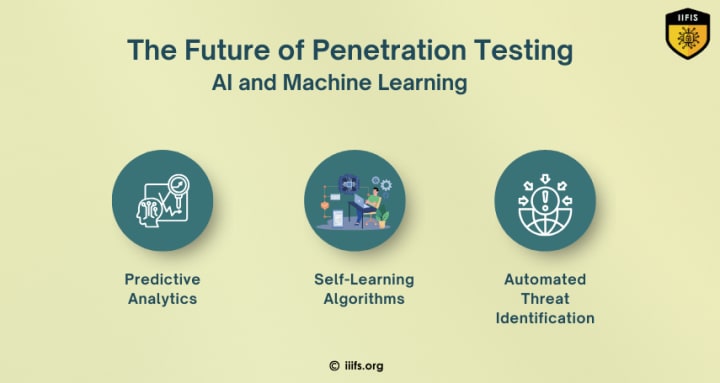
AI and Machine Learning: The Future of Penetration Testing
Artificial Intelligence (AI) and machine learning are expected to be game-changers in the world of penetration testing. These technologies bring the ability to simulate increasingly sophisticated attacks, often with more precision than traditional testing methods.
Predictive Analytics: AI can predict attack vectors and simulate real-world cyberattacks, enabling testers to assess vulnerabilities before they are exploited.
Self-Learning Algorithms: Machine learning models can analyze data from past tests and adapt to evolving security threats, continuously improving the penetration testing process.
Automated Threat Identification: AI tools are becoming better at identifying complex threats that might go unnoticed in manual tests, such as zero-day vulnerabilities.
By integrating AI and machine learning, penetration testers can become more proactive in anticipating emerging threats and securing systems before breaches occur.
Cloud Security Penetration Testing: The Next Frontier
With cloud adoption increasing across industries, penetration testing has shifted its focus toward securing cloud infrastructures. Traditional security measures designed for on-premises networks simply do not apply to cloud-based systems, creating new vulnerabilities that must be addressed.
Cloud-Specific Vulnerabilities: Misconfigurations, weak access controls, and poorly managed permissions are common issues in cloud environments that require specialized testing.
Multi-Cloud and Hybrid Environments: The complexity of multi-cloud and hybrid infrastructures makes penetration testing more challenging and requires a deep understanding of the specific cloud platforms being used.
Third-Party Services: Testing cloud services provided by third parties (such as AWS, Google Cloud, or Azure) is becoming more critical to ensure that external providers maintain robust security practices.
As businesses continue to transition to the cloud, penetration testers must adapt their strategies to assess risks unique to cloud environments and ensure organizations' cloud security measures are robust.
The Rise of IoT Security Penetration Testing
The Internet of Things (IoT) is growing rapidly, with many devices now connected. However, this growth raises security concerns, as many of these devices are not built with strong security, making them vulnerable to attacks.
Device Vulnerabilities: IoT devices often have weak authentication, hardcoded passwords, and outdated firmware that can be exploited by attackers.
Network Layer Security: Penetration testers will need to assess how IoT devices interact with networks, looking for weak points in communication protocols or unencrypted data streams.
Physical Security: Some IoT devices can be tampered with physically, so penetration testing will also need to address potential risks from device manipulation.
As IoT adoption continues to rise, penetration testing will become increasingly important in securing the connected world, ensuring that IoT ecosystems are as resilient to attacks as traditional IT infrastructures.
Red Team vs. Blue Team: Collaborative Security Testing
penetration testing has been a standalone exercise, but the future will likely see more collaboration between Red Teams (offensive security) and Blue Teams (defensive security). This approach, often referred to as "active defense," allows organizations to build a more comprehensive security strategy.
Simulated Attacks: Red Teams simulate real-world cyberattacks to test an organization’s defenses, while Blue Teams work to detect and mitigate these attacks.
Feedback Loops: Collaboration between teams provides valuable insights, allowing both to improve their tactics and strategies based on real-world attack scenarios.
Continuous Testing: By working together, Red and Blue Teams can conduct ongoing exercises that adapt to new threats in real-time, strengthening overall security posture.
This approach promotes a more comprehensive view of cybersecurity, where testing is ongoing and responses are swift, enabling faster detection and fixing of vulnerabilities.
Focus on Web Application and API Penetration Testing
As businesses increasingly depend on web applications and APIs for their operations, securing these platforms has become a critical focus for penetration testing professionals. With cyberattacks increasingly targeting web applications and APIs, penetration testers must stay ahead of emerging threats.
API Vulnerabilities: Misconfigured APIs, improper authentication, and insecure data handling are common targets for attackers.
Web Application Threats: Vulnerabilities like cross-site scripting (XSS), SQL injection, and broken authentication continue to be significant risks.
Mobile Application Security: As mobile applications grow in popularity, penetration testers will need to focus on securing mobile platforms and their communication with web servers.
Continuous Penetration Testing: A Shift to Proactive Security
The days of treating penetration testing as an annual or periodic task are behind us. As cyber threats become more advanced and frequent, organizations are moving towards ongoing testing to keep their systems secure and up-to-date against ever-changing risks.
Real-Time Vulnerability Detection: Continuous testing enables organizations to detect vulnerabilities as they emerge, rather than waiting for scheduled tests.
Always-On Defense: "Always-on" testing tools can simulate real-world attacks 24/7, offering real-time insights into potential risks.
Faster Response: With continuous monitoring and testing, organizations can react quickly to emerging threats, reducing the window of opportunity for attackers.
The future of penetration testing is evolving with new technologies like automation, AI, and a focus on cloud and IoT security. As the digital world grows more connected and vulnerable, staying ahead of these trends is essential for cybersecurity professionals. IIFIS certifications can help equip experts with the skills to tackle emerging threats.
About the Creator
yamini k
I’m Yamini, a Digital Marketing Executive at Eflot. I specialize in SEO, social media, and content creation, using data-driven strategies to boost traffic, engagement, and conversions, helping businesses grow their digital presence.
Smart Savings in Real Time
Every business wants to lower costs. However, many leaders fear that cutting expenses will hurt quality. The good news is that this does not have to happen. Many companies prove that smart planning can protect quality while lowering spending. These real-world examples show efficiency in action and how teams reduced costs without compromising quality.
By Duke Valentour7 days ago in Education
Sunday School: The purpose is evolving in some churches
What is the purpose of Sunday School? There is an old saying that if you don't know the purpose of something, you will abuse it. Around 1780, Robert Rakes of England established Sunday School to teach children to read, write, and learn biblical knowledge.
By Cheryl E Preston6 days ago in Education



Comments
There are no comments for this story
Be the first to respond and start the conversation.