
Martial law 1972 : Philippines under martial law
Article VII, Section 18 of the 1987 Constitution empowers the President of the Republic to declare martial law for a period not exceeding 60 days in cases of rebellion and invasion, when public safety requires it.

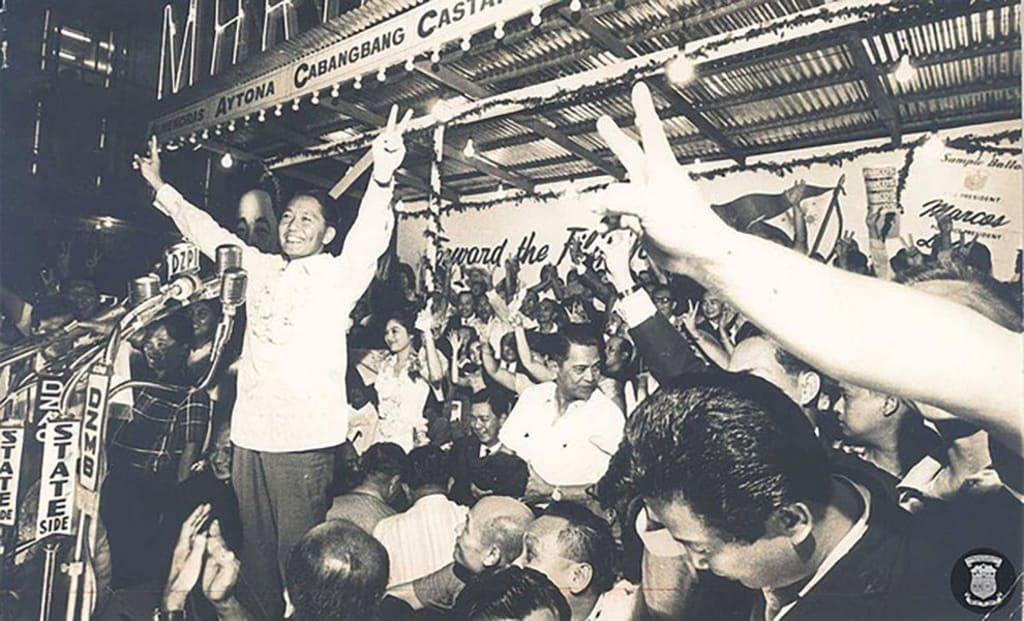
Martial law in the Philippines refers to a period of authoritarian rule that was imposed by former Philippine President Ferdinand Marcos from 1972 to 1981. During this period, Marcos suspended the Philippine Constitution, dissolved Congress, and arrested and detained political opponents, journalists, and activists without trial.
The imposition of martial law was justified by Marcos as a response to growing civil unrest and a communist insurgency in the country. However, it was also seen as an attempt to consolidate his power and suppress opposition to his regime.
During the period of martial law, the Philippine government engaged in widespread human rights abuses, including torture, extrajudicial killings, and disappearances. The government also censored the media and curtailed civil liberties, leading to widespread criticism from the international community.
Martial law in the Philippines was lifted in 1981, but the country continued to face political instability and violence in the decades following its imposition. The legacy of martial law remains a contentious issue in Philippine politics and society today.
Martial law in the Philippines refers to a period of authoritarian rule that was imposed by former Philippine President Ferdinand Marcos from 1972 to 1981. During this period, Marcos suspended the Philippine Constitution, dissolved Congress, and arrested and detained political opponents, journalists, and activists without trial.
The imposition of martial law was justified by Marcos as a response to growing civil unrest and a communist insurgency in the country. However, it was also seen as an attempt to consolidate his power and suppress opposition to his regime.
During the period of martial law, the Philippine government engaged in widespread human rights abuses, including torture, extrajudicial killings, and disappearances. The government also censored the media and curtailed civil liberties, leading to widespread criticism from the international community.
Martial law in the Philippines was lifted in 1981, but the country continued to face political instability and violence in the decades following its imposition. The legacy of martial law remains a contentious issue in Philippine politics and society today. During the period of martial law in the Philippines, thousands of people were killed or went missing due to human rights abuses committed by the government. The exact number of casualties is difficult to determine, but estimates range from 3,000 to 10,000 people killed or disappeared during the period of martial law.
The negative side of martial law in the Philippines is that it resulted in a period of authoritarian rule where the government engaged in widespread human rights abuses, including torture, extrajudicial killings, and disappearances. The government also censored the media and curtailed civil liberties, leading to widespread criticism from the international community. The economic benefits of martial law, such as increased infrastructure development, were often achieved through corrupt means and at the expense of human rights and democratic institutions. It is therefore important to acknowledge the negative impacts of martial law in the Philippines and work towards promoting human rights, democracy, and good governance in the country.
The imposition of martial law also had a significant impact on the economy, as the government imposed strict controls on foreign exchange and trade, leading to a decline in investment and economic growth. Many businesses were forced to shut down, leading to widespread unemployment and poverty.
Moreover, the government's failure to hold those responsible for human rights abuses accountable has also contributed to a culture of impunity and a lack of trust in government institutions. The legacy of martial law continues to affect Filipinos today, as many still struggle with the trauma and injustices that were inflicted upon them during this period
About the Creator
ynawrites
As a ghostwriter, my purpose is to transform your ideas, visions, and stories into captivating written works. Talented | Imaginative | Versatile | Collaborative | Detail-Oriented.
Managing Anxiety During Exams: A Student’s Guide
Exams are one of the most common sources of stress for students at every level. Even the most prepared individuals often feel nervous before or during a test. Exam anxiety is natural — it’s the body’s way of preparing for a challenge — but excessive stress can interfere with focus, memory recall, and overall performance. Understanding the causes of anxiety and learning effective coping strategies can make a significant difference. This guide provides practical, evidence-based techniques to manage stress before, during, and after exams.
By Games Mode Onabout 4 hours ago in Education
Best Tools and Tips for Project Managers to Manage Projects Effectively
Project management plays a critical role in ensuring that business goals are achieved on time and within budget. In today’s fast-paced and competitive environment, project managers must balance multiple responsibilities, manage diverse teams, and adapt to constant changes. Using the right tools along with proven management techniques can significantly improve project efficiency and success.
By Muhammad Hussainabout 5 hours ago in Education




Comments
There are no comments for this story
Be the first to respond and start the conversation.