
Manual Transmission
Pros and Cons of Manual Transmission


A manual transmission is designed to change the vehicle’s drive wheel speed and torque in relation to engine speed and torque.
A manual transmission, also referred to as a manual gearbox or a standard transmission, is a kind of transmission system that enables the driver to shift gears manually in a car. It is an engineering marvel that has lasted for more than a century and is still cherished by auto enthusiasts all over the world. Driving purists favor this system because it offers a level of engagement and control that is unmatched by its automatic counterpart.
A complex set of gears and shafts forms the core of a manual transmission. The clutch, gearbox, and gear shift mechanism are its three main parts in most cases. The driver can smoothly change gears because the clutch connects and disconnects the engine from the transmission. The ratio between the engine and the wheels can be altered by engaging or disengaging the gears, which are housed in the gearbox. Finally, the driver can choose the desired gear using the gear shift mechanism, which is typically in the shape of a gear stick.
The level of control a manual transmission gives the driver is one of its main benefits. The driver can adjust the engine's power and torque delivery for various driving situations by manually shifting gears. This control makes driving more interesting and individualized. A skilled driver can downshift for engine braking, shift just in time, and maximize the car's performance on the road or the racetrack.
It's important to remember that automatic transmissions have become more common in recent years, while manual transmissions have been losing favor. The decision between a manual and an automatic transmission ultimately comes down to the driver's preferences, driving habits, and unique needs.
For those who enjoy driving and want more control over their vehicle, manual transmissions, also referred to as "stick shifts," have a number of benefits. The following are advantages of manual transmissions:
1. Enhanced Control: With manual transmissions, the driver has total control over the choice of gear. For various driving situations, such as uphill climbs, winding roads, or passing other cars, they can select the appropriate gear. The driving experience could become more interesting and tailored as a result of this control.
2. Better Fuel Efficiency: Compared to automatic transmissions, manual transmissions typically use less fuel. Better fuel economy can be achieved by optimizing gear shifting with a manual transmission to match the engine's RPM (revolutions per minute).
3. Lower Repair and Maintenance Costs: Compared to automatic transmissions, manual transmissions are typically less complex, which can result in lower maintenance and repair costs. They are less likely to malfunction mechanically because they contain fewer parts. Additionally, unlike automatic transmissions, manual transmissions do not require routine transmission fluid changes.
While manual transmissions have a number of benefits, they also have some disadvantages that may turn some drivers off. The following are drawbacks of manual transmissions:
1. Operating a manual transmission requires more physical effort and hand-eye coordination than an automatic transmission does. Manual gear shifting requires the use of the clutch pedal and the gear shifter, which can be taxing, particularly in congested areas or during lengthy commutes. To become proficient at shifting smoothly and effectively, one must practice and put in the time.
2. Traffic Jams and Stop-and-Go Driving: Manual transmissions can be difficult to operate in congested areas or when driving frequently stops and starts. It might become boring and exhausting to continuously engage and disengage the clutch and change speeds. On the other side, automatic gearboxes offer comfort and convenience by automatically changing ratios as needed.
3. Learning Curve for New Drivers: Manual transmissions can be challenging for unskilled or new drivers to master. It takes practice to coordinate clutch control, throttle input, and gear selection, which might initially result in abrupt motions and stalling. Some individuals can find this process of learning to be tedious and like the ease of an automatic transmission.
When choosing between a manual or automatic transmission, it's crucial to take into account these aspects as well as your driving requirements and preferences.
******************
I hope it can help you to know what is manual transmission. <3
About the Creator
Mr. Auhc
Business Minded, Athletic, Free Diver, Mechanic
Keep reading
More stories from writers in Education and other communities.
Real Time Success: Simple Time Management Methods That Deliver Real Results
Time can feel hard to control, but simple time management methods can make each day easier and more productive. Many people think they need complex systems or expensive tools to stay organized. The truth is that small changes often bring the most significant results. When you use simple time management methods that fit your daily life, you build habits that last and help you get more done with less stress. This article shows how to use these methods clearly and practically so you can see real results fast.
By Norman Badgera day ago in Education
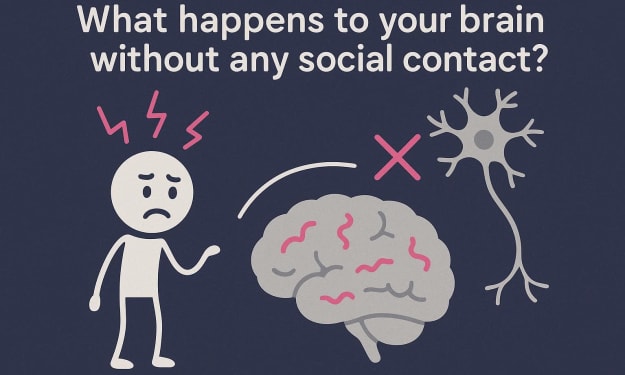
What happens to your brain without any social contract?
Everyone needs time to themselves, and peaceful solitude has stress-relieving benefits. But being alone takes on an entirely different dimension when it creeps up or is forced upon you. When that's the case, the effects can be surprisingly extensive. And though different people experience distinct effects at different times, symptoms tend to become more severe and persistent the longer one's isolated. When someone is involuntarily confined to one space indefinitely— for days, weeks, months, or even years—
By Munesh Yadav 6 days ago in Education



Comments
There are no comments for this story
Be the first to respond and start the conversation.