

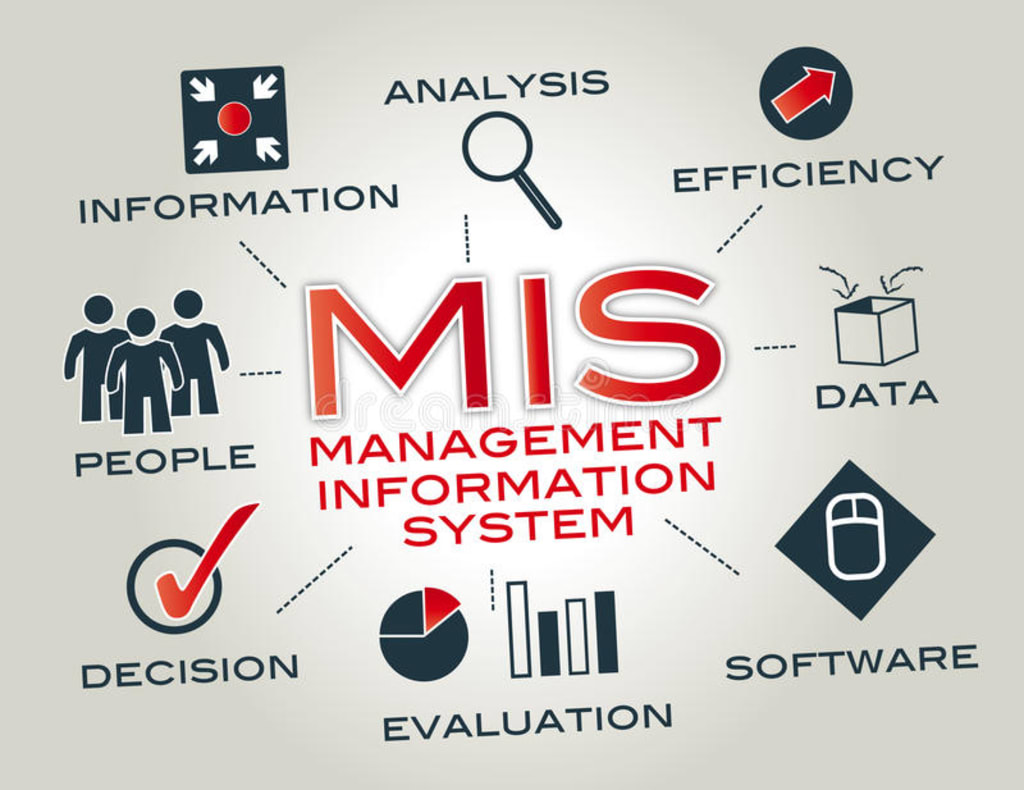
Management Information Systems (MIS) is a field of study that deals with the use of information technology to support and enhance the operations of an organization. MIS involves the design, development, implementation, and management of information systems that can provide timely, accurate, and relevant information to managers and decision-makers.
MIS is essential for any organization because it helps to improve the decision-making process and ensures that the organization operates efficiently. MIS involves the use of various technologies, such as hardware, software, databases, networks, and people, to support business operations, management, and decision-making.
MIS is used in various functional areas of an organization, such as finance, marketing, human resources, and operations. MIS systems are designed to provide the necessary information to managers at all levels of an organization to support their decision-making process.
The key objectives of MIS are to improve operational efficiency, enhance decision-making, support strategic planning, and gain a competitive advantage. MIS helps organizations to analyze and manage data, streamline business processes, and improve communication and collaboration within the organization.
MIS includes several components, such as hardware, software, databases, networks, and people. The hardware component of MIS includes the physical devices, such as computers, servers, and peripherals, that are used to process and store data. The software component of MIS includes the programs and applications that are used to process and analyze data. The database component of MIS includes the data storage and retrieval systems that are used to store and manage data. The network component of MIS includes the communication systems that are used to connect the different components of MIS. Finally, the people component of MIS includes the personnel who design, implement, and manage the MIS system.
MIS professionals are responsible for designing, implementing, and maintaining MIS systems in organizations. They should possess strong analytical, technical, and communication skills to ensure the effective functioning of MIS systems. MIS professionals can work in various roles such as MIS manager, data analyst, system analyst, and database administrator.
One of the most common MIS systems used in organizations is the enterprise resource planning (ERP) system. ERP systems are integrated software applications that are used to manage business processes across various functional areas of an organization. ERP systems typically include modules for finance, human resources, inventory management, and customer relationship management.
Another common MIS system used in organizations is the customer relationship management (CRM) system. CRM systems are used to manage interactions with customers and prospects. They help organizations to track customer information, manage customer interactions, and improve customer satisfaction.
Supply chain management (SCM) systems are also used in organizations to manage the flow of goods and services from suppliers to customers. SCM systems help organizations to optimize their supply chain processes, reduce costs, and improve customer satisfaction.
Business intelligence (BI) systems are used to analyze and report on business data. BI systems help organizations to identify trends, patterns, and insights in their data, and make informed decisions based on this information.
In conclusion, Management Information Systems (MIS) are a critical component of any organization. MIS helps organizations to improve operational efficiency, enhance decision-making, support strategic planning, and gain a competitive advantage. MIS includes several components, such as hardware, software, databases, networks, and people. MIS professionals are responsible for designing, implementing, and maintaining MIS systems in organizations. Finally, there are various types of MIS systems used in organizations, including ERP, CRM, SCM, and BI systems.
Management Information Systems (MIS) is the study of people, technology, organizations, and the relationships among them. MIS professionals help firms realize maximum benefit from investment in personnel, equipment, and business processes. MIS is a people-oriented field with an emphasis on service through technology
About the Creator
Rehan Siddiqui
Hello to everyone I am a father of three beautiful kids and husband of one loving caring understanding wife and they are my whole world. I loved my parents and we all leave together. I am a simple honest loving person.
Keep reading
More stories from Rehan Siddiqui and writers in Education and other communities.
Marketing Management
Marketing management is a critical function for any organization that seeks to succeed in the highly competitive business world. It involves developing strategies and tactics that enable the organization to meet the needs of its customers while achieving its business objectives. In this article, we will explore the key components of marketing management, including market analysis, customer segmentation, product development, pricing, promotion, and distribution.
By Rehan Siddiqui3 years ago in Education
The First UK Baby Born from a Deceased Donor’s Uterus
In a historic medical breakthrough, a baby boy named Hugo was born in the United Kingdom just days before Christmas 2025, weighing 7 pounds and making global headlines. His birth was not only a moment of joy for his family but also a landmark achievement in modern medicine. Hugo is the first baby in the UK to be born using a uterus transplanted from a deceased donor, marking a new era in reproductive science and offering hope to millions of women around the world.
By Irshad Abbasi 8 days ago in Education


Comments (1)
Hey there! Great breakdown of Management Information Systems in your post! If you're interested in diving deeper into how MIS differs from Enterprise Resource Planning, check out this insightful comparison: https://www.cleveroad.com/blog/mis-vs-erp/ Keep up the good work on shedding light on crucial topics!