
Living in the Matrix: The Evidence Mounts
Exploring the Possibility that Our Reality is a Computer-Generated Simulation

I. Introduction
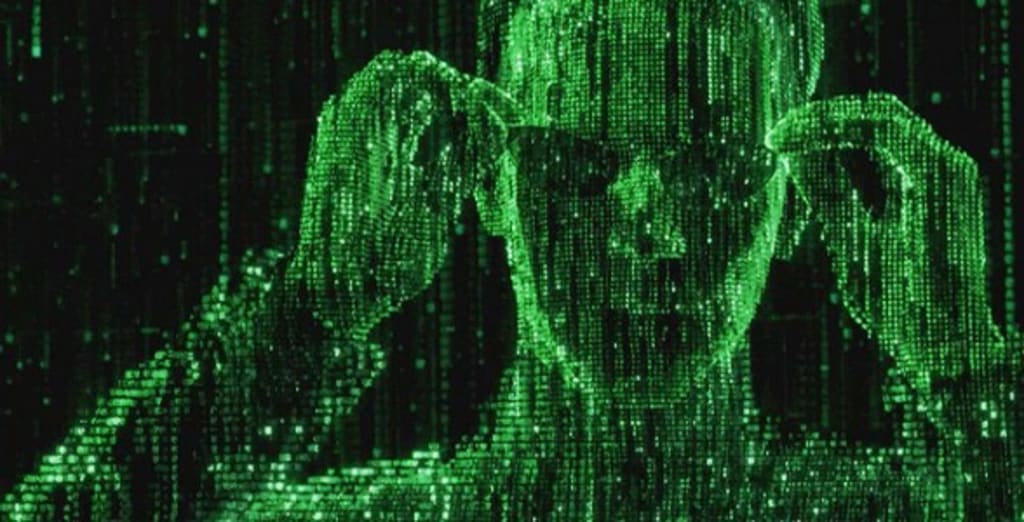
The Matrix, a science fiction action film released in 1999, introduced the concept of a simulated reality to a wide audience. In the film, humanity is unknowingly living in a simulated world, or "Matrix," while their bodies are used as a source of energy by sentient machines. The Matrix has become a cultural phenomenon and has sparked discussions about the possibility that our reality could be a simulated one.
Briefly, the idea that we may be living in a simulated reality suggests that our world and everything in it, including ourselves, may be nothing more than a computer-generated simulation. This concept raises several philosophical and scientific questions, such as what happens if the simulation is turned off, or if the creators of the simulation can manipulate the reality we experience.
II. Historical and philosophical roots of the Matrix hypothesis
The idea that reality may be a simulated one has a long history, with ancient philosophers such as Plato and René Descartes proposing similar ideas. Plato's allegory of the cave suggests that our perceptions of the world may not be accurate and that true reality is something beyond our sensory experiences. Descartes' famous statement, "I think, therefore I am," raises the possibility that our existence may be doubted and that we cannot be certain of anything beyond our thoughts.
In modern times, the Matrix hypothesis has been proposed by philosophers and scientists such as Nick Bostrom and David Chalmers. Bostrom's "simulation argument" suggests that, given the potential for future technological advancements, we may be living in a simulated reality created by a more advanced civilization. Chalmers, a philosopher, and cognitive scientist has proposed the "Matrix scenario" as a thought experiment to consider the implications of living in a simulated reality.
III. Scientific evidence for a simulated reality
While the Matrix hypothesis is still largely considered a philosophical thought experiment, there is some scientific research that supports the idea that we may be living in a simulated reality. In the field of physics, some scientists have proposed that our universe may be a hologram, with information about the universe encoded on a surface, much like a holographic image.
In computer science, there have been advancements in virtual reality technology that make it increasingly difficult to distinguish between virtual experiences and real ones. Some scientists argue that, if it is possible to create a realistic simulated world, our reality may be also a simulation.
There are also counterarguments to the idea that we are living in a simulated reality. Some scientists argue that there are limits to the level of computational power that could be used to create a realistic simulated world and that it is unlikely that we are living in one. Others point out that, if we are living in a simulated reality, it is unclear what the purpose or motivations of the creators of the simulation would be.
IV. Personal and societal implications of the Matrix hypothesis
If it were to be proven that we are living in a simulated reality, it would have significant personal and societal implications. On a personal level, our understanding of ourselves and our place in the world would be called into question. We may have to reassess our understanding of reality and the nature of consciousness.
On a societal level, the Matrix hypothesis raises questions about free will, morality, and the meaning of life. If our reality is being controlled by external forces, it is unclear what role, if any, we have in shaping our own lives and destinies.
V. Conclusion
While the Matrix hypothesis remains a controversial and largely unproven idea, it raises important questions about the nature of reality and our place in the world. While there is some scientific evidence that supports the idea.
About the Creator
Yohan
Freelance writer.
Reveal the world's darkest truths.
Reader insights
Outstanding
Excellent work. Looking forward to reading more!
Top insights
On-point and relevant
Writing reflected the title & theme
Easy to read and follow
Well-structured & engaging content
Excellent storytelling
Original narrative & well developed characters
Expert insights and opinions
Arguments were carefully researched and presented
Compelling and original writing
Creative use of language & vocab
Heartfelt and relatable
The story invoked strong personal emotions
Masterful proofreading
Zero grammar & spelling mistakes
Eye opening
Niche topic & fresh perspectives
Keep reading
More stories from writers in Education and other communities.
Reel Cap Components in Aerospace Electronics: History, Function, and Aviation Applications
Introduction: My Experience Exploring Reel Cap Components When I started researching aerospace electronic components, I discovered that even the smallest hardware pieces play a crucial role in aircraft systems. One such component that caught my attention was the Reel Cap, an often overlooked but essential element in electronic component packaging, aviation circuitry, and aerospace manufacturing systems.
By Beckett Dowhan7 days ago in Education
How Magnetic Fields Shape Solar Activity: The Hidden Power Behind Solar Flares and Sunspots
At first glance, the Sun appears calm and steady—a glowing sphere lighting our skies every day. Yet beneath this peaceful appearance lies a star constantly shaped by powerful and invisible forces. These forces twist, stretch, and reshape the Sun’s surface, producing dramatic events such as sunspots, solar flares, and massive eruptions of energy.
By shahkar jalal2 days ago in Education



Comments
There are no comments for this story
Be the first to respond and start the conversation.