
How Magnetic Fields Shape Solar Activity: The Hidden Power Behind Solar Flares and Sunspots
Discover how magnetic fields shape solar activity. Learn how the Sun’s magnetic forces create sunspots, solar flares, and space weather that can impact Earth.

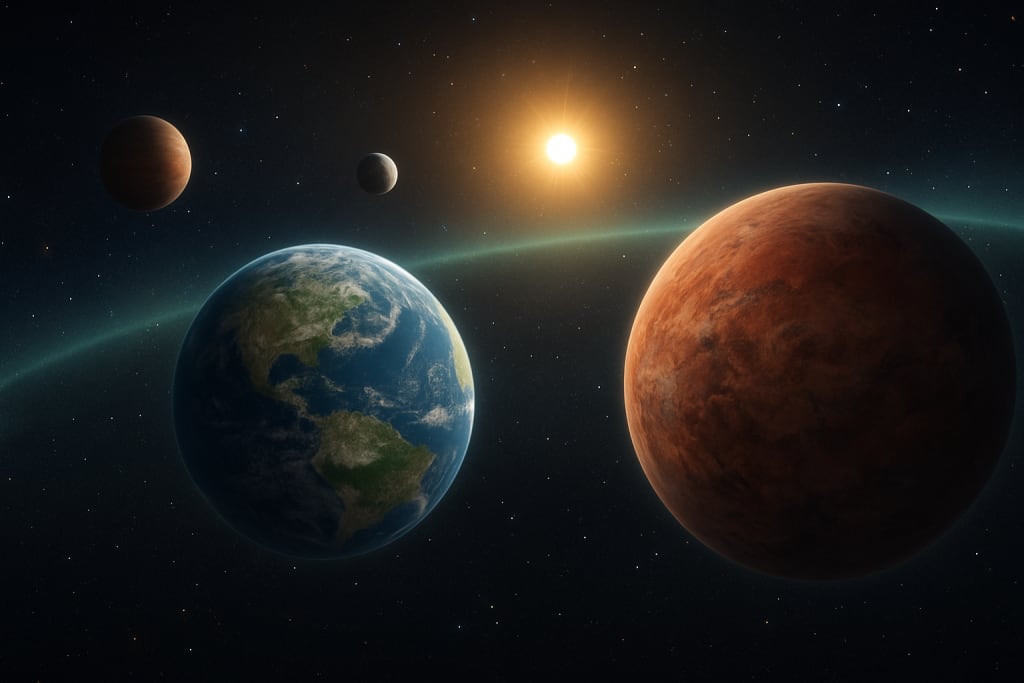
At first glance, the Sun appears calm and steady—a glowing sphere lighting our skies every day. Yet beneath this peaceful appearance lies a star constantly shaped by powerful and invisible forces. These forces twist, stretch, and reshape the Sun’s surface, producing dramatic events such as sunspots, solar flares, and massive eruptions of energy.
The key to understanding these phenomena lies in the Sun’s magnetic fields.
Magnetic fields inside the Sun act like invisible strings of energy embedded within hot plasma. As the Sun rotates and its internal material moves, these magnetic lines become tangled and compressed. When the tension grows strong enough, enormous bursts of energy can be released.
These magnetic processes control the rhythm of solar activity and influence space weather throughout the solar system. Sometimes they even affect technology and communication systems here on Earth.
Understanding how magnetic fields shape solar activity helps scientists predict solar storms and better understand the behavior of stars across the universe.
________________________________________
The Sun as a Magnetic Star
The Sun is not just a giant ball of glowing gas. It is also an enormous magnetic generator.
Inside the Sun, extremely hot plasma moves constantly through a process known as convection. At the same time, the Sun rotates on its axis. These two motions interact in complex ways.
When electrically charged particles move within a rotating fluid, they generate magnetic fields. This process is known as the solar dynamo.
The solar dynamo continuously produces magnetic fields inside the Sun. These fields rise toward the surface and extend far into space, forming the Sun’s vast magnetic environment.
________________________________________
How Magnetic Fields Form Inside the Sun
The formation of solar magnetic fields begins deep inside the Sun’s interior.
The Sun has several internal layers, but the outer portion called the convective zone is especially important for magnetic activity.
In this region, hot plasma rises toward the surface while cooler plasma sinks downward. These convective motions constantly stir the solar material.
Because plasma is electrically charged, its movement generates magnetic fields. As these fields interact with the Sun’s rotation, they become stretched and twisted.
Over time, these magnetic fields grow stronger and more complex.
Eventually, loops of magnetic field rise through the Sun’s surface, shaping many of the solar features that astronomers observe.
________________________________________
Sunspots: Visible Signs of Magnetic Fields
One of the most recognizable features on the Sun is the appearance of sunspots.
Sunspots are dark regions that appear on the Sun’s surface. They may look small from Earth, but some are larger than the entire planet.
These spots form where powerful magnetic fields emerge from the Sun’s interior.
Magnetic fields in these areas are so strong that they suppress the normal flow of heat from the Sun’s interior. As a result, the region becomes cooler than the surrounding surface.
Because they are cooler, sunspots appear darker compared to the brighter photosphere around them.
Sunspots often occur in pairs or groups where magnetic field lines rise from one spot and re-enter the Sun at another.
________________________________________
Solar Flares: Explosive Releases of Energy
Sometimes the magnetic fields around sunspots become extremely twisted and unstable.
When the tension in these magnetic fields becomes too great, the field lines can suddenly snap and reconnect in a process known as magnetic reconnection.
This sudden rearrangement releases enormous amounts of energy.
The result is a solar flare—a powerful burst of radiation and charged particles erupting from the Sun’s surface.
Solar flares can release as much energy as billions of nuclear bombs exploding simultaneously.
These events send intense radiation into space and can sometimes affect Earth’s upper atmosphere.
________________________________________
Coronal Mass Ejections: Massive Solar Storms
In some cases, magnetic instability leads to even larger eruptions called coronal mass ejections (CMEs).
During a CME, billions of tons of solar plasma are hurled into space at incredible speeds.
These eruptions occur when magnetic field lines that hold solar material in place suddenly break and release their stored energy.
The ejected plasma carries magnetic fields along with it as it travels through the solar system.
If a CME is directed toward Earth, it can interact with our planet’s magnetic field and create powerful geomagnetic storms.
________________________________________
The Solar Magnetic Cycle
Solar activity does not remain constant over time. Instead, it follows a repeating pattern known as the solar cycle.
This cycle lasts approximately 11 years.
During periods of low activity, the Sun may have few sunspots and relatively calm magnetic conditions.
As the cycle progresses, the number of sunspots increases and solar activity becomes more intense.
At the peak of the cycle, known as solar maximum, solar flares and coronal mass ejections occur more frequently.
After reaching maximum activity, the Sun gradually returns to a quieter state before the cycle begins again.
This repeating cycle is driven by the changing structure of the Sun’s magnetic field.
________________________________________
The Twisting of Magnetic Fields
One reason the Sun’s magnetic fields become so complex is the way the star rotates.
Unlike Earth, the Sun does not rotate as a solid body. The equator rotates faster than the polar regions, a phenomenon called differential rotation.
This uneven rotation stretches and twists magnetic field lines over time.
Imagine twisting a rubber band again and again. Eventually, the tension becomes so strong that it snaps.
Something similar happens with the Sun’s magnetic fields. When the stress becomes too great, magnetic reconnection occurs, releasing energy in the form of solar activity.
________________________________________
How Solar Magnetic Activity Affects Earth
Although the Sun is nearly 150 million kilometers away, its magnetic activity can still influence our planet.
When solar storms reach Earth, they interact with the planet’s magnetic field.
This interaction can produce beautiful auroras, also known as the northern and southern lights.
However, strong solar storms can also cause problems for modern technology.
For example, solar activity can:
• Disrupt satellite communication
• Affect GPS navigation systems
• Damage electrical power grids
• Interfere with radio signals
Because of these risks, scientists closely monitor solar magnetic activity and attempt to predict space weather events.
________________________________________
Studying Solar Magnetism
Modern technology allows scientists to study the Sun’s magnetic behavior in extraordinary detail.
Space missions and solar observatories constantly observe the Sun’s surface and atmosphere.
Special instruments measure magnetic field strength and track the movement of plasma across the Sun’s surface.
Using these observations, scientists can build models of the Sun’s magnetic field and better understand the processes driving solar activity.
These studies are essential for improving space weather forecasting.
________________________________________
Magnetic Fields Beyond the Sun
The Sun is not the only star influenced by magnetic fields. Many stars across the universe display similar magnetic activity.
By studying the Sun, astronomers gain insights into how magnetic fields shape stellar behavior throughout the galaxy.
Understanding these processes also helps scientists learn more about planetary environments and the potential habitability of distant worlds.
________________________________________
Why Solar Magnetic Fields Matter
Magnetic fields are the hidden engines behind many of the Sun’s most dramatic events.
They control the formation of sunspots, power solar flares, and trigger massive coronal mass ejections that travel through the solar system.
Without magnetic fields, the Sun would be a much quieter star.
By studying solar magnetism, scientists not only learn more about our own star but also gain valuable knowledge about stars throughout the universe.
________________________________________
Conclusion
The Sun may appear calm from a distance, but it is actually a dynamic and constantly changing star shaped by powerful magnetic forces.
Inside the Sun, moving plasma generates magnetic fields that rise to the surface and twist into complex structures. These magnetic fields create sunspots, drive explosive solar flares, and launch massive coronal mass ejections into space.
Through the repeating solar cycle, magnetic activity continually reshapes the Sun’s behavior and influences conditions throughout the solar system.
Understanding how magnetic fields shape solar activity allows scientists to better predict space weather and protect modern technology on Earth.
More importantly, it reveals the hidden forces that power the star at the center of our solar system—an extraordinary engine of energy whose magnetic dynamics continue to fascinate astronomers around the world.
About the Creator
Keep reading
More stories from shahkar jalal and writers in Education and other communities.
Why the Sun Rotates Faster at the Equator: The Surprising Physics of Solar Rotation
If you watch the Sun through powerful telescopes over several days, you might notice something unusual. Dark patches known as sunspots slowly drift across the surface of the Sun as the star rotates. At first, this movement seems similar to the rotation of Earth or other planets.
By shahkar jalalabout 2 hours ago in Education
How Small Organizations Can Use Data Analytics to Boost Their Business
Big or small, businesses of all sizes today rely on insightful information to make decisions. Especially in this data-driven economy, those who fail to adopt a data-driven culture may risk falling behind their competitors who embrace and are updated with data analytics trends. Though large corporations already have sufficient analytics systems, they are no longer limited to huge enterprises. Data analytics for small businesses is gaining quite traction, powering them with unprecedented insights to take their business forward.
By Pradip Mohapatra7 days ago in Education
Twenty Years of Medical Experience: Knowledge That Will Redefine Future Healthcare
Medicine has changed profoundly over the last two decades. Scientific breakthroughs, digital innovation, and evolving healthcare policies have reshaped how medical professionals diagnose illnesses, treat patients, and manage healthcare systems. Conditions that were once difficult to detect or treat now benefit from advanced imaging, improved medications, and minimally invasive procedures. These developments have significantly improved survival rates and overall patient outcomes.
By Yousuf A. Gaffar, M.D4 days ago in Education




Comments
There are no comments for this story
Be the first to respond and start the conversation.