
Lessons from failure: “7 Things I Learned After Failing Big”
Lessons From Failure
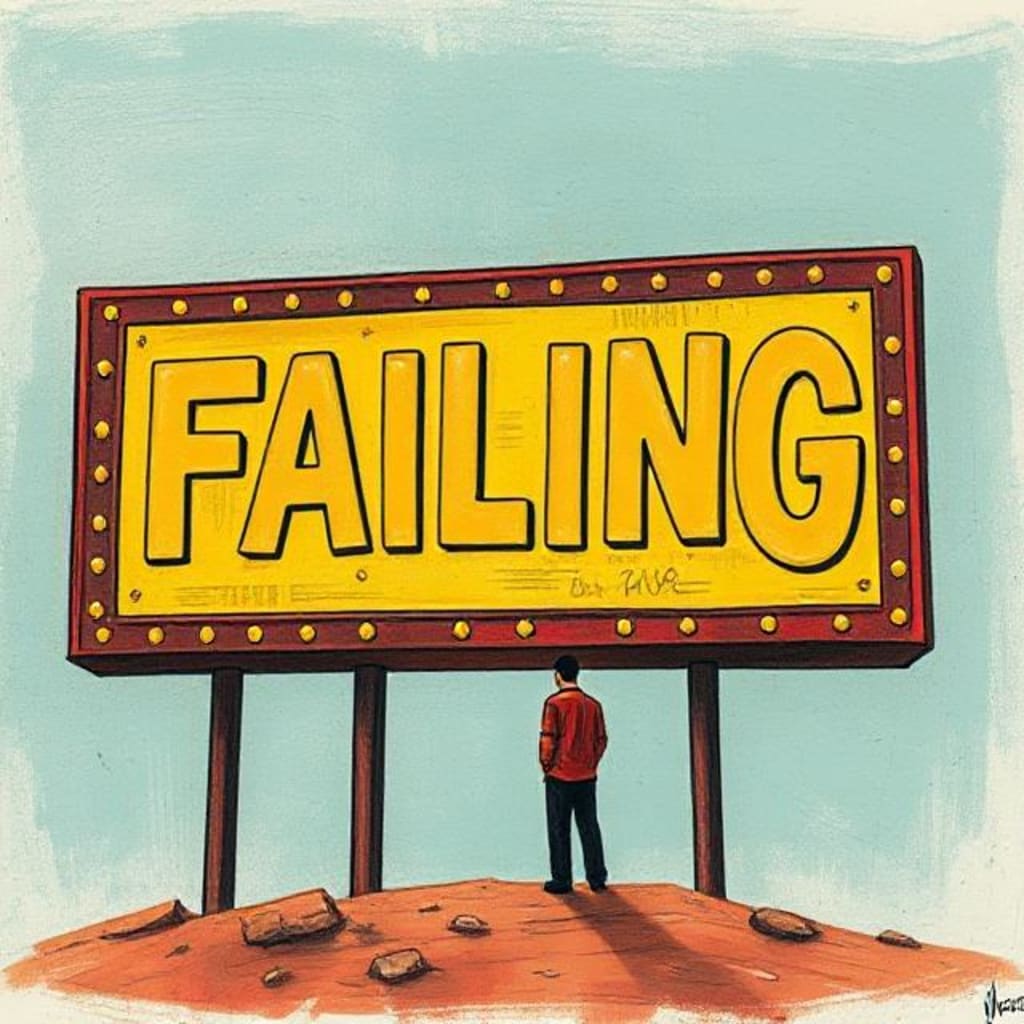
Failure. It's a term we all dread, but it's one of the most common human experiences. Nobody is immune to it, and yet we spend our lives avoiding it, as if failure may wipe out everything we've worked for. For a long time, I assumed that failure was something to be embarrassed of, that it would leave a permanent stain on my life. Then, I had my own "big failure." At the time, it seemed like the end of my tale. I recall waking up every morning with a huge weight in my chest, repeating my mistakes and hoping I could change the past. But with time and meditation, I learned that failure was not the end, but rather the beginning of something much greater.
The first and arguably most crucial lesson I learnt was that failure is not irreversible. In the midst, it sure feels like it is. The guilt, disappointment, and sense of loss are tremendous. However, failure does not mean that life comes to an end. The world continues to move on, and with it comes the opportunity to rebuild. I discovered that I could stand up again, even when I felt broken. Each incremental step proved that failure was a comma in my story, not a full stop as I had thought.
The second lesson concerned ego. Looking back, I can understand how my pride caused the downfall. I wanted to prove that I could handle things on my own. I ignored warning flags, refused to seek help, and forced myself into situations I couldn't get out of. When the failure occurred, my ego was the hardest hit. For a while, it felt awful. But I eventually saw the gift in it. Eliminating my ego made me more humble, willing to accept I didn't know everything, and more open to asking for help. It turns out that true power isn't trying to be invincible it's admitting you're not.
Another interesting lesson was on how people see failure. I had convinced myself that everyone would judge, laugh, or think less of me. And there were whispers, questions, and complaints. However, most people were more interested in how I handled the failure than in the failure itself. They noted whether I conducted myself with grace or bitterness, learned or remained stagnant. That discovery taught me a valuable lesson: people may remember your failure for a short time, but they will remember your answer much longer.
Then came the realization of resilience. At first, I didn't believe I had any. I felt heartbroken, embarrassed, and helpless. But with each passing day, I realized that resilience is like a muscle: the more you use it, the stronger it grows. The first time I stood up after failing, I felt wobbly and apprehensive. Next time, be a little more steady. And resilience gradually became a part of me. I now know I can overcome obstacles that I once believed would ruin me.
One of the most unexpected benefits of failure was clarity. Failure has a way of ripping everything down, leaving only the fundamentals. Losing what I thought I wanted led me to think on what I truly valued. I recognized that some of my aspirations were not genuinely mine; they were borrowed expectations from others. Failure provided an opportunity for progress by forcing me to rebuild on my own terms. What I believed was the end of my dream was actually the start of a more authentic one.
I also learned that failure adds significance to victory. Previously, I believed that success was all about winning—achievements, titles, and milestones. However, success without struggle feels empty. Failure deepened my wins. It taught me to celebrate tiny victories, to value progress over outcomes, and to enjoy the trip rather than racing to the end. Success without failure may look wonderful on paper, but it does not develop you in the same way that hardship does.
Finally, the most important lesson I learnt was that failure does not define me. For a long time, I wore my failure like a scarlet letter, believing that it was all people saw when they looked at me. But over time, I discovered that one chapter does not determine the entire book. We are not defined by our mistakes, but by how we respond to them. Failure is a part of me, but it does not define me.
Looking back, I see my failure differently. It was painful, embarrassing, and draining, but it also served as a learning experience. It taught me about humility, resilience, perspective, and courage. It taught me to let go of my ego, respect genuineness, and view problems as possibilities rather than threats. I no longer dread or avoid failure. Instead, I see suffering as an unavoidable and necessary component of growth.
If you've lately failed, I understand how heavy it feels. I understand how the days blur together, how self-doubt speaks continuously, and how the weight of remorse can seem insurmountable. But I also know that failure isn't the end. It's a passageway. It may not feel like it right now, but in the long run, it will be remembered as a watershed moment. You'll see the strength you forged in the debris, the lessons you learnt in the silence, and the fortitude you carried into the next chapter.
The truth is that failure alters you—but not in the way you fear. It does not make you weaker. It makes you braver. It does not diminish your worth. It reminds you of something. And it does not define your life story; rather, it gives dimension to it.
So, if I could go back, I wouldn't undo my mistakes. As difficult as it was, it taught me lessons I could not have learnt any other way. And for that, strangely enough, I am grateful.
About the Creator
Life-changing moments: “5 Experiences That Completely Changed My Life”
Life has a way of teaching us lessons we never expected. Sometimes the teachings are mild nudges, and other times they come at us like a tidal wave, forever transforming us. Over the years, I've had experiences that changed the way I saw the world, my relationships, and even myself. Looking back, I can pinpoint a few moments that profoundly impacted my life, each leaving an imprint that I still carry now.
By mary5 months ago in Motivation
Cover Assembly Screened in Aircraft Systems: Function, History, and Aerospace Applications
Introduction: My Research into Cover Assembly Screened Aircraft Components While studying aircraft hardware and aerospace structural parts, I recently explored a catalog listing dedicated to Cover Assembly Screened components used in aviation systems. During my research, I realized that even small parts like protective covers are essential for the reliability, safety, and longevity of aircraft electronics and mechanical assemblies.
By Beckett Dowhan5 days ago in Education
The Man Who Refused to Worry
During my student years, I once met someone who seemed very different from everyone else around him. Most students were constantly worried about exams, grades, and their future careers. Conversations in classrooms and hostels often revolved around competition and pressure. Everyone appeared to be running in a race, trying not to fall behind.
By zohaib ahmada day ago in Education




Comments
There are no comments for this story
Be the first to respond and start the conversation.