
LEARN FROM YOUR MISTAKES
EMBRACE YOUR YOUR FAILURES

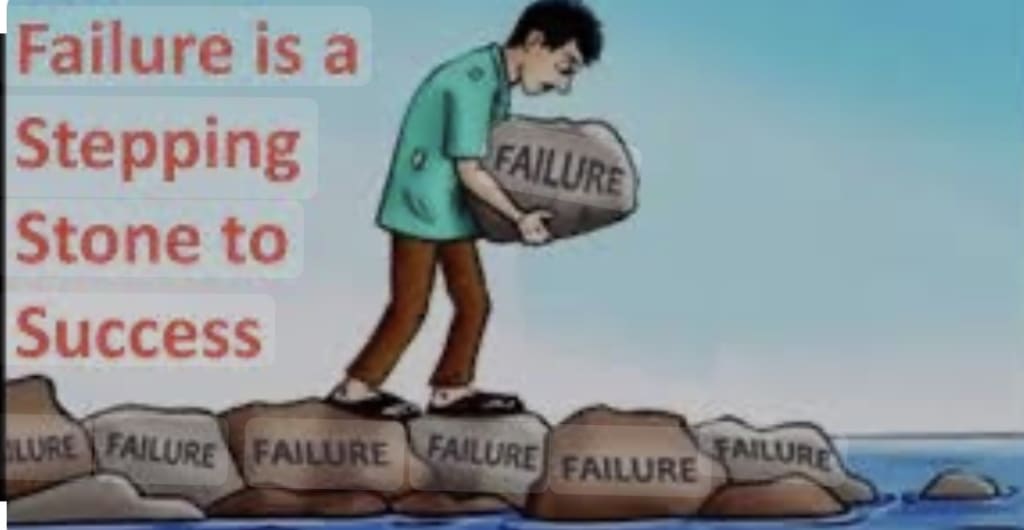
Embracing Failure: A Blueprint for Learning and Growth
In our pursuit of success, failure often feels like a daunting adversary. It stirs feelings of frustration, disappointment, and self-doubt. However, when approached with the right mindset, failure can become one of our greatest teachers, offering invaluable lessons that pave the way to future success. Learning from failure is not merely about analyzing what went wrong but also about cultivating resilience, adaptability, and a growth-oriented mindset. Here’s how you can turn your failures into powerful learning experiences.
- #### 1. **Reframe Failure as Feedback **
One of the most crucial steps in learning from failure is to reframe it as feedback rather than a verdict on your abilities. When you view failure as a form of feedback, it becomes a valuable source of information. This perspective allows you to ask critical questions: What went wrong? Why did it go wrong? What could I have done differently? By treating failure as a learning opportunity, you shift your focus from the negative aspects of the experience to the constructive insights it offers.
For instance, Thomas Edison’s journey to inventing the light bulb is a quintessential example of reframing failure. After thousands of unsuccessful attempts, Edison famously remarked, "I have not failed. I've just found 10,000 ways that won't work." His ability to see each failure as a step closer to success was instrumental in his eventual breakthrough.
#### 2. **Embrace a Growth Mindset**
Dr. Carol Dweck, a renowned psychologist, introduced the concept of a growth mindset—a belief that abilities and intelligence can be developed through dedication and hard work. Embracing a growth mindset is essential for learning from failure because it encourages you to see challenges and setbacks as opportunities to grow, rather than as insurmountable obstacles.
When you adopt a growth mindset, you’re more likely to persist in the face of difficulties, seek out learning opportunities, and view failures as temporary setbacks rather than permanent defeats. This mindset not only enhances your ability to learn from failures but also fosters resilience and a positive attitude toward lifelong learning.
#### 3. **Analyze Without Self-Blame**
While it’s important to analyze your failures, it’s equally crucial to do so without indulging in self-blame. Excessive self-criticism can lead to a negative spiral of doubt and discouragement, making it harder to bounce back and learn effectively. Instead of focusing on personal shortcomings, concentrate on the specific actions or decisions that led to the failure.
Conduct a post-mortem analysis to identify what went wrong, but do so with a focus on improvement rather than fault-finding. Ask yourself: What factors contributed to this outcome? Were there any warning signs I missed? What can I learn from this experience to improve in the future? By maintaining an objective and constructive approach, you can extract valuable lessons without undermining your confidence.
- #### 4. **Cultivate Resilience**
Resilience is the ability to recover quickly from setbacks. It’s a key trait that distinguishes those who learn from failures and those who are defeated by them. To cultivate resilience, it’s important to build a support system, practice self-care, and develop coping strategies that help you navigate through difficult times.
Resilient individuals tend to have a positive outlook, seeing failure as a temporary and necessary part of the learning process. They are able to maintain their motivation and continue striving toward their goals, even after experiencing setbacks. By building resilience, you increase your capacity to learn from failures and turn them into stepping stones toward success.
#### 5. **Take Ownership and Accountability**
Taking ownership of your failures is an important aspect of learning from them. While it’s tempting to blame external factors or other people, true growth comes from acknowledging your role in the failure and taking responsibility for your actions. This doesn’t mean being overly harsh on yourself, but rather recognizing that you have the power to influence outcomes and that your decisions and actions matter.
When you take ownership of your failures, you empower yourself to make changes and take corrective action. This sense of accountability fosters a proactive approach to learning and improvement, making you more likely to achieve better results in the future.
#### 6. **Set New Goals and Adjust Strategies**
After analyzing your failure and extracting lessons from it, the next step is to set new goals and adjust your strategies accordingly. Use the insights gained from your failure to inform your future actions. This might involve tweaking your approach, learning new skills, or adopting different tactics.
Setting new goals gives you a sense of direction and purpose, helping you move forward rather than dwelling on past failures. It’s also important to be flexible and willing to adapt as you implement these new strategies. Remember, the path to success is rarely linear, and being open to change is key to learning from failure.
#### 7. **Celebrate Progress, Not Perfection**
Finally, it’s important to celebrate progress rather than perfection. Learning from failure is a continuous journey, and it’s essential to acknowledge and celebrate the small wins along the way. By focusing on the progress you’re making, no matter how incremental, you reinforce a positive learning experience and maintain your motivation.
Perfectionism can be a barrier to learning from failure because it sets unrealistic expectations and makes setbacks feel like catastrophic failures. Instead, strive for continuous improvement, understanding that failure is a natural part of the growth process.
### Conclusion
Learning from failure is an essential skill that can significantly enhance your personal and professional development. By reframing failure as feedback, embracing a growth mindset, analyzing without self-blame, cultivating resilience, taking ownership, setting new goals, and celebrating progress, you can transform failures into powerful learning experiences. Ultimately, it’s not the failures themselves that define you, but how you respond to them and the lessons you choose to take away. By mastering the art of learning from failure, you equip yourself with the tools needed to navigate challenges, overcome obstacles, and achieve lasting success.
About the Creator
Exboi Ceejay THE ARMY 🪖⚔️
An activist in the Army , I join the Army at 13years old , I have eleven years of experience both in peace and war time
You will find anything you need to know in the Nigerian Army and Government precisely 🪖⚔️
Keep reading
More stories from Exboi Ceejay THE ARMY 🪖⚔️ and writers in Education and other communities.
The History of ARMY IN NIGERIAN
The history of the Nigerian Army is deeply intertwined with the broader history of Nigeria itself, reflecting the country’s colonial past, the struggles for independence, and the subsequent evolution into a modern state. The Nigerian Army, one of the largest in Africa, has played a pivotal role in shaping the nation’s political and social landscape since its inception. This narrative explores the origins, development, challenges, and contributions of the Nigerian Army from its colonial roots to the present day.
By Exboi Ceejay THE ARMY 🪖⚔️about a year ago in History
Creating a Higher Education Legacy in Monterey
Not Known for Colleges Picturesque Monterey, California is not known as a college town. Instead, its recent fame was that of being the old stomping grounds for John Steinbeck and the current location of a world-class marine aquarium.
By Dean Traylor4 days ago in Education




Comments
There are no comments for this story
Be the first to respond and start the conversation.