
Latest Technology in Software Industry: What’s New for 2025?
Learn all the latest facts and features in the software arena


The latest technology in software industry is constantly evolving alongside market demands and user expectations. As a result, organizations today need to stay updated with these technological advancements more than ever. In 2025, several trends have already begun to reshape the software development landscape, with many others set to emerge in the upcoming years.
In this blog, we will cover trending tech details to help you understand the current digital atmosphere and its impact on the software sector.
What is the Latest Technology in the Software Industry?
The latest technology in the software industry includes AI integration, blockchain, low-code platforms, and many others. For instance, AI tools like Large Language Models (LLMs) are revolutionizing software development by automating code generation and increasing collaboration. Then again, blockchain technology is improving data security and transparency, particularly in finance and healthcare. In addition, low-code platforms are democratizing software development, allowing non-tech users to create applications efficiently.
What are the Emerging Software Technologies in 2025?
In 2025, the newest technologies in the software industry will emerge with current trends and topics. So, let's explore these in detail:
Agile and DevOps Methodologies
In the future, Agile and DevOps will standardize software development practices. These two will enable teams to deliver high-quality products more rapidly and efficiently. Let's talk about how these methodologies can boost your software development process:
Firstly, continuous delivery is all about frequent releases. This means you can get updates out faster and adapt more quickly to what your users need. It's a great way to stay ahead and keep your users happy.
Secondly, cross-functional collaboration is key. Agile and DevOps encourage teams like operations, development, and QA to work together seamlessly. This not only improves accountability but also ensures everyone is on the same page, which increases communication.
Finally, automated testing and deployment is a dynamic feature. By automating your pipelines, you can eradicate errors, speed up your development cycles, and maintain high-quality code. It's a win-win for efficiency and reliability!
Extended Use of the Internet of Things (IoT)
IoT technology will continue to advance across industries, connecting devices and enabling smart solutions. Now, let's talk about how IoT is changing things in different areas:
Smart Homes and Cities: Imagine walking into 2025 with your home and city being super smart. IoT devices will be all over the place. Besides, these will help us save energy, increase security, and make transportation smoother.
Manufacturing: On the production side, IoT will help factories run more smoothly. It will make maintenance easier and let them keep an eye on things in real time. This means lower costs and higher efficiency.
Healthcare: In the medical field, IoT is going to play a pivotal role. Devices will track patients' health, monitor treatments, and send all that data to doctors and nurses.
Cloud-Native and Serverless Computing
In 2025, cloud-native and serverless technologies will revolutionize how new software applications are built, managed, and deployed. Now, let's begin talking about the benefits of serverless computing:
Lowered Infrastructure Costs: With serverless computing, you do not need to worry about managing servers, which means reduced overhead costs. It is also a cost-effective way to run your operations.
Scalability: Imagine your application growing automatically to handle changing loads. It's perfect for businesses with varying demands, as it adjusts perfectly to meet your needs.
Faster Development Cycles: Developers can deploy updates more frequently, helping businesses respond quickly to market changes. This agility is crucial in today's fast-paced environment.
Progressive Web Applications (PWAs)
In 2025, Progressive Web Applications (PWAs) will likely combine the best of web and mobile app experiences, offering users a fast, engaging, and offline-capable interface. Now, let's talk about some exciting features of Progressive Web Apps (PWAs):
First, imagine being able to use your favorite apps even when you are offline or in areas with poor internet. That is exactly what PWAs will offer in the future— an offline functionality that makes them super usable no matter where you are.
Another great thing about PWAs is that they can save you a lot of your investment. Since they work across both mobile and desktop, you won't need separate apps for each platform. This means lower development and maintenance costs.
Lastly, PWAs are designed to load promptly and provide a smooth experience. This not only keeps users engaged but also increases their overall satisfaction with the app.
Cybersecurity and Secure Development Practices
As cyber threats grow more complex, secure software development is important for protecting data and applications. Therefore, it is significant to learn the below key security measures:
Multi-Factor Authentication (MFA): Think about how often you hear about data breaches. One way to prevent that is by using MFA. It adds an extra layer of security, so even if someone tries to access your system without permission, they will need more than just a password.
Data Encryption: Have you ever worried about sensitive data being exposed? Encrypting data both when it is stored and when it is being sent is a crucial step in keeping that information safe. It is like locking your data in a safe, so even if someone gets their hands on it, they won't be able to read it.
DevSecOps Integration: Imagine if you could make your software development process way more secure by integrating security checks at every stage. That is exactly what DevSecOps does. And in 2025, it will be huge for mitigating vulnerabilities and ensuring compliance.
Extensive Use of Low-Code and No-Code Development Platforms
Low-code and no-code platforms will gain unprecedented traction in 2025. Besides, these will pave the way for rapid application development for non-technical users. Now, let's check the below relevant features:
Faster Development: Imagine building software from scratch much quicker than before. These platforms use visual interfaces and drag-and-drop components for a faster development process.
Cost-Effective: One of the best parts is that companies can save money through these platforms. By not relying so heavily on specialized developers, they can keep costs down while still getting the job done.
Accessibility for Non-Developers: In 2025, many anticipate more business users will create applications without needing to be expert programmers. This is all about making development more accessible to everyone.
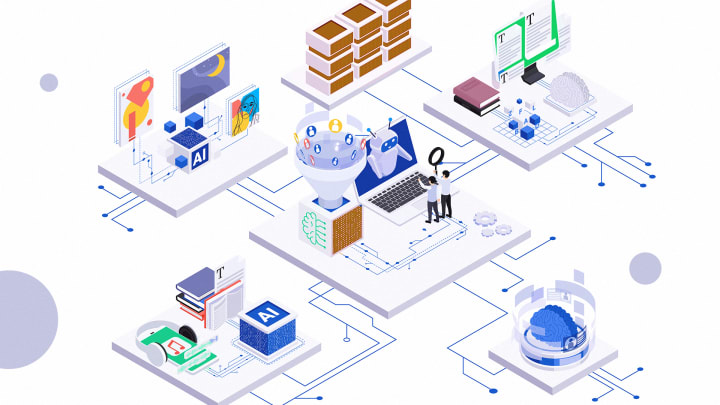
Artificial Intelligence (AI) and Machine Learning (ML)
In 2025, AI and Machine Learning will continue to lead technological transformation. Let's dig deep into how AI and ML is changing the game:
Predictive Analytics: Imagine being able to predict what your customers will do next, how efficient your operations will be, and what sales trends will emerge. In 2025, AI-powered analytics will make all that possible.
Automation: Artificial Intelligence is taking automation to the next level. It is not just about chatbots handling customer support; it's also about using robotic process automation (RPA) to strengthen back-office tasks with minimal human input.
Improved User Experience (UX): AI algorithms are making user interactions more personal. By analyzing how users behave, AI can create interfaces that are personalized to each person. This can excel in engagement and make the experience feel more intuitive.
Future of Quantum Computing
It is expected that 2025 will be the year for quantum computing. Due to its massive popularity, it will revolutionize the software industry. Now, let’s look at some key applications:
Cryptography: Enhanced encryption against cyber threats.
Drug Discovery: Faster molecular structure analysis.
Supply Chain Optimization: Improved logistics efficiency.
This transpiring field has substantial implications for industries handling large-scale computations and automation.
Summary
Looking ahead to the next few years, the latest technology in the software industry will transform our world. Trends like blockchain, biotechnology, AI, and renewable energy will bring both transformative challenges and opportunities. By staying informed and adapting to these emerging trends, you can predict a brighter future and unlock technology's potential for humanity.
Frequently Asked Questions (FAQs)
What role do Big Data and Data Analytics play in the latest software technologies?
Answer: Big Data and data analytics augment decision-making and efficiency in software tech. These will enable real-time processing and predictive analytics. Technologies like Apache Spark and AI integration drive innovation, strengthening software quality and user experience.
What role does 5G technology play in the software industry's latest technologies?
Answer: 5G transforms the latest technology in the software industry with faster data transmission and lower latency, enabling advanced AR, VR, and IoT applications.
How does Blockchain technology affect the software industry?
Answer: Blockchain offers secure, transparent transactions, adopted in finance and supply chain management for its error-proof capabilities.
About the Creator
Boorhan U
Boorhan is an experienced copywriter with nearly 13 years, specializing in sales copy, blogs, and web content. He uses AI tools to enhance efficiency and create tailored, engaging content for clients.
E-Invoicing as a Catalyst for Digital Taxation and Business Efficiency in this Digital Era
Introduction In today’s rapidly evolving digital economy, businesses and governments are increasingly turning to technology to improve efficiency, transparency, and compliance. One of the most significant developments in this transformation is electronic invoicing, commonly known as e-invoicing. E-invoicing refers to the generation, exchange, validation, and storage of invoices in an electronic format between suppliers and buyers, often through government-mandated platforms or standardized systems.
By Bobby Yadavabout 2 hours ago in Education



Comments
There are no comments for this story
Be the first to respond and start the conversation.