
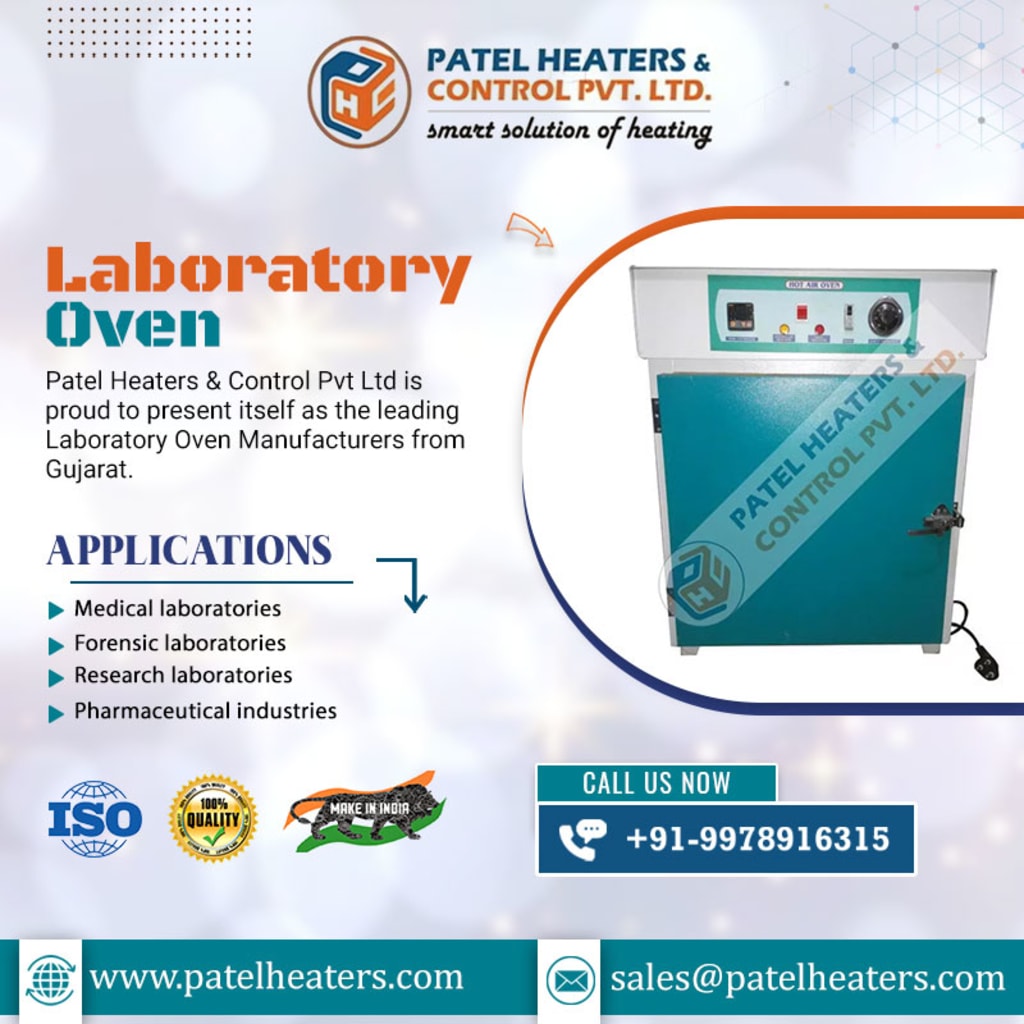
When it comes to scientific research and experimentation, precision and control are paramount. Laboratories utilize various instruments and equipment to ensure accurate results, and one such essential tool is the laboratory oven. In this blog, we will explore the inner workings of a lab oven and delve into its diverse applications
How Does A Laboratory Oven Work?
The working mechanism of lab oven is explained as follows:
Heating Mechanism:
At the heart of a laboratory oven is its heating mechanism. Unlike conventional ovens, lab ovens are designed for precise temperature control and uniform heating. The most common type is the hot air oven, which operates based on the principle of convection.
In a laboratory hot air oven, electric heating elements generate heat, and a fan ensures the even distribution of this heat throughout the chamber. This ensures that all samples, regardless of their position within the oven, experience the same temperature conditions. This uniform heating is crucial for experiments that require consistency and reproducibility.
Temperature Control:
Laboratory hot air ovens come equipped with sophisticated temperature control systems. Researchers can set and maintain specific temperatures with a high degree of accuracy. This level of control is essential for experiments involving sensitive materials, as even slight temperature variations can impact the outcome.
Safety Features:
To ensure the safety of both the experiments and the researchers, laboratory ovens often incorporate safety features such as over-temperature protection and alarms. These mechanisms help prevent accidental overheating and alert users if the oven exceeds preset temperature limits.
Here Are Some Common Uses of Lab Oven
Lab ovens are used for many purposes across industries. The most common uses of these ovens are as follows:
Sterilization:
One of the primary applications of laboratory ovens is the sterilization of equipment and glassware. The controlled heat inside the oven eliminates bacteria, viruses, and other microorganisms, ensuring a sterile environment for experiments. This is particularly crucial in microbiology, where contamination can significantly affect results.
Drying:
Laboratory ovens are invaluable for drying materials and samples. Whether it's removing moisture from chemicals, drying glassware, or preparing samples for further analysis, the precise control of temperature in a lab oven ensures efficient and consistent drying.
Material Testing:
In material science, researchers often use laboratory ovens to subject materials to specific temperature conditions. This allows them to study the effects of heat on different substances, helping in the development and improvement of materials for various applications.
Aging Studies:
Certain experiments require materials to undergo accelerated aging processes. Laboratory ovens facilitate these studies by providing a controlled environment for exposing materials to elevated temperatures over an extended period.
Research and Development:
In research and development across various scientific disciplines, laboratory ovens play a vital role. From testing the stability of pharmaceuticals to determining the thermal properties of polymers, these ovens provide researchers with a versatile tool for a wide range of experiments.
Conclusion
The laboratory hot air oven is an indispensable tool in scientific research, offering precise temperature control and uniform heating. Its applications range from sterilization to material testing, making it a versatile asset in laboratories worldwide. We supply world class lab ovens to all our customers at reasonable prices. Our oven is equipped with a thermostat and proper air circulation vents to guarantee hassle free operations. Our offered product is fabricated in accordance with international industry norms and is quality tested at each production stage.
Patel Heaters and Control Pvt Ltd is one of the trusted manufacturers and suppliers of a wide range of laboratory ovens. If you need assistance with these lab ovens, you can visit our website or contact us now.
About the Creator
Keep reading
More stories from Patel Heaters and writers in Education and other communities.
Air Circulation Oven
The air circulation oven is an essential piece of equipment in industries where heating is needed. This equipment consists of stainless steel rod trays where the material is placed for heating. Their ability to maintain a consistent temperature makes them an ideal tool for the heating process.
By Patel Heaters8 months ago in Education
Common Online Money
Introduction: The Dark Side of Online Earning The internet has created countless opportunities to earn money online. From freelancing and blogging to online teaching and affiliate marketing, many people now make a living from the digital world. However, along with real opportunities, the internet is also full of scams. Every year, millions of people lose money, time, and personal information because of online money-making frauds. Understanding these scams is the first step to staying safe. This article explains the most common online money-making scams and how you can avoid them.
By Bilal Mohammadi2 days ago in Education
Connected Wealth: Why Strong Networks Are Essential to Smarter Financial Planning
Financial planning is often associated with spreadsheets, forecasts, and long-term projections. While these technical elements are essential, they represent only one side of the process. Relationships, shared knowledge, and access to broader communities strengthen a truly effective financial plan. Networks—both personal and professional—play a critical role in shaping smarter, more resilient financial strategies.
By Lee Generous5 days ago in Education



Comments
There are no comments for this story
Be the first to respond and start the conversation.