
Ketamine Clinics: 10 Safety Musts for Depression Care
Learn how ketamine clinics keep therapy safe: screening, monitoring, telehealth rules, side effects, and choosing care for treatment‑resistant depression
Introduction
Ketamine therapy has moved from operating rooms into mental health care. Many people find fast relief from depression, anxiety, PTSD, and pain. Clinics and telehealth options are proliferating. Oversight has lagged. This guide explains the benefits, risks, and rules. It also helps you choose safe, high‑quality ketamine care.
Below, you’ll learn how ketamine works, what types exist, and which safety steps matter most. We share screening tips, clinic checks, and policy trends. If you follow mental health news, explore World Mental Health Day. Informed choices keep care accessible, effective, and responsible. Use this article to talk with your clinician and to compare programs.
What Ketamine Therapy Is and Why It’s Growing
Ketamine is a dissociative anesthetic and a Schedule III controlled medicine. At lower doses, it can quickly lift mood and reduce suicidal thoughts. Many people feel better within hours. That speed attracts patients who have tried standard treatments. It also drives a wave of clinics and at‑home services.
Growth comes from need and awareness. The pandemic exposed gaps in mental health care. Investors backed new networks. Telehealth lowered barriers. People share stories online, creating demand and debate. For a broader view of youth trends, see our guide to social media and Gen Z mental health. All of this set the stage for ketamine’s rapid rise.
How Ketamine Works in the Brain
Ketamine blocks NMDA receptors, which briefly boosts glutamate and activates AMPA receptors. That chain triggers brain‑derived neurotrophic factor, aiding new synapse growth. Many refer to this burst as “neuroplasticity.” It may help the brain escape stuck patterns. In depression, that can mean relief from hopelessness, rumination, and the heavy freeze of anhedonia.
Other effects also matter. Ketamine can reduce inflammation, interrupt fear loops, and increase cognitive flexibility. Some programs pair dosing with talk therapy or coaching to reinforce new habits. Integration sessions help you apply insights to daily life. That plan can turn a short therapeutic window into longer, steadier gains overall.
Esketamine vs. Off‑Label Ketamine
Esketamine, sold as Spravato, is the only FDA‑approved ketamine‑related option for depression. It is a nasal spray used in a clinic under a Risk Evaluation and Mitigation Strategy. Staff monitor blood pressure and dissociation for two hours. Some insurers cover it for treatment‑resistant depression and suicidal thoughts, under strict criteria.
Racemic ketamine, often infused intravenously or given intramuscularly, is used off‑label. Many clinics also use sublingual tablets or lozenges. Evidence shows rapid relief for many people, though maintenance varies. Because it is off‑label, protocols differ widely, and most costs are out of pocket. Quality depends on training and monitoring standards.
Compounded and At‑Home Options
Some clinics use compounded ketamine from specialty pharmacies. These products are not FDA‑approved, so quality depends on the pharmacy’s controls and testing. Responsible prescribers request certificates of analysis, discuss storage, and warn about diversion. Patients should ask how dosing is verified and how the clinic consistently tracks outcomes over time.
At‑home protocols can extend access but raise risks. Without on-site staff, errors, fainting, and drug interactions are more likely. Best practice includes live video supervision, a sober support person, blood pressure checks, and a clear plan for emergencies. Integration matters too; see tips on building daily mental health habits today.
Telehealth, Mail‑Order, and Evolving Rules
Telehealth fueled ketamine’s spread, especially during pandemic flexibilities for controlled‑substance prescribing. Ketamine regulations are changing, so clinics must verify identity, review records, and check state programs for controlled drugs. Effective programs coordinate with local providers and provide clear educational information. Telehealth can widen access while keeping safety strong, if done carefully.
Some programs ship compounded ketamine by mail. Trackable delivery, secure storage, and counted doses reduce diversion. Education must explain interactions, timing, and disposal. Tech adds convenience, but it needs guardrails. For a broader look at digital care, see AI therapy: blessing or menace. Thoughtful design protects patients and communities alike.
Safety, Side Effects, and Monitoring
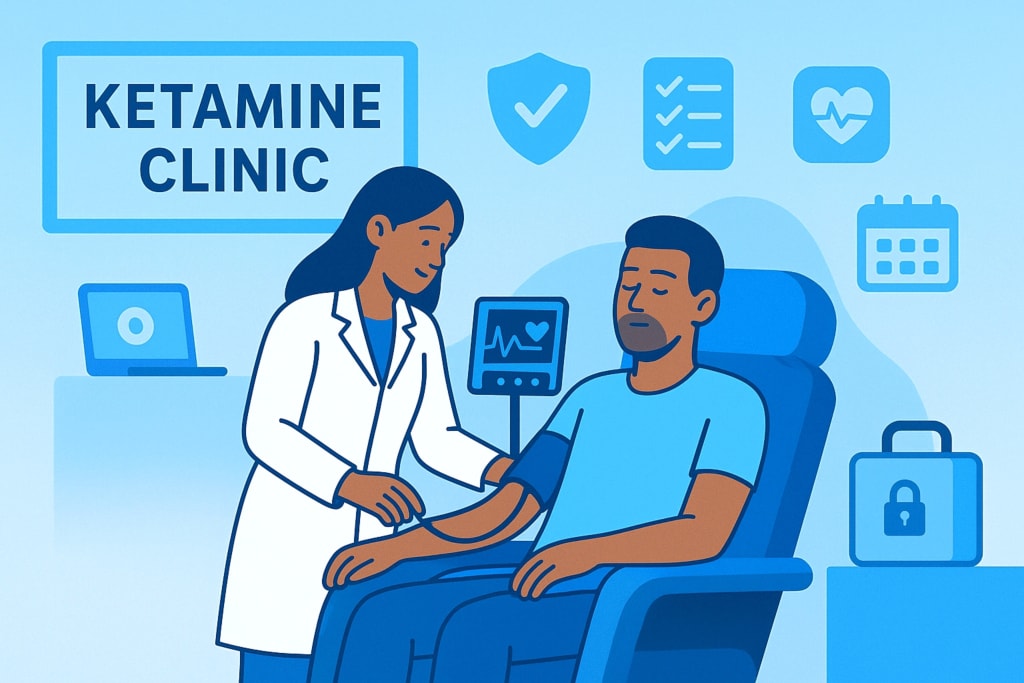
Common effects include dissociation, altered perception, dizziness, nausea, and short spikes in blood pressure and heart rate. You should not drive until the next day. Avoid alcohol, opioids, and sedatives. A calm setting helps. Skilled teams coach breathing, adjust doses, and support you through the experience with steady, reassuring care.
Serious events are rare with proper screening and monitoring. Repeated high‑frequency exposure can harm the bladder, causing ketamine‑induced cystitis. Some people show liver enzyme changes. Those risks call for measured schedules, not endless boosters. Clinics should track vitals, maintain emergency equipment, and document adverse events to improve safety across programs.
Who Benefits and Who Should Avoid It
Ketamine is most studied for treatment‑resistant depression and depression with suicidal thoughts. Evidence also supports some use in PTSD, certain anxiety disorders, obsessive‑compulsive symptoms, and chronic pain. It is usually considered after standard care. Measuring progress with validated scales helps guide dosing, maintenance intervals, and decisions to pause or stop.
Some people should avoid ketamine or use it only with extra caution. Risks include uncontrolled hypertension, serious heart disease, aneurysms, active psychosis, untreated mania, severe breathing problems, pregnancy, and breastfeeding. Substance use disorders need support structures. Sedatives can add risk and may blunt the response. Bipolar patients need a mood stabilizer.
Ethics, Marketing, and Public Safety
Honest marketing matters. No clinic should promise a cure or guarantee results. Informed consent should explain benefits, limits, alternatives, and costs in plain language. Pricing should be transparent. Beware of pressure sales, minimal screening, and aggressive upselling. Ethical care builds trust and keeps patients engaged long enough to benefit over time.
Public safety also matters. Clinics should prevent diversion with counted doses and secure storage. They should report adverse events responsibly and coordinate with emergency services. Community education helps reduce stigma and panic. For practical self‑care, explore stress in school and student mental health routines. Empowered people use care wisely together.
How to Choose a Reputable Clinic
Start with credentials. Look for physicians trained in anesthesia, psychiatry, pain medicine, or emergency care, plus licensed therapists and well‑trained nurses. Ask about case volume, complication rates, and Advanced Cardiac Life Support. Confirm DEA registration and emergency equipment. A capable team anticipates problems and responds quickly if something goes wrong.
Then review protocols. Good clinics do full assessments, verify diagnoses, and screen for risks. They coordinate with your existing providers. They track progress with validated scales and adjust your plan. Integration support matters too. See mental health tips for students for simple habits that help your brain learn new patterns.
Research Gaps and What Comes Next
Key questions remain. How long do benefits last, and for whom? What is the best maintenance schedule that limits exposure but preserves relief? Which biomarkers predict response? How does ketamine compare with ECT, TMS, and new agents? Trials pairing ketamine with psychotherapy may stretch gains and improve real‑world function outcomes.
Policy is evolving, too. Expect clearer telemedicine rules, stronger compounding standards, and better outcome tracking. Coverage may expand when clinics meet consistent benchmarks. Pairing treatment with lifestyle supports can help cognition and memory. For simple brain‑friendly habits, see our guide to spatial memory and healthy routines. Standards move care forward.
Conclusion
Ketamine therapy is not a miracle or a menace. It is a powerful tool that can open a window for change. With smart screening, careful dosing, and good integration, many people feel real relief. With strong standards and transparency, communities can expand access while keeping patients safe and supported everywhere.
If you are exploring ketamine for depression, start with evidence and safety, not hype. Talk with your clinician, ask hard questions, and choose a team that measures outcomes. Your story matters. With the right support, small steps add up. Care should feel clear, respectful, and shaped around your goals always.
ketamine clinics, ketamine therapy, esketamine (Spravato), off‑label ketamine, treatment‑resistant depression, ketamine safety and monitoring, telehealth ketamine prescribing, at‑home ketamine protocols, compounded ketamine quality, choosing a ketamine clinic, ketamine side effects and risks, ketamine integration therapy, REMS esketamine guidelines, ketamine‑induced cystitis prevention, ketamine policy and oversight
About the Creator
Keep reading
More stories from Sabz Ali Khan and writers in Education and other communities.
Spatial Memory Decline: 12 Ways To Keep Your Brain’s GPS
By Mr Ali Picture a quiet compass inside your head. It learns landmarks, stores routes, and helps you get around without thinking. As years pass, that compass can wobble. Yet, a special group of older adults, often referred to as super-agers, maintains their sense of direction and memory strong. Knowing why helps you protect your own “inner GPS”.
By Sabz Ali Khan5 months ago in Education
Leveraging Prediction Markets to Enhance Strategic Planning
In today’s competitive business environment, making informed strategic decisions is crucial for long-term success. Prediction markets have emerged as a valuable tool for improving strategic planning by aggregating insights from diverse participants. These markets enable organizations to forecast outcomes through collective intelligence, providing a more accurate understanding of potential scenarios. By integrating prediction market data into planning processes, companies can anticipate risks, identify opportunities, and make better-informed decisions that support sustainable growth.
By Anthony Qi3 days ago in Education
How Small Organizations Can Use Data Analytics to Boost Their Business
Big or small, businesses of all sizes today rely on insightful information to make decisions. Especially in this data-driven economy, those who fail to adopt a data-driven culture may risk falling behind their competitors who embrace and are updated with data analytics trends. Though large corporations already have sufficient analytics systems, they are no longer limited to huge enterprises. Data analytics for small businesses is gaining quite traction, powering them with unprecedented insights to take their business forward.
By Pradip Mohapatra5 days ago in Education




Comments
There are no comments for this story
Be the first to respond and start the conversation.