
Java: A Timeless Programming Language That Powers the World
Java programming language, Java features, Java benefits, why learn Java, Java applications, Java developer jobs, Java vs Kotlin, Java for beginners.


Java is more than just a programming language; it's a story of innovation, versatility, and resilience. From its humble beginnings to becoming one of the most widely used programming languages in the world, Java has shaped the digital world we live in today. Let’s dive into its journey, features, and why it remains a favorite among developers and businesses alike.
The Birth of Java
Java was born in 1995, created by James Gosling and his team at Sun Microsystems (later acquired by Oracle). Initially designed for interactive television, Java quickly found its true calling in web development, mobile applications, and enterprise systems. Its motto, "Write Once, Run Anywhere" (WORA), captured the imagination of developers everywhere, promising cross-platform compatibility.
Imagine a world where the same code could run seamlessly on a PC, a Mac, or even a mobile device. This dream became a reality with Java. It was a game-changer, breaking barriers and making technology accessible across platforms.
Core Features That Make Java Special
Java’s popularity isn’t just luck. Its thoughtful design and robust features have earned it a loyal following. Let’s explore what makes Java stand out:
1. Platform Independence
Java’s bytecode, generated after compilation, can run on any device equipped with the Java Virtual Machine (JVM). This flexibility has been instrumental in its success, allowing developers to focus on building applications without worrying about compatibility.
2. Object-Oriented Programming (OOP)
Java embraces OOP principles, making it easier to organize code into reusable modules. This approach fosters cleaner, more manageable, and scalable applications.
3. Rich API
Java’s extensive Application Programming Interface (API) includes libraries for networking, data structures, concurrency, and more. These tools empower developers to build powerful applications efficiently.
4. Security
In an age where cyber threats loom large, Java prioritizes security. With features like bytecode verification and a robust Security Manager, it’s designed to minimize vulnerabilities.
5. Community Support
Java’s global developer community is one of its greatest assets. Whether you’re a beginner or an expert, you’ll find tutorials, forums, and resources to guide you every step of the way.
Java in the Real World
Java’s impact spans industries and technologies. Here are some areas where Java has made its mark:
1. Enterprise Applications
Java dominates the enterprise world. With frameworks like Spring and Hibernate, it powers the back-end systems of banks, e-commerce platforms, and multinational corporations. Its reliability and scalability make it a top choice for mission-critical applications.
2. Android Development
Did you know that Java is the backbone of Android development? Before Kotlin entered the scene, Java was the primary language for creating mobile apps. Even today, millions of apps rely on Java, making it a cornerstone of the mobile ecosystem.
3. Web Applications
Java frameworks like Spring Boot, Struts, and JavaServer Faces (JSF) have made it easier to develop secure and scalable web applications. Companies like LinkedIn, Spotify, and Netflix have harnessed the power of Java to deliver seamless user experiences.
4. Big Data and Machine Learning
In the age of data, Java has adapted beautifully. With tools like Apache Hadoop, Spark, and Weka, Java plays a significant role in processing large datasets and implementing machine learning models.
Why Learn Java in 2025 and Beyond?
As technology evolves, you might wonder: “Is Java still worth learning?” The answer is a resounding yes! Here’s why:
1. Job Opportunities
With Java’s widespread adoption, Java developers are always in demand. Whether you’re aiming for a career in web development, mobile apps, or enterprise systems, Java skills will open doors.
2. Stability
Unlike trend-driven languages, Java has stood the test of time. It’s consistently updated with new features while maintaining backward compatibility, ensuring its relevance in the tech world.
3. Versatility
From IoT devices to cloud computing, Java’s versatility ensures that it remains integral to cutting-edge technologies.
4. Thriving Community
Learning Java means joining a community of millions of developers who are ready to support, mentor, and share their knowledge.
The Emotional Connection to Java
Java is more than a language; it’s a bridge that connects ideas with reality. For developers, it’s a trusted companion that empowers them to create, innovate, and solve real-world problems. Every time a Java application runs, it’s a testament to the hard work, creativity, and passion of countless individuals.
Imagine a young programmer writing their first “Hello, World!” program in Java, full of dreams and aspirations. Years later, they might lead a team building software that impacts millions. Java isn’t just code; it’s a medium through which dreams come true.
Final Thoughts
Java’s legacy is a testament to its design, adaptability, and enduring appeal. Whether you’re a seasoned developer or just starting your journey, Java has something to offer. It’s not just a tool; it’s a gateway to opportunities, creativity, and innovation.
As we move into a future shaped by technology, Java will undoubtedly continue to play a vital role. Its story is far from over, and you could be a part of the next chapter.
So, why wait? Dive into Java, and let it guide you toward a world of endless possibilities. 🌟
About the Creator
EduScript
"Hey, I’m EduScript! 🎓✨ Your learning buddy for school, college, and exam tips! 📚 Let’s make studying exciting, easy, and rewarding. 🚀 Join the journey to success—stay tuned for fun updates! 💡🔥"
Your phones camera isn't as good as you think
When the Visualphone VP210 hit the market in 1999, it advertised a never-before-seen feature: a camera. With only 0.11 megapixels and storage for 20 photos, the Visualphone is a relic compared to modern devices sporting three distinct cameras, each with up to 100 times more resolution. But while this technology has improved dramatically in the 21st century, engineers are rapidly approaching a hard limit on phone camera quality. To understand this limit, we first need to know how phone cameras work.
By Munesh Yadavabout 8 hours ago in Education
Mastering X-Bar Theory in Grammar in 10 Minutes
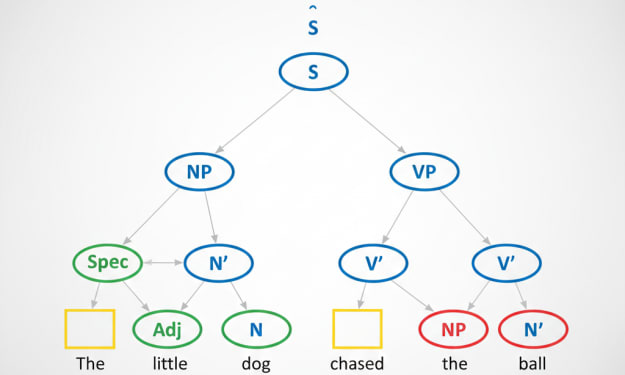
Grammar can often feel like a maze of confusing rules, especially when we dive into syntax — the study of sentence structure. One of the foundational tools in modern linguistics is X-Bar Theory, a framework that helps explain how words and phrases combine to form sentences. While it might sound intimidating, understanding X-Bar Theory can become straightforward if approached step by step.
By Games Mode Onabout 16 hours ago in Education
Miss Persephone's Manual to a Seemingly Ordinary Life
Miss Persephone was found at the dining table, her blue eyes swollen, her tears arriving and retreating like the tides of the ocean. Earlier that day, her family had visited her in the retirement home where she had lived for eight years. It was her eightieth birthday.
By Imola Tóth4 days ago in Fiction



Comments
There are no comments for this story
Be the first to respond and start the conversation.