
Is Physics Complete or Forever Unfinished? Exploring the Future of Fundamental Science
Is physics complete, or is it forever unfinished? It is a bold and fascinating question. After centuries of discovery—from the laws of motion to quantum mechanics and relativity—physics has explained an extraordinary range of natural phenomena. We can predict planetary orbits, manipulate subatomic particles, and measure the age of the universe. Yet, despite its stunning success, physics still faces profound unanswered questions. So, is physics nearing completion? Or is it an endless journey of discovery we explore the current state of physics, its greatest unsolved mysteries, and whether science will ever reach a final theory of everything.

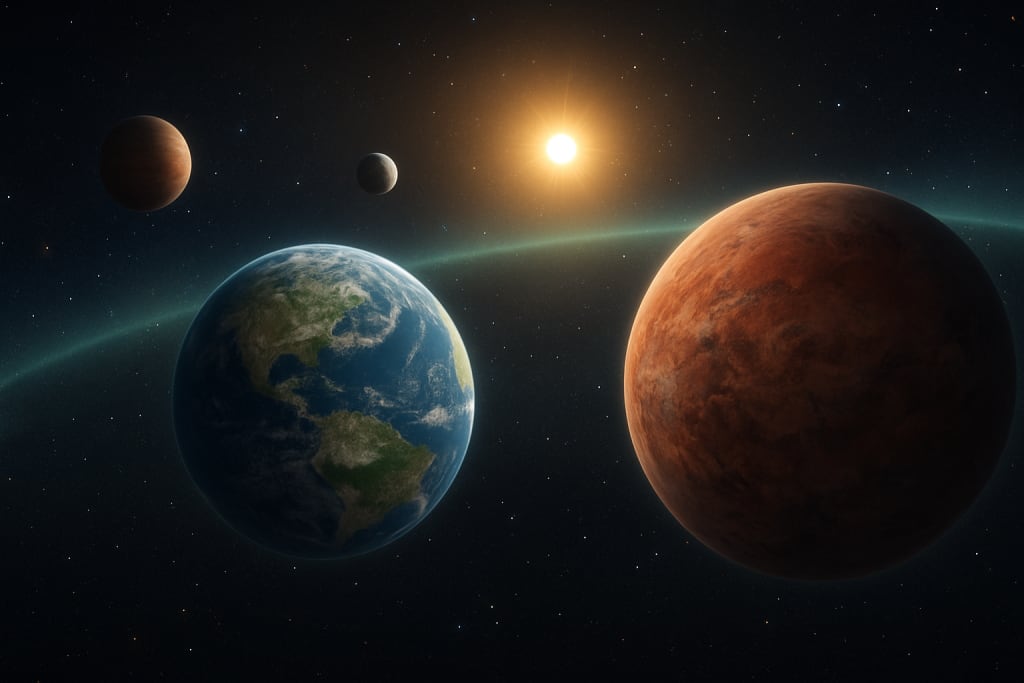
The Illusion of Completion in the Past
This is not the first time scientists have believed physics was nearly complete.
At the end of the 19th century, many physicists thought the major discoveries had already been made. Classical mechanics, electromagnetism, and thermodynamics appeared to explain nearly everything.
Then two revolutions changed everything:
• Quantum mechanics, which revealed the strange behavior of atoms and subatomic particles.
• Relativity, introduced by Albert Einstein, which reshaped our understanding of space, time, and gravity.
These breakthroughs demonstrated an important lesson:
Every time physics seems complete, deeper layers of reality emerge.
________________________________________
What Physics Has Successfully Explained
Before discussing what remains unknown, it’s important to appreciate how much physics has accomplished.
Modern physics explains:
• The motion of planets and galaxies
• The behavior of light and electricity
• The structure of atoms
• The origin of chemical elements
• The expansion of the universe
• The behavior of black holes
The Standard Model of particle physics successfully describes fundamental particles and three of the four known forces:
• Electromagnetism
• The strong nuclear force
• The weak nuclear force
Meanwhile, general relativity explains gravity as the curvature of spacetime.
These theories are extraordinarily precise. Experiments confirm their predictions to astonishing accuracy.
So in one sense, physics is incredibly mature.
But maturity does not mean completion.
________________________________________
The Greatest Unsolved Problems in Physics
Despite its success, physics remains incomplete. Several major mysteries challenge our understanding.
1. The Unification of Gravity and Quantum Mechanics
General relativity describes gravity on large scales.
Quantum mechanics describes particles on tiny scales.
But these two theories are mathematically incompatible.
Physicists have been searching for a theory of quantum gravity that unifies them. Leading approaches include:
• String theory
• Loop quantum gravity
• Emergent spacetime models
Until gravity is fully reconciled with quantum mechanics, physics cannot be considered complete.
________________________________________
2. Dark Matter
Observations of galaxies reveal that visible matter accounts for only about 15% of the universe’s mass. The remaining mass appears to be invisible and is called dark matter.
We know dark matter exists because of its gravitational effects. But we do not know what it is made of.
Is it:
• A new type of particle?
• A modification of gravity?
• Something entirely unexpected?
Until dark matter is identified, our understanding of the universe is incomplete.
________________________________________
3. Dark Energy
Even more mysterious is dark energy—the force driving the accelerated expansion of the universe.
Dark energy appears to make up about 70% of the universe’s total energy content.
We do not know:
• What it is
• Why it exists
• Why its strength has the value it does
This is one of the biggest unsolved problems in cosmology.
________________________________________
4. The Nature of Consciousness
Physics explains matter and energy with extraordinary precision. But how does conscious experience arise from physical processes?
Neuroscience studies the brain.
Physics describes particles.
Yet subjective awareness—the experience of being—is still not fully explained.
Some argue that understanding consciousness may require new physics.
________________________________________
5. The Origin of Physical Laws
Even if we discover a “Theory of Everything,” deeper questions may remain:
• Why do these laws exist?
• Why do constants have their specific values?
• Why is mathematics so effective in describing nature?
A final theory may describe reality—but it might not explain why that theory exists.
________________________________________
The Dream of a Theory of Everything
Physicists often speak of a “Theory of Everything” (TOE)—a single, unified framework explaining all fundamental forces and particles.
The hope is that such a theory would:
• Unify gravity with quantum mechanics
• Explain particle properties
• Reveal deeper symmetry in nature
If found, would this mean physics is complete?
Not necessarily.
Even a TOE would likely raise new questions:
• Why this theory and not another?
• Are there deeper layers beneath it?
• Does it explain the universe’s origin?
Completion may always recede as we move closer.
________________________________________
The Expanding Frontier of Knowledge
Science progresses by answering questions—but each answer generates new ones.
For example:
• Discovering atoms led to questions about subatomic particles.
• Discovering quarks led to questions about deeper structure.
• Discovering cosmic expansion led to questions about dark energy.
Knowledge does not close the frontier—it expands it.
As we learn more, we uncover more mysteries.
________________________________________
Is There a Fundamental Limit?
Some physicists suggest there may be fundamental limits to knowledge.
Examples include:
• The uncertainty principle in quantum mechanics
• The cosmic horizon limiting observable regions
• Computational limits imposed by information theory
If such limits are intrinsic to nature, then physics may always remain partially incomplete.
Not because of failure—but because reality itself contains boundaries to what can be known.
________________________________________
Physics as an Endless Process
Perhaps physics is not a fixed body of knowledge but an evolving process.
Scientific theories are models of reality. They are refined, expanded, and sometimes replaced.
Newtonian mechanics was not wrong—it was incomplete. It remains accurate within certain limits.
Similarly, our current theories may be approximations of deeper truths.
Physics may not end in a final answer. Instead, it may continuously approach deeper understanding without reaching an ultimate conclusion.
________________________________________
The Role of Technology
Advances in physics depend heavily on technology:
• Particle accelerators
• Space telescopes
• Gravitational wave detectors
• Quantum computing devices
Each new tool reveals phenomena previously hidden.
Future technologies may uncover:
• New particles
• Extra dimensions
• Evidence of quantum gravity
• Entirely unexpected phenomena
Completion depends partly on our ability to observe.
As long as technology advances, new discoveries remain possible.
________________________________________
Philosophical Perspectives on Scientific Completion
Philosophers of science debate whether a final theory is possible.
Some argue that science converges toward truth and will eventually discover a final, unified framework.
Others suggest that scientific knowledge is always provisional—subject to revision.
If reality is infinitely complex, physics may never fully capture it.
If reality has a finite structure, perhaps a final theory is possible.
We simply do not yet know.
________________________________________
Historical Lessons
History suggests caution when declaring physics complete.
In 1900, Lord Kelvin famously remarked that only “two small clouds” remained in the sky of physics.
Those “small clouds” became quantum mechanics and relativity—the two greatest revolutions in modern science.
This lesson reminds us:
The biggest breakthroughs often emerge from small anomalies.
________________________________________
Is Completion Even the Goal?
Perhaps asking whether physics is complete misunderstands science.
The goal of physics is not finality—it is understanding.
The process of discovery drives innovation, technology, and philosophical insight.
If physics were suddenly complete, would exploration end?
Unlikely.
Even if fundamental laws were known, applying them to complex systems—biology, climate, consciousness—would remain an immense challenge.
Physics influences every field of knowledge. Its journey may be inseparable from human curiosity itself.
________________________________________
A Balanced Conclusion
So, is physics complete or forever unfinished?
Physics is remarkably advanced. It explains much of the observable universe with extraordinary precision.
But it remains incomplete in crucial areas:
• Quantum gravity
• Dark matter
• Dark energy
• Consciousness
• The origin of physical laws
Whether physics will one day reach a final theory remains uncertain.
It may discover a unified framework describing all fundamental interactions.
Or it may continue evolving indefinitely, with each answer revealing deeper questions.
What seems clear is this:
Physics is not static.
It is a living, expanding exploration of reality.
As long as mysteries remain—and they certainly do—physics will continue pushing the boundaries of understanding.
________________________________________
Final Thoughts
The question “Is physics complete?” reflects a deeper human desire for closure.
But the history of science suggests that reality is richer and more layered than we expect.
Each generation of physicists uncovers new dimensions of the universe.
Perhaps physics is not meant to be finished.
Perhaps its unfinished nature is precisely what makes it powerful.
The universe continues to surprise us.
And as long as curiosity exists, physics will remain an open, evolving frontier—forever unfinished, yet endlessly illuminating.
About the Creator
Keep reading
More stories from shahkar jalal and writers in Education and other communities.
Why Does Anything Exist at All? Exploring the Ultimate Mystery of Reality
Why does anything exist at all? Why is there something rather than nothing? In this in-depth, SEO-optimized article, we explore whether physics can fully explain existence, what modern cosmology reveals about the origin of the universe, the limits of scientific explanation, and whether the ultimate answer may lie beyond physics itself.
By shahkar jalalabout 5 hours ago in Education
Best ChatGPT Alternatives in 2026
AI chatbots have become essential tools for productivity, creativity, and online interaction. While ChatGPT remains one of the most popular AI models, 2026 introduces a variety of ChatGPT alternatives that offer unique features, specialized capabilities, and advanced conversational AI experiences.
By Micheal Turnerabout 20 hours ago in Education
Will Your Medical Billing and Coding School Actually Prepare You for the CPC or CBCS Exam?
Many students enroll in a medical billing and coding schools with one clear goal “to become eligible for and pass the CPC or CBCS certification exam”. But does every program actually prepare you for those exams, or will you need separate, costly exam prep later? Not all schools structure their curriculum around these exam blueprints. Some heavily focus on general theory instead of in-depth training on critical areas.
By Meaghan Howe2 days ago in Education



Comments
There are no comments for this story
Be the first to respond and start the conversation.