
Iran and Israel: A tense geopolitical standoff
exploring the roots, risks, and regional implications of a longstanding rivalry.
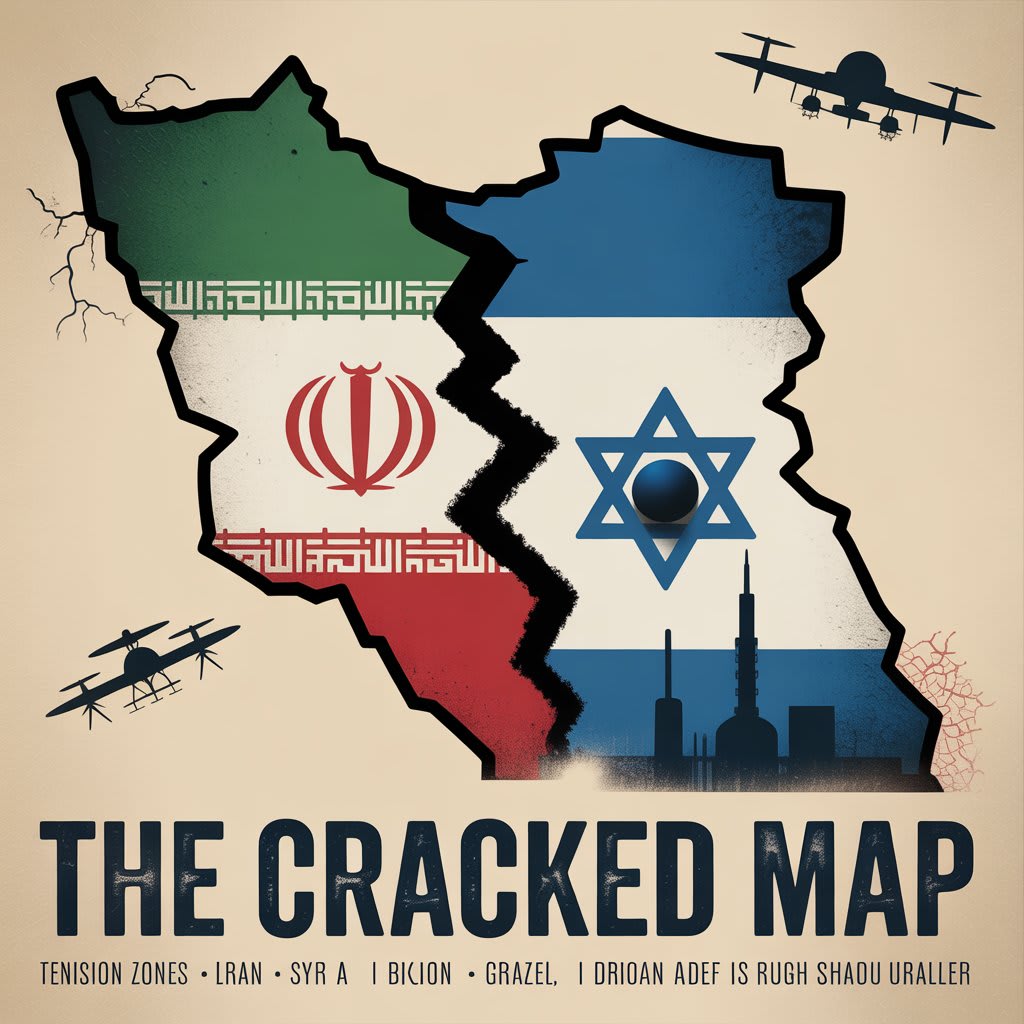
The Middle East has long been a region marked by complex alliances, ideological divides, and recurring conflict. Among the most volatile and consequential rivalries is the ongoing standoff between Iran and Israel. While not an overt war in the traditional sense, this conflict is deeply entrenched, multifaceted, and increasingly dangerous—marked by ideological enmity, proxy confrontations, cyber warfare, and political maneuvering.
Understanding this tense geopolitical standoff requires a deep dive into its historical roots, the motivations driving both nations, and the far-reaching implications for the region and beyond.
⸻
Historical Roots: From Allies to Adversaries
The Iran-Israel relationship wasn’t always defined by hostility. In fact, during the reign of the Shah of Iran, Mohammad Reza Pahlavi, Iran and Israel maintained relatively close ties. Both countries viewed Arab nationalism, particularly under Egypt’s Gamal Abdel Nasser, as a threat. Israel supplied Iran with weapons and training, and the two cooperated economically and militarily in the 1960s and 1970s.
This dynamic changed dramatically after the 1979 Islamic Revolution. The newly established Islamic Republic of Iran, under Ayatollah Ruhollah Khomeini, adopted a vehemently anti-Israel stance. Israel was labeled as a “Zionist regime” and considered an illegitimate state occupying Muslim lands. This ideological pivot transformed Israel from a strategic partner into a sworn enemy.
From that point forward, Iran’s foreign policy began to center around opposition to Israel’s existence, while Israel increasingly viewed Iran as its most serious long-term threat.
⸻
The Strategic and Ideological Divide
At the heart of the Iran-Israel rivalry is a profound ideological divide. Iran’s theocratic leadership, particularly the Supreme Leader and the Islamic Revolutionary Guard Corps (IRGC), sees the destruction of Israel as both a religious and political goal. Iran has consistently supported groups that oppose Israel’s existence, including Hezbollah in Lebanon, Hamas and Islamic Jihad in Gaza, and various Shiite militias across Iraq and Syria.
Israel, in turn, sees Iran’s actions as existential threats. The prospect of a nuclear-armed Iran, combined with its support for regional proxies and ballistic missile development, has placed Tehran at the center of Israeli national security concerns. Israel has launched hundreds of airstrikes in Syria over the past decade, targeting Iranian weapons shipments and military infrastructure.
This strategic chess game is not confined to conventional warfare. It spans across multiple arenas—proxy battles, cyber warfare, intelligence operations, diplomatic lobbying, and economic sanctions. In recent years, cyberattacks attributed to both nations have targeted critical infrastructure, nuclear facilities, and private companies, escalating tensions beyond traditional battlegrounds.
⸻
The Nuclear Flashpoint
One of the most critical and dangerous elements of the Iran-Israel conflict is Iran’s nuclear program. Israel has repeatedly stated that it will never allow Iran to acquire nuclear weapons. In contrast, Iran insists its nuclear activities are for peaceful purposes, despite international skepticism.
The 2015 Joint Comprehensive Plan of Action (JCPOA), brokered between Iran and major world powers, aimed to limit Iran’s nuclear enrichment in exchange for sanctions relief. Israel was a vocal opponent of the deal, arguing it merely delayed Iran’s nuclear ambitions while enriching its economy and regional influence. The U.S. withdrawal from the deal in 2018 under President Donald Trump, followed by renewed sanctions, reignited Iranian nuclear activity and raised fears of a new confrontation.
As of 2025, diplomatic efforts to revive the JCPOA or formulate a new agreement remain stalled. Iran’s uranium enrichment has reached near-weapons-grade levels, and its breakout time—the time required to produce enough fissile material for a bomb—has significantly shortened. This has led to open threats from Israeli officials about potential military strikes on Iranian nuclear facilities, increasing the likelihood of direct conflict.
⸻
Proxy Warfare and Regional Fallout
Much of the Iran-Israel conflict unfolds through third-party actors and territories. Hezbollah, Iran’s most formidable proxy, possesses tens of thousands of rockets aimed at Israel from southern Lebanon. Hamas and Islamic Jihad, heavily backed by Iranian funds and training, engage in intermittent warfare with Israel from Gaza.
The Syrian Civil War became a battleground for Iran’s entrenchment and Israel’s preventative strikes. Iranian efforts to establish a permanent military presence in Syria have been repeatedly disrupted by Israeli airstrikes, many of which go unclaimed but are widely acknowledged.
This proxy warfare has broader consequences. It destabilizes fragile states, drags in global powers like the United States and Russia, and increases civilian suffering. It also threatens to ignite wider regional wars, especially if incidents escalate beyond the usual tit-for-tat attacks.
⸻
Diplomatic and Strategic Calculations
Despite the hostility, both Iran and Israel are aware of the catastrophic costs of full-scale war. Diplomatically, Israel has made significant gains through normalization agreements with Arab states under the Abraham Accords, reducing Iran’s influence and isolating it further. Countries like the UAE, Bahrain, and Morocco have openly embraced ties with Israel, in part due to shared concerns about Iran’s regional ambitions.
Iran, meanwhile, has deepened ties with non-Western powers like China and Russia. These relationships provide economic and military support in the face of Western sanctions and serve as a counterweight to Israeli-American alliances.
This global realignment adds new complexity to the rivalry. Any misstep—be it an Israeli strike on Iranian soil or an IRGC operation against Israeli interests abroad—could trigger broader international involvement.
⸻
The Path Forward: De-escalation or Detonation?
The Iran-Israel standoff remains one of the most dangerous flashpoints in the Middle East. While both nations prefer indirect confrontation, the risk of escalation is ever-present—particularly around Iran’s nuclear activities, proxy attacks, or retaliatory assassinations (such as the high-profile killings of Iranian nuclear scientists or IRGC commanders).
De-escalation would require multilateral diplomacy, regional dialogue, and meaningful steps toward arms control. However, entrenched ideologies, domestic political pressures, and the strategic advantages of maintaining a state of controlled hostility make such progress elusive.
⸻
Conclusion
The Iran-Israel conflict is not just a bilateral enmity—it is a geopolitical fault line that affects the entire Middle East and increasingly draws in global powers. As both nations continue to vie for influence and security in an unstable region, the stakes remain dangerously high. Without deliberate diplomatic efforts and a willingness to compromise, the standoff could turn from a simmering conflict into a full-scale regional catastrophe.
About the Creator
Keep reading
More stories from Mamoon Munaeem and writers in Education and other communities.
How Creative People Stay Inspired: 7 Daily Rituals from History’s Most Iconic Artists
Introduction Inspiration often seems elusive — a fleeting spark that arrives when you least expect it and disappears just as quickly. Yet, for some of history’s most celebrated creatives, inspiration wasn’t something they waited for passively. It was something they actively cultivated through intentional daily rituals.
By Mamoon Munaeem7 months ago in Education
Key Qualities to Look for in a Financial Advisor for Your Retirement Goals
Choosing a financial advisor is one of the most important decisions you will make as you prepare for retirement. The right advisor can help you create a strong financial plan, protect your savings, and guide you through complex decisions about investments, taxes, and income distribution. Since retirement planning involves long-term commitments, it is essential to work with someone who understands your goals and values. Knowing what to look for in a financial advisor ensures you choose a professional who can support your financial security for years to come.
By Keith D'Agostino2 days ago in Education



Comments
There are no comments for this story
Be the first to respond and start the conversation.