
IP Tokenization: Managing, Licensing, and Trading Intellectual Property On-Chain
Blockchain Infrastructure Enables Secure Ownership, Programmable Licensing, and Transparent Exchange of Intellectual Property Assets

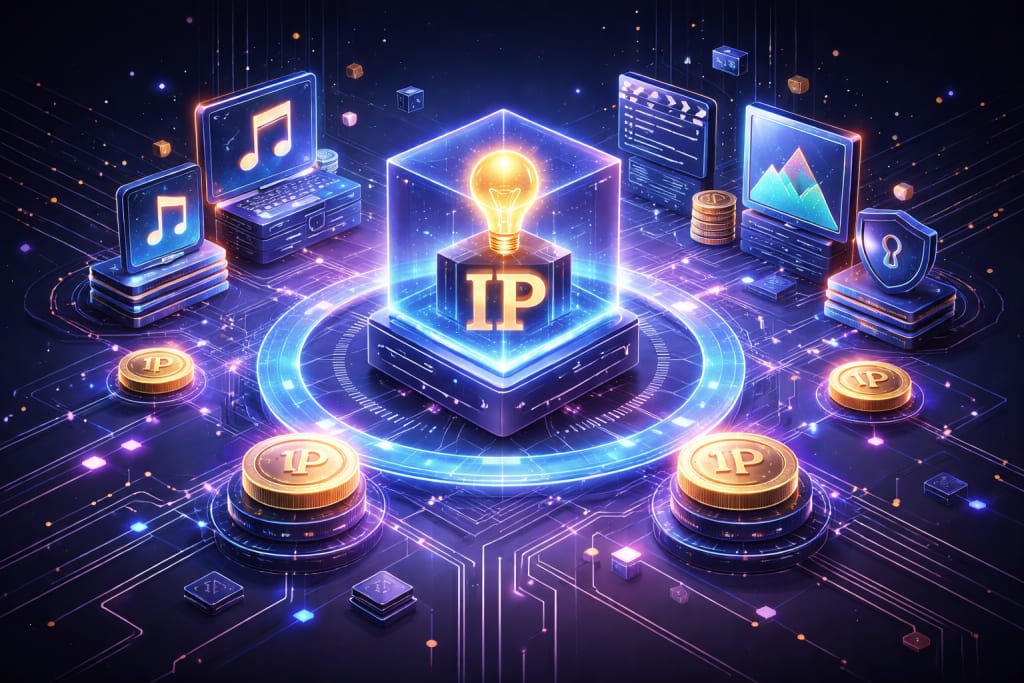
Intellectual property has become one of the most critical asset classes in the global digital economy. From software code and pharmaceutical patents to music catalogs and brand trademarks, IP underpins innovation, competitiveness, and long-term value creation. Yet despite its importance, intellectual property remains difficult to manage, monetize, and trade efficiently. Ownership records are fragmented across jurisdictions, licensing agreements rely on manual processes, enforcement is costly, and access to IP-based investment opportunities is limited.
IP tokenization introduces a blockchain-based approach to representing, managing, licensing, and exchanging intellectual property rights. By encoding IP ownership and usage rules into smart contracts, tokenization enables transparent governance, automated licensing, programmable royalties, and fractional participation. This article examines how IP tokenization works, how intellectual property can be managed and licensed on-chain, and how tokenized IP assets can be traded within decentralized digital markets.
Intellectual Property in the Modern Economy
Intellectual property refers to legally protected creations of the mind, granting exclusive rights to creators and owners. These rights are designed to incentivize innovation while enabling controlled commercialization.
Major Forms of Intellectual Property
- Patents, which protect inventions, processes, and technological innovations
- Copyrights, covering creative works such as software, literature, music, films, and digital content
- Trademarks, safeguarding brand identifiers including names, logos, and symbols
- Trade secrets, protecting confidential information, formulas, and business processes
While IP assets generate substantial economic value, they are traditionally illiquid and difficult to transact. Ownership changes require legal filings, licensing negotiations are time-consuming, and enforcement often depends on jurisdiction-specific legal systems. These inefficiencies restrict access to capital, slow innovation cycles, and limit the scalability of IP commercialization.
What Is IP Tokenization?
IP tokenization is the process of converting intellectual property rights into blockchain-based digital tokens. These tokens represent defined economic or usage rights associated with an IP asset and are governed by smart contracts that automate ownership, licensing, and revenue distribution.
Importantly, IP tokenization does not eliminate traditional legal protections. Instead, it complements them by linking legally enforceable agreements to programmable on-chain representations. This hybrid model ensures that token holders’ rights are recognized both digitally and legally.
How IP Tokenization Works
Asset Identification and Legal Mapping
The process begins by identifying the IP asset and determining which rights are to be tokenized. This may include full ownership, partial ownership, licensing rights, or royalty entitlements. Legal documentation establishes the connection between the real-world IP and its digital representation, ensuring enforceability. Clear definition of scope is essential. For example, a token may represent rights limited to a specific geography, industry, or time period.
Digital Representation on the Blockchain
The IP asset is assigned a unique digital identifier on the blockchain. Metadata associated with the token typically includes ownership references, registration numbers, licensing scope, and expiration terms. Sensitive information is often stored off-chain, with cryptographic hashes ensuring integrity and verification. This approach balances transparency with confidentiality, particularly for proprietary or trade-secret-based IP.
Token Issuance and Rights Allocation
Tokens are issued according to the defined rights structure. Depending on the use case, tokens may represent:
- Full or fractional ownership of IP
- Exclusive or non-exclusive licensing rights
- Revenue-sharing or royalty participation
- Governance rights over IP usage and commercialization
Smart contracts enforce the rules governing token transfers, usage permissions, and economic flows.
Smart Contract Enforcement
Smart contracts automate key functions such as license activation, royalty calculation, and compliance enforcement. This reduces reliance on intermediaries and minimizes disputes by ensuring that terms are executed exactly as programmed.
Managing Intellectual Property On-Chain
On-chain intellectual property management brings transparency, traceability, and automation to IP workflows that have historically relied on fragmented records and manual enforcement. By anchoring ownership and usage rights to blockchain infrastructure, IP assets can be governed with greater precision, auditability, and consistency across jurisdictions and platforms.
Ownership Tracking and Provenance
Blockchain-based registries maintain an immutable record of IP ownership, transfers, licensing events, and amendments over time. This tamper-resistant provenance establishes a single source of truth for authorship and rights history, simplifying due diligence and reducing the likelihood of ownership disputes. Stakeholders can independently verify claims without relying on centralized intermediaries or opaque databases.
Version Control and Attribution
For software code, digital media, and creative works, on-chain systems can record version histories and derivative relationships. Each update or modification can be cryptographically linked to the original asset, preserving attribution across iterations. When derivative works are monetized, these links enable automated recognition of upstream contributors, supporting fair value distribution and long-term creator participation.
Access Control and Rights Enforcement
Smart contracts enable programmatic enforcement of IP usage conditions. Access to view, use, modify, or sublicense an asset can be restricted based on token ownership or predefined permissions. These rules execute automatically, ensuring that licensing terms are consistently applied and reducing the risk of unauthorized use, over-distribution, or contractual non-compliance.
Licensing Intellectual Property Using Smart Contracts
Licensing represents one of the most impactful use cases of IP tokenization, as it replaces static, paper-based agreements with programmable and enforceable digital logic. Traditional licensing frameworks depend heavily on negotiated contracts, manual compliance checks, and delayed settlement cycles. By contrast, on-chain licensing introduces efficiency, scalability, and execution certainty, making it particularly well suited for digital-first intellectual property.
Automated Licensing Execution
Smart contracts enable licenses to be issued automatically once predefined conditions are satisfied. When payment or other trigger requirements are met, access rights are granted instantly without intermediaries or manual approval. This approach reduces administrative overhead, minimizes settlement delays, and ensures consistent enforcement of licensing terms. It is especially effective for software, APIs, digital media, and data assets where access can be controlled programmatically.
Programmable Royalty Distribution
On-chain licensing allows royalty calculations and distributions to be embedded directly into smart contracts. Royalties can be tied to usage metrics, revenue generation, or transaction volume, with funds allocated automatically to multiple rights holders based on predefined splits. This real-time settlement model improves financial transparency, reduces reconciliation errors, and significantly lowers the risk of disputes over underreporting or delayed payments.
Dynamic Licensing Models
Unlike static contracts, on-chain licenses can evolve in response to real-time conditions. Pricing structures, access duration, or usage limits may adjust automatically based on demand signals, consumption patterns, or governance-approved parameters. This adaptability enables IP owners to implement more responsive and optimized monetization strategies while maintaining clear, enforceable rules across all participants.
Trading Intellectual Property On-Chain
Tokenization transforms intellectual property from a static legal construct into a liquid, programmable digital asset that can be exchanged, governed, and valued in real time. By representing IP rights as on-chain tokens, ownership and economic participation become more flexible while maintaining transparent records of transfers and usage.
Fractional Ownership and Investment Access
High-value intellectual property such as patents, music catalogs, research portfolios, or software platforms can be divided into fractional tokens, allowing multiple participants to hold proportional interests. This structure broadens access to IP-based investments without requiring full acquisition, lowering entry barriers and improving capital efficiency for both creators and investors.
Secondary Markets and Liquidity
Tokenized IP assets can be traded on decentralized or permissioned marketplaces, where smart contracts automate settlement, ownership transfer, and rule enforcement. This automation reduces transaction costs, shortens settlement cycles, and introduces liquidity to asset classes that have traditionally been difficult to trade or monetize efficiently.
Market-Based Valuation
On-chain trading activity generates transparent and verifiable pricing signals. Historical transaction data, licensing revenues, and usage metrics collectively contribute to more accurate and dynamic valuation models. As market demand fluctuates, IP valuations can adjust continuously rather than relying on infrequent, subjective assessments.
Governance Models for Tokenized IP
Effective governance frameworks are critical to ensure that shared or fractionalized IP assets are managed responsibly and aligned with stakeholder interests.
Token-Based Governance Structures
Token holders may participate directly in governance decisions related to licensing terms, commercialization strategies, enforcement actions, or revenue allocation. Voting mechanisms embedded in smart contracts align incentives by linking decision-making power to economic participation.
DAO-Managed IP Portfolios
Decentralized Autonomous Organizations can coordinate the collective management of IP assets. DAOs enable contributors, licensors, and investors to collaborate under transparent governance rules, with on-chain voting, treasury management, and accountability mechanisms guiding portfolio-level decisions.
Legal and Regulatory Considerations
Long-term viability of IP tokenization depends on alignment between on-chain systems and existing legal frameworks.
Enforceability of Tokenized Rights
Smart contracts should reference or integrate with legally binding agreements that are recognized under applicable jurisdictions. This linkage ensures that on-chain ownership transfers, licenses, and governance actions correspond to enforceable legal rights.
Securities and Compliance Implications
Depending on their structure and economic characteristics, some IP tokens may be classified as securities. Proper legal analysis, disclosures, and compliance processes are necessary to manage regulatory exposure and protect participants.
Cross-Jurisdictional Complexity
Intellectual property laws differ significantly across regions. Tokenized IP systems must account for varying registration requirements, licensing rules, and enforcement mechanisms to operate effectively on a global scale.
Industry Applications of IP Tokenization
IP tokenization is applicable across multiple sectors:
- Software and SaaS: Automated licensing and usage-based monetization
- Media and Entertainment: Royalty distribution and rights management
- Pharmaceuticals: Patent licensing and collaborative R&D
- Gaming and Digital Assets: Ownership and monetization of in-game IP
- Research and Academia: Commercialization of research outputs
Each sector benefits from increased transparency, efficiency, and access to capital.
The Future of Tokenized Intellectual Property
Advancements in blockchain scalability, interoperability, and legal standardization are expected to accelerate IP tokenization adoption. Integration with AI-driven analytics, decentralized identity systems, and cross-chain infrastructure will further enhance functionality. As standards mature, tokenized IP may become a foundational component of innovation-driven economies.
Conclusion
IP tokenization redefines how intellectual property is managed, licensed, and traded. By combining legal frameworks with blockchain-based automation, tokenization introduces transparency, liquidity, and programmable governance to an asset class long constrained by inefficiency. While legal, regulatory, and security considerations remain critical, the trajectory of IP tokenization points toward a more accessible, efficient, and globally connected intellectual property ecosystem.
About the Creator
Gabrielle
Blockchain enthusiast and NFT writer dedicated to merging technology with art on decentralized platforms, driving innovation for a creative future. Embracing the potential of digital expression.
The $100M Line in Elite Real Estate: Where Ultra Luxury Becomes a Class of Its Own
In the world of high end property, prices can climb very fast. A $15 million mansion feels extreme to most buyers. A $40 million penthouse sounds even more rare. Yet in the top layer of the market, those numbers do not define the peak. The real shift happens at the $100M mark. This is the point where elite real estate breaks away from homes that are simply expensive.
By Inspirata Group3 days ago in Education
Best Forex Signal Providers
The forex market in 2026 is more competitive and data-driven than ever. With rapid price movements, global economic uncertainty, and algorithmic trading dominating liquidity, many retail traders rely on forex signal providers to help structure their trades.
By Elaxi Digital7 days ago in Education
When the Shelter Closes
Across the street from my house, a man slept under a tree, his dog by his side. My first, naive thought: he must be traveling through. But he kept coming back, often sleeping there during the day. Then it hit me—that person might not have a home.
By Bride of Sound2 days ago in Humans



Comments
There are no comments for this story
Be the first to respond and start the conversation.