
"IoT-Driven Innovations in CAD and CAE: Transforming Product Design and Manufacturing"
Digital Manufacturing
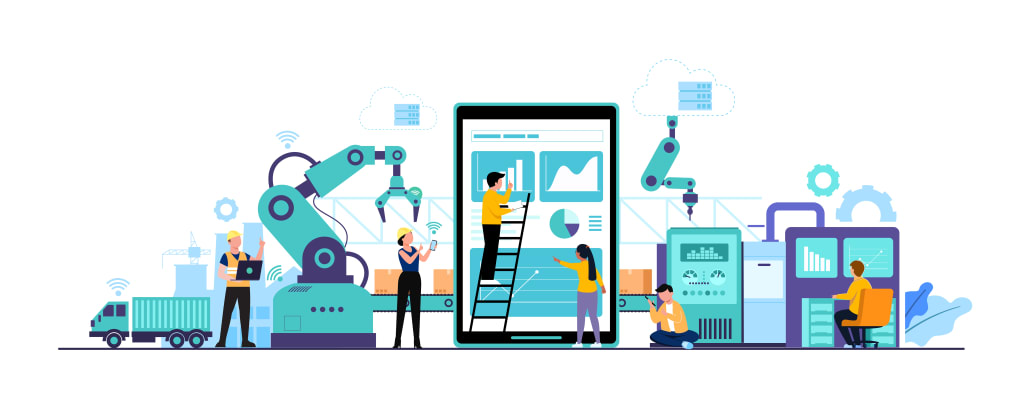
The Internet of Things (IoT) is revolutionizing the way we interact with our surroundings. From smart homes and cities to industrial processes and manufacturing, IoT has the potential to transform every aspect of our lives. In the field of computer-aided design (CAD) and computer-aided engineering (CAE), IoT-driven innovations are opening up new possibilities for product design and manufacturing.
Traditionally, CAD and CAE have been used to create and simulate product designs on a computer before they are physically manufactured. With the advent of IoT, however, these tools can now be enhanced with real-time data from sensors and connected devices. This data can be used to optimize product designs and manufacturing processes in ways that were previously impossible.
One area where IoT-driven innovations are having a significant impact is in the design of smart products. Smart products are those that are connected to the internet and can collect and analyze data in real-time. By integrating IoT sensors into the design process, designers can create products that are more intelligent and responsive to their environment.
For example, IoT sensors can be used to monitor the performance of a product in real-time and adjust its operation accordingly. This could include adjusting the temperature or humidity levels of a device based on the ambient conditions, or adjusting the speed of a motor based on the load it is carrying. By using real-time data to optimize the performance of a product, designers can create products that are more efficient, reliable, and user-friendly.
IoT-driven innovations are also transforming the manufacturing process itself. By integrating IoT sensors into manufacturing equipment, manufacturers can collect data on everything from the temperature and pressure of the manufacturing process to the performance of individual components. This data can be used to optimize the manufacturing process in real-time, reducing waste, increasing efficiency, and improving the quality of the final product.
For example, IoT sensors can be used to monitor the temperature and pressure of a manufacturing process and adjust them in real-time to optimize the process. This can lead to significant cost savings by reducing the amount of energy required to manufacture a product. IoT sensors can also be used to monitor the performance of individual components, such as motors or pumps, and alert maintenance teams when they need to be replaced or repaired. By using real-time data to optimize the manufacturing process, manufacturers can reduce downtime, increase productivity, and improve the quality of the final product.
Another area where IoT-driven innovations are having a significant impact is in the field of predictive maintenance. Predictive maintenance is the practice of using real-time data to predict when a piece of equipment is likely to fail, allowing maintenance teams to schedule repairs before the equipment breaks down. By using IoT sensors to monitor the performance of equipment in real-time, predictive maintenance algorithms can identify patterns and anomalies in the data that may indicate an impending failure.
For example, an IoT sensor could be used to monitor the vibration levels of a motor. If the sensor detects an increase in vibration levels, this could indicate that the motor is beginning to fail. The predictive maintenance algorithm could then alert maintenance teams to schedule repairs before the motor fails, reducing downtime and increasing productivity.
IoT-driven innovations are also making it easier for designers and engineers to collaborate on product design and manufacturing. By integrating IoT sensors into CAD and CAE tools, designers and engineers can share real-time data on the performance of a product or manufacturing process. This can help to identify design flaws or manufacturing inefficiencies early in the process, allowing them to be addressed before they become more significant problems.
For example, IoT sensors could be used to monitor the performance of a product during the design phase. This data could then be shared between designers and engineers, allowing them to identify design flaws or performance issues early in the process. By addressing these issues early, designers and engineers can save time and money by avoiding costly design changes or manufacturing errors later
About the Creator
Keep reading
More stories from writers in Education and other communities.
Ai Basics Everyone Should Know for the Future
Artificial Intelligence (AI) is no longer a distant concept reserved for scientists or tech companies. It’s already shaping how we work, learn, communicate, and make decisions. From recommendation systems on streaming platforms to AI assistants that help write emails, analyze data, or generate images, AI has quietly become part of everyday life.
By Anthony Bahamonde3 days ago in Education
Entering the Golden Alchemical Door to Teaching and Healing
It starts with love . . . Entering the Golden Door: Who Am I? Going through cancer treatments with chemo, a strange thing happened, for I started to forget things, even who I am because my wife ghosted me and my friends would have nothing to do with me. Without human contact, you forget what it means to be human. I am a professor at a university, but I forgot what I taught. . . .
By WILD WAYNE : The Dragon King6 days ago in Education
Thoughts on Vocal and the way the world is
"Death cannot stop true love, only delay it." – Wesley in The Princess Bride. I decided to come back to Vocal on a very cold and dark night at the end of December. I had been, and still am, convalescing from a horrible staph infection that had gone misdiagnosed for months. This, paired with the increasing challenges of being healthy, making the best choices for my co-parented child, being a wife, and being a director at a new job, was a lot to manage.
By Jazzy 4 days ago in Confessions


Comments
There are no comments for this story
Be the first to respond and start the conversation.