

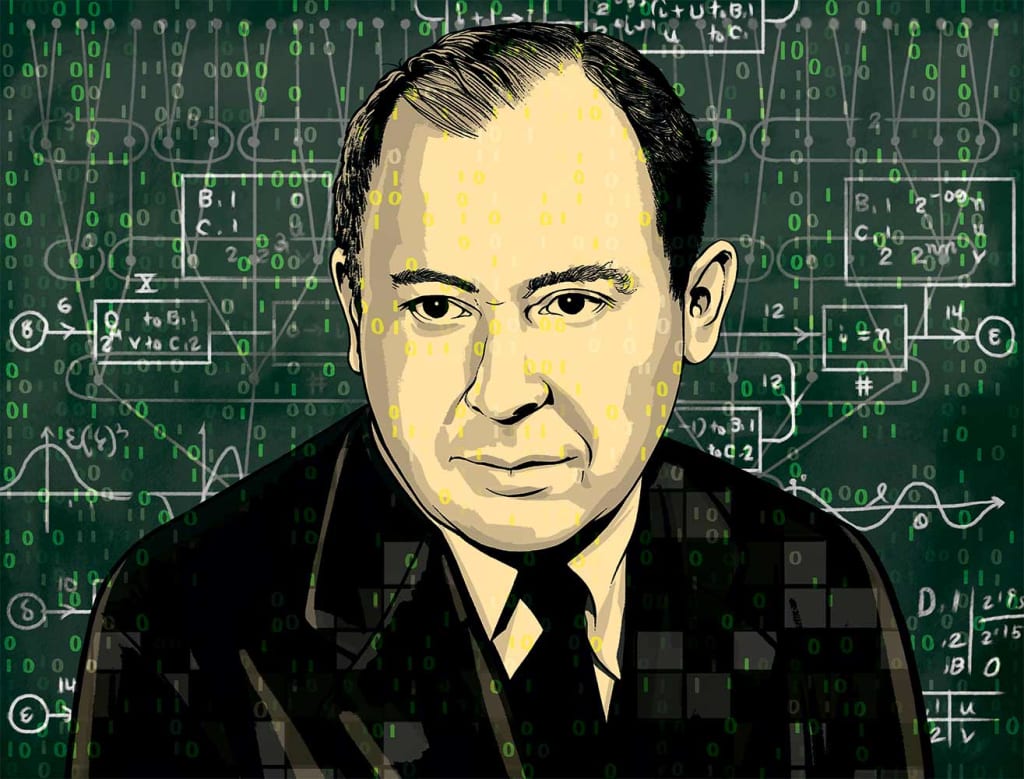
John von Neumann was a towering figure whose intellect and contributions spanned multiple fields, including quantum mechanics, the atomic bomb, modern computing, game theory, and self-replicating machines. His exceptional understanding of mathematics underpinned all these achievements, making him one of the most influential scientists of the 20th century. Hans Bethe, a Nobel Prize-winning physicist, once pondered if von Neumann’s brain represented a superior species, highlighting the profound impact and breadth of von Neumann's intellect.
Early Life and Mathematical Prowess
Born in Budapest to well-off Jewish parents, von Neumann's prodigious talents were evident from an early age. By the age of six, he could multiply two eight-digit numbers in his head. His father, Max, an economic adviser to the Hungarian government, fostered an intellectually stimulating environment, often hosting dinners with eminent thinkers. The "von" was added to their surname after the Austro-Hungarian Emperor elevated Max to nobility.
Concerned about the rise of anti-Semitism, Max prepared his sons for potential displacement by having them learn multiple languages. However, von Neumann's greatest strength lay in mathematics. His talent was recognized early by his teachers, including Gábor Szegő, who was moved to tears upon meeting him due to his unparalleled brilliance.
Academic Journey and Early Contributions
Despite his father’s initial reservations about pursuing mathematics, von Neumann struck a compromise by studying chemistry at the University of Berlin while simultaneously working on his mathematics PhD at the University of Budapest. His thesis on set theory laid a foundational stone in mathematics, elucidating the concept of sets as the building blocks of the discipline.
Von Neumann then moved to Göttingen, Germany, to study under David Hilbert, where he made significant contributions to quantum mechanics. At a time when Werner Heisenberg and Erwin Schrödinger had developed different models to describe particle behavior, von Neumann proved their equivalence, unifying the field of quantum mechanics.
Migration to America and Work on the Atomic Bomb
Von Neumann's career in Europe was marked by short stints at various universities due to the political climate and lack of tenure opportunities. In 1930, he moved to Princeton University in the United States, attracted by the promise of higher salaries and better research opportunities.
As World War II loomed, von Neumann became involved in the Manhattan Project, where he played a critical role in developing the implosion mechanism for the "Fat Man" bomb dropped on Nagasaki. His improvements in the arrangement of explosives around the plutonium core were pivotal in achieving the symmetrical implosion necessary for a powerful nuclear explosion.
Pioneer of Modern Computing
During and after the war, von Neumann’s focus shifted to computing. He joined the ENIAC project at the University of Pennsylvania as a consultant, where his vision for a stored-program computer revolutionized the field. The EDVAC, a successor to the ENIAC, implemented this concept, allowing data and instructions to be stored in memory—a cornerstone of modern computing.
Despite controversies over intellectual property, von Neumann's ideas guided the development of subsequent computers, including the IBM 701. His contributions helped establish the principles of digital computing, which remain fundamental to this day.
Game Theory and Cold War Strategy
Von Neumann also developed game theory, seeking to apply mathematical rigor to strategic decision-making. He viewed the Cold War as a zero-sum game between the U.S. and the Soviet Union, advocating for policies that eventually led to the doctrine of mutually assured destruction (MAD). His work in this area influenced military strategy, emphasizing deterrence and the psychological aspects of conflict.
Later Years and Legacy
In his later years, von Neumann's health deteriorated due to bone cancer, possibly resulting from radiation exposure during nuclear tests. Despite his declining health, he continued to contribute to various fields, including theories on self-replicating machines, which anticipated the discovery of DNA and influenced the development of artificial intelligence.
John von Neumann passed away on February 8, 1957, at the age of 53. His foresight and intellectual prowess left an indelible mark on science and technology. Reflecting on the future, he emphasized the need for continuous education in STEM fields to bridge the gap in technological advancements.
Closing
John von Neumann's legacy is a testament to the power of the human mind. His contributions laid the groundwork for many modern scientific and technological advancements. As we continue to explore the frontiers of knowledge, von Neumann’s life and work serve as an enduring inspiration for future generations.
About the Creator
Horace Wasland
Research analyst, writer & mystical healer. Exploring the edge where science meets mystery. From mystery/the mystical, to facts, news & psychology. Follow for weekly insights on all four and please leave a tip if you like what you read :)
Reader insights
Nice work
Very well written. Keep up the good work!
Top insight
On-point and relevant
Writing reflected the title & theme
Keep reading
More stories from Horace Wasland and writers in Education and other communities.
The Man Who Built the World
Isambard Kingdom Brunel, born in 1806, was a visionary engineer whose groundbreaking projects in railways, bridges, and ships transformed modern engineering and infrastructure. His innovative designs and relentless pursuit of excellence established him as one of history's greatest engineers.
By Horace Waslandabout a year ago in Education
How Learning About Global Health Gives Early Impacts to Medical Students
Medical students begin forming their professional identities long before they enter residency, and early exposure to global health giving plays a decisive role in shaping those identities. While traditional training emphasizes diagnostics and clinical precision, global learning encourages students to understand the broader human context behind every medical decision.
By Dr. Seth Eidemiller3 days ago in Education
Navigating School Choice in America: Charter vs. Traditional Public Schools Explained
Parents today face many options when choosing a school for their children. One of the most discussed topics in education is school choice. This idea allows families to select the type of public school that best fits their child’s needs. The two most common options are charter schools and traditional public schools. Both are publicly funded, but they operate differently. Understanding these differences helps parents make better decisions. This article explains how charter schools and traditional public schools work, what sets them apart, and how each option may support students in different ways.
By Martin Karp7 days ago in Education


Comments (1)
Awesome content