
Inflation Pressure On People
Factors Affecting Inflation

Inflation is a term that describes a general increase in prices in an economy over time. When inflation occurs, the purchasing power of money declines, which means that consumers can buy fewer goods and services with the same amount of money. Inflation can have both positive and negative effects on the economy, and its causes can vary. In this article, we will explore the concept of inflation in more detail, its causes, and its effects.
The Definition of Inflation
Inflation is typically measured by an inflation index such as the Consumer Price Index (CPI), which measures the average price of a basket of goods and services commonly consumed by households. Inflation is usually expressed as a percentage increase in prices over a specific period, such as a year.
Causes of Inflation
Inflation can be caused by several factors, including demand-pull inflation, cost-push inflation, and expansionary monetary policy.
Demand-pull inflation occurs when the demand for goods and services exceeds the supply available, leading to an increase in prices. For example, if there is a sudden increase in consumer spending, businesses may raise their prices to take advantage of the increased demand.
Cost-push inflation occurs when the cost of producing goods and services increases, leading to an increase in prices. This can occur due to several factors, such as an increase in the price of raw materials or an increase in wages.
Expansionary monetary policy can also cause inflation. When a central bank increases the money supply in an economy, it can lead to an increase in aggregate demand, which can drive up prices. This type of inflation is often called "too much money chasing too few goods."
Effects of Inflation
Inflation can have both positive and negative effects on the economy. Some of the effects of inflation include:
Reduced Purchasing Power: As prices rise, consumers can buy fewer goods and services with the same amount of money. This can lead to a decrease in consumer spending and a reduction in economic growth.
Redistribution of Income: Inflation can lead to a redistribution of income from savers to borrowers as the real value of savings decreases over time. This can also lead to a redistribution of income from those on fixed incomes to those with variable incomes.
Higher Interest Rates: Inflation can lead to higher interest rates as lenders demand higher returns to compensate for the decrease in the value of money over time. This can lead to a decrease in borrowing and investment.
Uncertainty: High inflation rates can create uncertainty in the economy, which can make it difficult for businesses to plan and invest. This can lead to a reduction in economic growth.
Solutions to Inflation
Governments and central banks have several tools at their disposal to manage inflation. Some possible solutions include:
Monetary Policy: Central banks can use monetary policy tools such as interest rate adjustments and open market operations to manage inflation. For example, if inflation is high, a central bank may increase interest rates to reduce aggregate demand and bring inflation under control.
Fiscal Policy: Governments can use fiscal policy tools such as taxation and spending to manage inflation. For example, a government may raise taxes or reduce spending to reduce aggregate demand and bring inflation under control.
Wage and Price Controls: Governments can implement wage and price controls to limit the increase in prices and wages. However, these policies are often ineffective and can lead to shortages and other problems.
Exchange Rate Policy: Governments can use exchange rate policy to manage inflation by adjusting the value of their currency relative to other currencies. For example, if inflation is high, a government may devalue its currency to make its exports more competitive and reduce aggregate demand.
Conclusion
Inflation is a complex phenomenon that can have serious consequences if it is not managed effectively. By understanding the causes and effects of inflation, governments and central
Regenerate response
About the Creator
How to Make Your Vocal Media Account Go Viral
The Track That Reached 250,000 Views on Vocal Media When Michael Anderson first created his Vocal Media account, he had no big expectations. He wasn’t a famous writer, influencer, or public speaker. He was simply a young man with ideas, experiences, and a strong desire to share meaningful content with the world. Like many beginners, his early posts received very little attention. Most of his tracks barely crossed 50 views. Some received only a few likes, and the comments section was often empty.
By Bilal Mohammadi8 days ago in Education
Inside Malaysia’s RON95 Reform: Why Targeted Subsidies Might Be Better Than Cheap Petrol for All
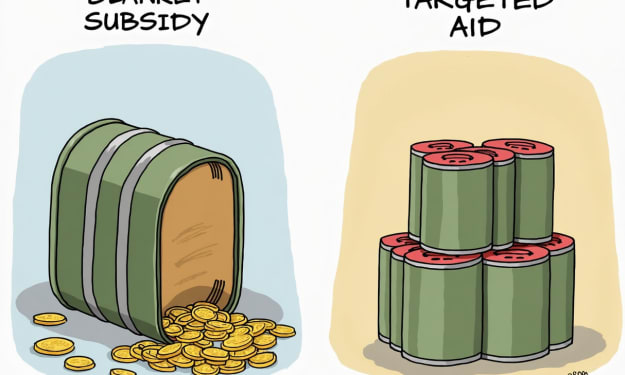
Targeting beats guessing. Instead of blanket “cheap petrol” for everyone (including people who don’t need help), aiming subsidies at real users and then channelling savings into cash aid is a more grown-up way to run a country’s finances. Data should guide feelings. The 300 liter limit sounds harsh until you see the numbers: most people don’t even reach 200 liters a month. Knowing the data helps you panic less and plan better. Short-term discomfort, long-term options. Saving RM2.5 billion a year gives the government more room to fund things like cash aid and social support, which can actually cushion us when costs rise elsewhere. Your IC is more powerful than you think. MyKad isn’t just an ID; it’s slowly becoming a tool to receive help, track usage, and make sure benefits go to actual Malaysians instead of slipping into the cracks.
By Anie the Candid Mom Abroad8 days ago in Education



Comments
There are no comments for this story
Be the first to respond and start the conversation.