
Inside Malaysia’s RON95 Reform: Why Targeted Subsidies Might Be Better Than Cheap Petrol for All
Smart subsidies, stronger Malaysia.

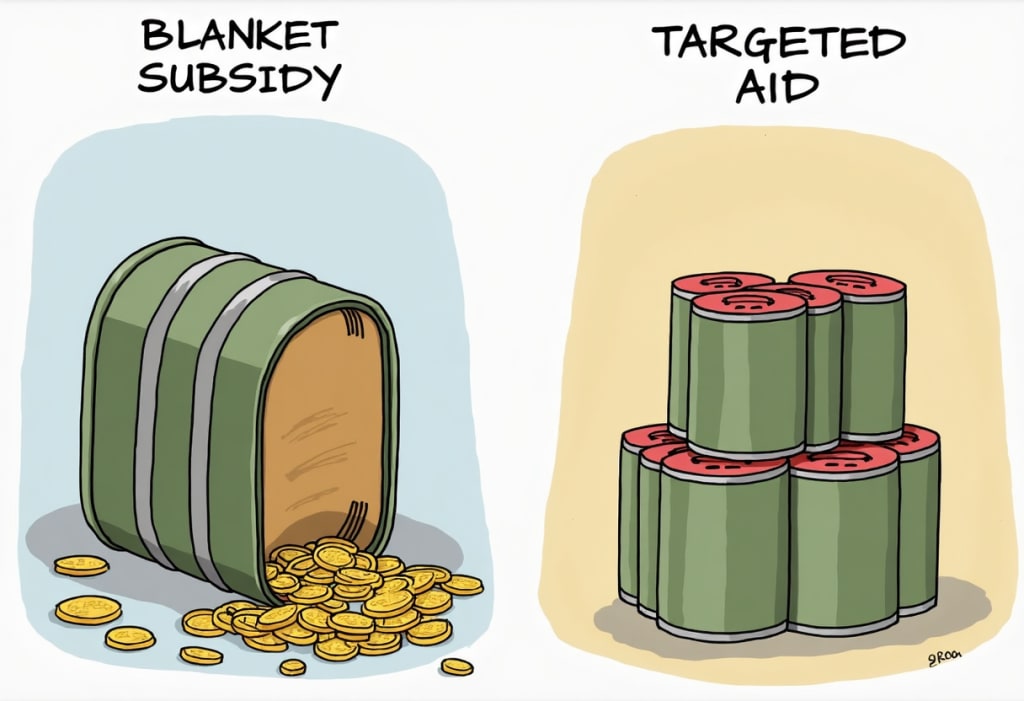
- Targeting beats guessing. Instead of blanket “cheap petrol” for everyone (including people who don’t need help), aiming subsidies at real users and then channelling savings into cash aid is a more grown-up way to run a country’s finances.
- Data should guide feelings. The 300 liter limit sounds harsh until you see the numbers: most people don’t even reach 200 liters a month. Knowing the data helps you panic less and plan better.
- Short-term discomfort, long-term options. Saving RM2.5 billion a year gives the government more room to fund things like cash aid and social support, which can actually cushion us when costs rise elsewhere.
- Your IC is more powerful than you think. MyKad isn’t just an ID; it’s slowly becoming a tool to receive help, track usage, and make sure benefits go to actual Malaysians instead of slipping into the cracks.
----------------------------------------------------------------------------------------
In just two days, the government splashed RM200 million back to the rakyat — and most of us only realised when the RM100 quietly appeared on Malaysian's MyKad.
Honestly, if only all “painful policies” came with surprise duit minyak like this.
1. The Big Petrol Plot Twist: Subsidi, But Smarter
So here’s the heart of it: the government is reshaping how petrol RON95 subsidies work under something called BUDI MADANI 95 (BUDI95), and they expect to save RM2.5 billion in 2026.
In non-economist language: instead of throwing subsidies at everyone (including rich folks and maybe even some smugglers at the border), they’re trying to aim it properly at people who actually need it.
Petrol subsidies in Malaysia have always been a double-edged sword:
- They keep fuel prices low so people can cope with living costs.
- But they also cost the government billions and can be abused through ketirisan (leakages) and penyeludupan (smuggling).
Now, with BUDI95, the idea is:
- Less wasted subsidy.
- More money freed up for direct bantuan like Sumbangan Tunai Rahmah (STR) and Sumbangan Asas Rahmah (SARA).
2. Two Days, RM200 Million: The Quiet Cash Drop
Here’s the part that made me raise my eyebrows: in just two days, 22 million Malaysians aged 18 and above received RM100 each via MyKad under SARA.
That’s RM200 million flowing back into the economy, just like that.
This isn’t random generosity; it’s literally funded by the money saved from targeting fuel subsidies more tightly.
Instead of invisible “cheap petrol for all”, it becomes visible, touchable cash or credit people can actually spend.
Example of how that feels in real life:
Mak: “Eh, macam ada lebih sikit duit beli barang dapur bulan ni.” Anak: “Bukan bonus, mak. Itu SARA masuk MyKad.”
And in a bigger context, direct cash transfers are something international institutions like the World Bank often recommend because they’re more targeted than blanket subsidies, as long as they don’t fully float prices and shock the rakyat.
Malaysia is kind of taking a middle road here: no full floating, but more targeted help.
3. Why Not Just Float Petrol and ‘Settle’? (The Spicy Question)
Prime Minister Anwar actually said they rejected the approach suggested by the World Bank and some economists: full pengapungan harga (letting prices float fully), then giving back cash to families.
On paper, that sounds super efficient. In real life, it can feel like: “Surprise! Everything naik harga, good luck.”
He mentioned that under a pure floating system, a family could be spending around RM13,000 a year on petrol and then getting some form of bantuan back.
The problem? Most people feel the pain first, and help later — and psychologically, that’s a lot harder to swallow.
So what they’re doing instead is:
- Keep RON95 subsidised, but with limits and better tracking.
- Avoid shocking rakyat with suddenly very high pump prices.
Is it perfect? No.
Is it less traumatic than full-on floating? Also yes.
4. MyKad, 300 Liters, and “Will I Survive?”
Let’s talk about that scary-sounding 300 liter per month cap for subsidised RON95.
It sounds small if you imagine yourself driving from Johor to Kedah every weekend, but here’s the data Prime Minister (PM) Anwar shared:
- Average usage: around 100 liters per month
- 90% of users don’t even hit 200 liters a month.
So 300 liters is basically a ceiling that most people will never touch in normal daily life.
The experience at the pump also doesn’t change much:
- You still pay with cash, card, or e-wallet.
- You still enjoy subsidised prices at all brands.
- The only new “main character” is your MyKad, which is used to make sure the subsidised fuel goes to actual people, not random loopholes.
They’re tracking around 3.1 million transactions a day, or 96 million a month, for BUDI95 — and so far, things are “kekal lancar” (running smoothly), according to the PM.
Is it a bit Big Brother-y? Maybe.
But is it also a way to stop your tax money from becoming someone else’s side business at the border? Also that.
5. Electric Tariffs, Same Energy, Same Story
He also compared this petrol move to what they did with electricity tariff earlier:
- Higher tariffs were targeted at industries and high-income groups
- -85% of regular Malaysians were not affected.
The pattern here is clear:
- Don’t shock the majority.
- Nudge the heavier users (and those with higher incomes) to pay closer to actual costs.
In governance-speak, this is called “tadbir urus lebih telus dan bersasar”— targeted and transparent governance.
In coffee shop language: “Jangan bagi diskaun sama rata bila bukan semua orang perlukan diskaun tu.”
Final Thoughts
You don’t control policy, but you do control your response.
You can choose to (a) be angry and confused, or (b) understand how these changes work, adjust your budget a bit, and grab every benefit you qualify for.
So maybe the real question for us now is: if the system is getting more targeted, are we making sure we’re informed enough — and proactive enough — to be on the right side of that targeting?
About the Creator
Anie the Candid Mom Abroad
Hi, nice to meet you. I'm Anie. The anonymous writer trying to make sense of the complicated world, sharing tips and tricks on the life lessons I've learned from simple, ordinary things, and sharing ideas that change me.
Keep reading
More stories from Anie the Candid Mom Abroad and writers in Education and other communities.
Battery-As-A-Service Models Driving Innovation in Electric Transportation
The global shift toward electrification and clean energy has placed batteries at the center of modern technological progress. Batteries power electric vehicles, support renewable energy systems, enable mobile devices, and ensure backup power for critical infrastructure. Despite their importance, batteries remain expensive, complex to maintain, and challenging to manage throughout their lifecycle. To address these challenges, a new business model known as Battery-As-A-Service (BaaS) is gaining global attention.
By Bobby Yadav7 days ago in Education
The Missing Ingredient
The first time I saw her, she was wearing a velvety, red ribbon in her hair. She carried a small leather backpack everywhere. She searched the forest by turning stones, checking beneath shrubs, listening to the wind as if it might carry an answer.
By Imola Tóthabout 8 hours ago in Fiction


Comments (1)
🐾🐉🐉🐲🐲🐉🐾🐾🐉🐉🐾🐉🐉🐲🐲🐉🐾🐾🐉🐉 Thank you . 🐾🐉🐉🐲🐲🐉🐾🐾🐉🐉 🐾🐉🐉🐲🐲🐉🐾🐾🐉🐉🐾🐉🐉🐲🐲🐉🐾🐾🐉🐉