
Igniter or Ignitor? The Small Word Mix-Up That Causes Big Confusion
Why One Letter Makes a Difference in Modern Gas Appliances

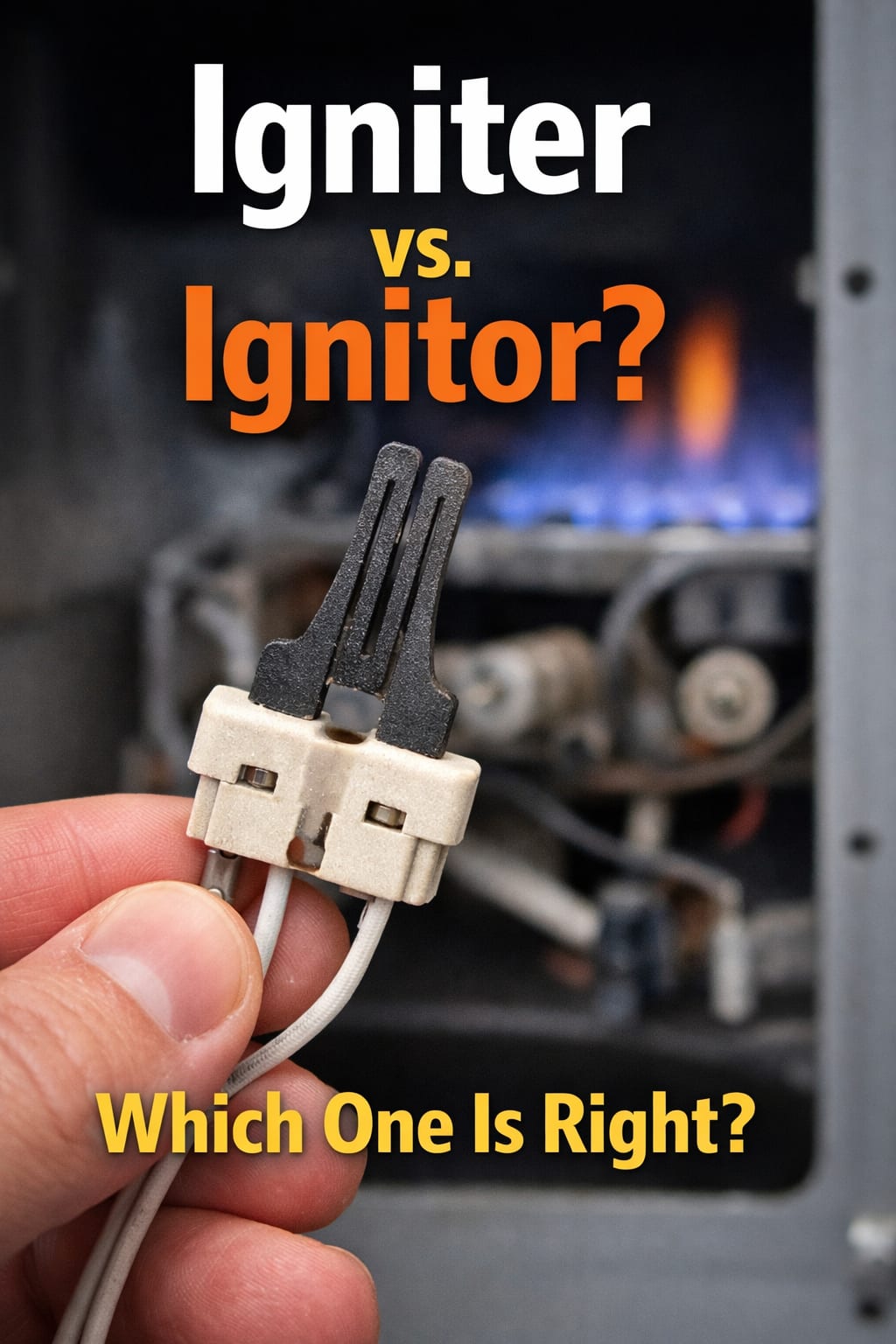
The first time I heard someone confidently say, “I think the ignitor is bad,” I didn’t question it. The sentence sounded right. It’s a word most people use without thinking twice, especially when a water heater or furnace suddenly stops working.
But a few conversations later with homeowners, technicians, and even parts suppliers it became clear that this single word causes more confusion than it should.
Is it ignitor? Or is it igniter?
Where the Confusion Starts
Most people encounter the word when something goes wrong. The water is cold, the furnace won’t start, and someone mentions that the “ignitor” might not be working. A quick online search reinforces the spelling, because both versions appear everywhere forums, listings, videos, and even old manuals.
That’s where the problem begins.
In everyday conversation, “ignitor” sounds natural. It follows the same pattern as words like “motor” or “generator.” But when you move from conversation to documentation, ordering parts, or troubleshooting, spelling suddenly matters more than people realize.
What the Part Actually Does
In modern gas appliances, the component in question is responsible for lighting gas safely when heat is needed. Older systems used standing pilot lights, but most newer water heaters and furnaces rely on electronic ignition systems.
In many of these systems, a hot surface component heats up until it glows, triggering the burner to light. Once ignition is confirmed, the system continues operating until the heating cycle ends.
In technical documentation, this component is most commonly referred to as an igniter.
Why “Igniter” Is the More Accurate Term
The word “igniter” comes directly from its function it ignites gas. Over time, manufacturers, service manuals, and parts catalogs began standardizing on this spelling to reduce ambiguity.
That doesn’t mean “ignitor” is invented or meaningless. It appears in older materials and informal usage. But today, when you look up manufacturer documentation, replacement parts, or service diagrams, “igniter” is far more consistent.
Using the wrong term doesn’t break anything, but it can slow things down. Searching for parts, reading manuals, or communicating with suppliers becomes harder when terminology isn’t aligned.
When Words Affect Real Repairs
This distinction becomes important when someone is trying to fix a problem quickly. Homeowners often assume that anything related to ignition must be the same part. In reality, ignition systems include multiple components sensors, controls, valves and the igniter is just one piece.
Calling everything an “ignitor” can blur those lines. Clear terminology helps narrow the issue and prevents unnecessary replacements or confusion during diagnosis.
For readers looking to understand how manufacturers typically label ignition components, publicly available brand reference pages such as those used by companies like AO Smith can help clarify how these terms are applied in real documentation.
(Linked for general reference and terminology clarity)
Why This Mix-Up Keeps Happening
Language evolves faster than documentation. People learn words from conversation, not manuals. Once a term becomes common, it spreads even if it’s slightly off from the technical standard.
Search engines also contribute to the confusion. If enough people type “ignitor,” content creators follow the trend to stay visible. Over time, both spellings coexist, even though one is more precise in technical contexts.
The Practical Takeaway
If you’re talking casually, “ignitor” won’t confuse most people. But if you’re:
- Reading manuals
- Ordering parts
- Researching repairs
- Communicating with manufacturers or suppliers
…it’s better to use igniter.
That single letter difference can lead you to clearer information, fewer mismatches, and better understanding of how modern gas appliances actually work.
Final Thought
The igniter-versus-ignitor debate isn’t about correcting people it’s about clarity. When systems are complex, language matters more than we think. Using the right word helps everyone stay on the same page, especially when heat, safety, and reliability are involved.
Sometimes, the smallest details make the biggest difference.
About the Creator
Keep reading
More stories from writers in Education and other communities.
How Intentional Listening Transforms Leadership and Team Excellence
Leadership has long been associated with decisiveness, direction, and the ability to articulate vision. While these qualities remain essential, the most effective leaders today are distinguished by a different capability: their ability to listen with intention. As workplaces become more collaborative and knowledge-driven, leadership success increasingly depends on understanding people rather than simply directing them. Intentional listening allows leaders to grasp not only what is being said, but also what remains unspoken. This deeper understanding strengthens relationships, improves decision-making, and fosters trust. In high-performing teams, listening is not passive but strategic, shaping how leaders connect with individuals and guide collective effort.
By Thomas Kuriakose, MD2 days ago in Education
UMPCO Inc: My Insider View on an Unsung Aerospace Fastener Maker
When I first learned about UMPCO Inc, I had no idea how deep its influence ran through aviation and aerospace hardware. Today, I want to take you behind the scenes of this fastener and hardware solutions manufacturer — a company that quietly supports every aircraft clip, clamp, and bracket that helps keep our skies safe.
By Beckett Dowhan2 days ago in Education


Comments
There are no comments for this story
Be the first to respond and start the conversation.