
Idioms About Dogs
Here are idioms about dogs you might have heard.


I love using idioms because they add flavor to my writing and speaking. Using an idiom is like adding seasoning to bland food.
Dog Idioms
There are many idioms in the English language, but this short article features only dog idioms.
Whether you're feeling sick as a dog, working like a dog, or just enjoying a dog day afternoon, it's clear that our canine companions have left paw prints all over the English language. So, don't be in the dog house because you don't know what they mean.
"All bark and no bite"
Dogs of all breeds will bark, but many are harmless. If you’re saying that some people are all bark and no bite, you’re saying they give threats but won’t act on them.
"Dog days of summer"
Dog days of summer are the hottest and most stagnant days of summer, usually much of July through mid-August.
"Dog-eat-dog world"
A dog-eat-dog world refers to a harsh and competitive environment. It describes people who would harm others to get what they want, just like dogs that fight to get the biggest bone.
"It’s raining cats and dogs"
When people say, "It’s raining cats and dogs," they mean it is raining heavily. Cats and dogs don't fall from the sky.

"Let sleeping dogs lie"
"Let sleeping dogs lie" means "leave the situation alone like a sleeping dog." Otherwise, the sleeping dog might wake up mad. It is better not to stir up anything that could cause trouble. In other words, leave well enough alone.
"Pick of the litter"
Pick of the litter means something is the best choice, or a preferred option. If you have the “pick of the litter,” then you have the top choice, or you can get the best in a group.

"Puppy love"
Puppy love is a feeling of love or affection, usually innocent and temporary, occurring during childhood or adolescence.
"You can’t teach an old dog new tricks"
When people say, “You can’t teach an old dog new tricks,” they’re saying that there’s no point in trying to change someone’s mind about an established routine.

"A doggy bag"
We might take leftover food home from restaurants in a doggy bag, even if we don't have a dog to give it to.
"Dog-tired"
Saying you are “dog-tired” means you are exhausted.
"Sick as a dog"
This idiom describes someone who feels very ill.
"Dog-eared"
A book that has corners of pages ripped off or turned down because of frequent use is dog-eared.
"Every dog has its day"
This idiom describes a person (usually of low status) who will eventually live successfully.
"Call off the dogs"
Call off the dogs is an idiom used when someone needs to stop criticizing another person.
"An underdog"
An underdog is someone who is not considered a favorite to win a tournament or contest. It is someone who is at a disadvantage.
"In the dog house"
Being in the doghouse means you’re in a bad situation because someone is angry with you. Therefore, you are not allowed in your own house. Instead, you must stay outside in the dog house.

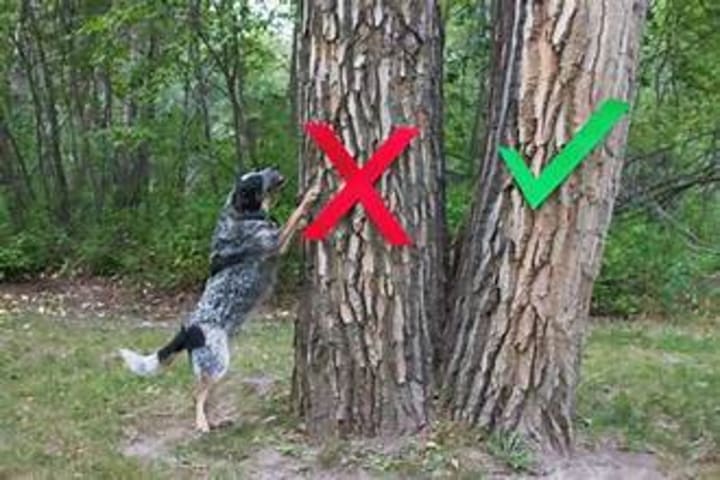
"Barking up the wrong tree"
“Barking up the wrong tree” is a commonly used idiom to describe a person who has chosen the wrong course of action.
"Dog and pony show"
A dog and pony show is used to describe something fancy, flashy, and overly dramatic.
"It’s a dog’s life"
This idiom refers to the wretched and servile lives that some dogs are forced to live.
How to Learn Idioms
The best way to learn what idioms mean is to become acquainted with them by reading articles in magazines and books, and listening to native speakers on television and radio broadcasts. For instance, Dr. Phil McGraw often uses idioms in conversations with guests on his show.
Please Share!
If you know some dog idioms not included in this article, feel free to share them in the comments.
About the Creator
Margaret Minnicks
Margaret Minnicks has a bachelor's degree in English. She is an ordained minister with two master's degrees in theology and Christian education. She has been an online writer for over 15 years. Thanks for reading and sending TIPS her way.
Keep reading
More stories from Margaret Minnicks and writers in Education and other communities.
Kamala Harris first woman to deliver commencement speech at West Point
Vice President Kamala Harris did something on Saturday, May 27, 2023, that no other woman had ever done before. She became the first woman to deliver a commencement address to the graduating class at the US Military Academy in West Point, New York. It had never been done before in the military academy's 221-year history.
By Margaret Minnicks3 years ago in Education
Common Online Money
Introduction: The Dark Side of Online Earning The internet has created countless opportunities to earn money online. From freelancing and blogging to online teaching and affiliate marketing, many people now make a living from the digital world. However, along with real opportunities, the internet is also full of scams. Every year, millions of people lose money, time, and personal information because of online money-making frauds. Understanding these scams is the first step to staying safe. This article explains the most common online money-making scams and how you can avoid them.
By Bilal Mohammadi3 days ago in Education
Casie Hynes and the Future of Math Education Reform
Mathematics has always been a cornerstone of formal education. It strengthens reasoning, supports problem solving, and underpins critical fields such as science, technology, engineering, and economics. Yet despite its importance, math remains one of the most challenging subjects for students across the globe. Many learners struggle not because they lack ability, but because the way math is taught no longer aligns with how students learn or how the world now functions.
By Casie Hynes18 minutes ago in Education



Comments
There are no comments for this story
Be the first to respond and start the conversation.