
Idioms About Birds
Here are some idioms about birds you might have heard.


"A bird in the hand is worth two in the bush"
This idiom advises being happy with what you have, instead of chasing after more. You might end up losing the one bird in your hand if you chase after a second bird that you don't even see.
"A little bird told me"
This is a way of telling people you heard a secret about them without telling them the source. The origin of this idiom may come from a time when birds were used to deliver messages. The bird has a message for you, but you didn’t know where it came from.
"Eat like a bird"
Most birds are small, so it stands to reason that they only eat small amounts. If someone says you eat like a bird, they are saying you eat only small amounts of food.

"Free as a bird"
Being free as a bird means being completely free, liberated, and unrestrained. It means having the luxury of being worry-free, having no troubles or commitments.
"Killing two birds with one stone"
This describes the action of someone who can multitask or work efficiently. It means to achieve or accomplish two things with one action, or to solve two problems with one solution.
"Birds of a feather flock together"
People with similar interests or characteristics tend to associate with one another, like birds. They share a common interest and get along well.
"The early bird catches the worm"
Someone who wakes up early in the morning can be described as having an advantage by doing something productive before others.
"Birdbrain"
Birds have relatively small brains and so have much less cognitive capacity than humans. Calling someone a birdbrain is saying that the person is foolish, scatterbrained, forgetful, or unintelligent.
"Bird’s-eye view"
As birds usually fly above us, their viewpoint is from a great height, looking down at the world below them. A bird’s-eye view is from a height that allows a larger area to be seen.
"An albatross around your neck"
This idiom is taken from The Rime of the Ancient Mariner. An albatross around your neck means you have a big burden that particularly torments you.
"Which came first, the chicken or the egg?"
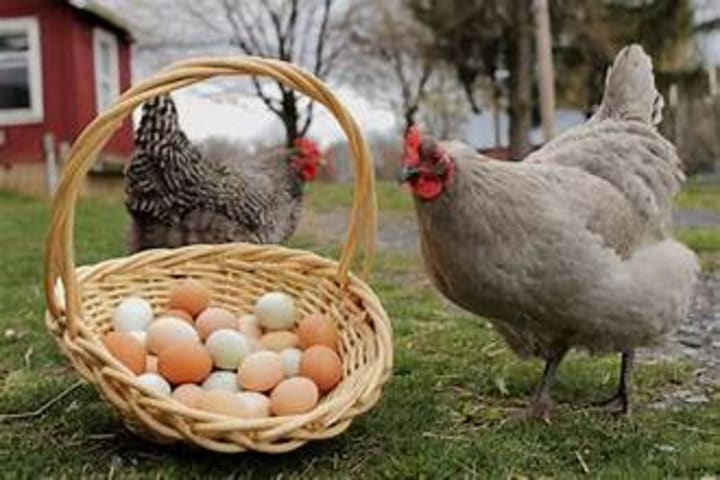
This question shows up in many discussions where the right answer is debated.
"Like a chicken with its head cut off "
This means behaving erratically or without purpose, like chickens do after their heads have been cut off. They don't die immediately. They flutter around in the yard for a while.
"Chicken out"
If people call you a chicken, it is an insult. If you are too scared to do something and back out or cancel your plans, you are said to have chickened out.
"Don’t count your chickens before they hatch"
Do not anticipate success or profit before it occurs. Celebrating prematurely can be risky. It’s not wise to count your chickens before they hatch because they might not hatch.
"Dead as a dodo"
Dodos are now extinct. Saying, as dead as a dodo, means that something is no longer working, popular, needed, or interesting. It can also be used when something (or someone) is out of energy.
"A sitting duck"
This idiom means someone is vulnerable and exposed to danger.
"Get your ducks in a row"

If someone is telling you to “get your ducks in a row,” it means to straighten up and organize a project or task. When baby ducks walk behind their mother, they’re often in a straight line or in a row.
"Like a duck to water"
Ducks easily and quickly learn how to swim. So when someone learns or adapts to something new with ease, they take to it like a duck to water.
"Like water off a duck's back"
It just doesn’t seem to bother ducks whether they are swimming in water or if it’s raining. When someone doesn’t react negatively to a harmful, mean comment or upsetting situation, they just don’t let it bother them because it is like water off a duck’s back. They are not affected or bothered by criticism or insults.
"A lame duck"
A lame duck is an ineffectual or unsuccessful person. This idiom is often heard about unsuccessful politicians.
"Ugly duckling"
This idiom is taken from the story by Hans Christian Andersen. It is used to describe a person who may not fit in with their peers or society’s standards of beauty but possesses admirable qualities such as intelligence, kindness, or creativity. It can also refer to an object or idea that seems unremarkable at first glance but reveals its true value over time.
"Eagle eyes"
To be eagle-eyed is to watch something carefully and have a keen eye for detail. Those with eagle eyes let nothing get past them because they are highly attentive to details that most people miss.
"Goose bumps"
Good bumps are small, raised bumps on the skin caused by cold, excitement, or fear.
"Wild goose chase"
Geese are fast, strong, and awkward birds. A wild-goose chase is a search for something that is either very difficult to find or doesn’t exist at all. It is a search that is a waste of time, as it is unattainable.
"What’s good for the goose is good for the gander"
A male goose is called a gander, and a female is referred to as a goose. Therefore, what's good for a female is also suitable for a male. It is another way of saying that what is acceptable or beneficial for one person should also be acceptable to someone else.
"Watching like a hawk"
Watching like a hawk is continuing to look at something very closely. It is being extremely watchful and observant.
"Scarce as hen’s teeth"
Hens have no teeth. Therefore, something as scarce as a hen’s teeth is something that is exceptionally rare or non-existent.
"Happy as a lark"
Someone as happy as a lark is someone who is very happy and carefree. A lark’s birdsong early in the morning is a bright, cheerful, and happy tune.
"Night owl"
Owls are nocturnal because they stay awake during the night. Someone who is described as a night owl is a person who normally stays up late at night.

"Wise as an owl"
This means having great wisdom or intelligence.
"Proud as a peacock"
When you are as proud as a peacock, you are pleased with something you have achieved. However, it can also be said as an insult to describe someone as vain or self-centered.
"Put a cat among the pigeons"
If you put a cat among pigeons, you are doing something that upsets people, makes them angry, or causes trouble.
"Black swan event"
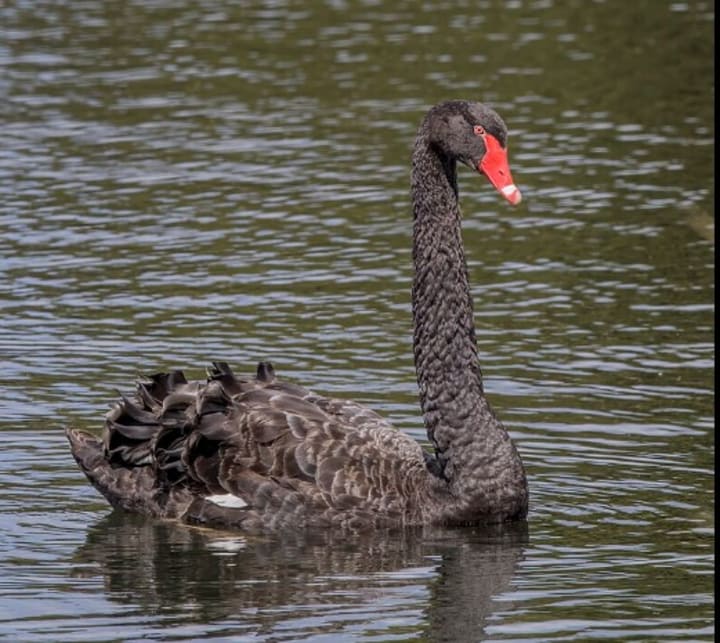
A black swan event is an unexpected and rare occurrence with significant consequences that catches people off guard. That is because most swans are white.
"Graceful as a swan"
To be as graceful as a swan means you are very agile, move with elegance, or have smooth motions. This comparison is taken from how nicely a swan glides through the water.
"A feather in your cap"
When someone does something that others approve of, it is said he has a feather in his cap. It is an achievement or honor to be proud of.
"Fly the coop"
When a bird is old enough, it will leave the nest or coop and set out by itself. Flying the coop means leaving or escaping a situation that you have outgrown, in order to gain more freedom and move on to something new.
"Nest eggs"
Nest eggs are savings set aside for the future, based on the notion that birds save things in their nests.
"Empty nest syndrome"
When birds grow up, they leave their nests. When grown children leave home, some parents feel empty.
"Spread your wings"
To spread your wings means you are taking on new challenges or trying something different.
"Under your wing"
When you take people under your wing, you are protecting and caring for them.
READ: Idioms About Dogs
About the Creator
Margaret Minnicks
Margaret Minnicks has a bachelor's degree in English. She is an ordained minister with two master's degrees in theology and Christian education. She has been an online writer for over 15 years. Thanks for reading and sending TIPS her way.
Keep reading
More stories from Margaret Minnicks and writers in Education and other communities.
Why Great Customer Service Is Non-Negotiable for Modern Businesses
Excellent customer service is no longer something businesses can choose to offer later. It is a basic requirement in today’s fast-moving market. Customers expect respect, clear communication, and fast solutions. When they do not get these things, they leave. This is why excellent customer service is non-negotiable for businesses that want to survive and grow.
By Apex Service Partners5 days ago in Education
The Devil's Cut
“Comrade, finally you’re awake.” The voice was smooth, sensual. A flickering incandescent bar was all that lit the white, sterile room. All Vladimir remembered was everything going black. He tried to move his arms and found them strapped to the gurney.
By Matthew J. Fromm4 days ago in Fiction


Comments (1)
I've heard of some of these and learned some new ones as well hehehe