
I’m Earning My Teaching Degree at 66
It’s never too late

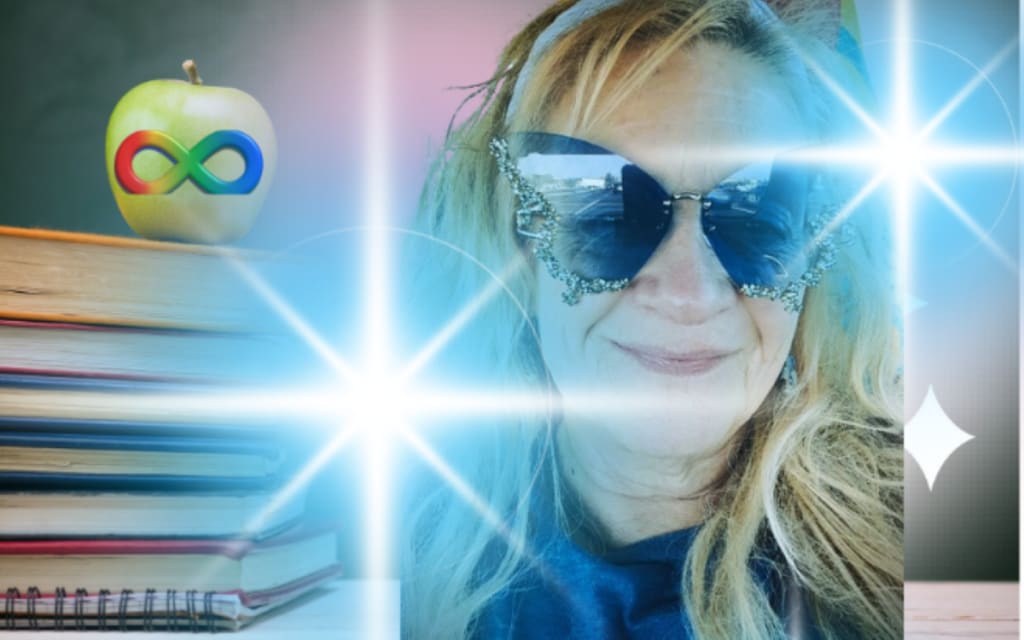
This story is adapted from the essay I wrote for my application to an Alternative Teacher Certification Program. It first appeared in Petits Fours Magazine on Medium
I have had a lot of divergent experiences in my life which have allowed me to develop a strong sense of acceptance and empathy for others. Like most children, as a youngster I toyed with ideas about what I wanted to be when I grew up. Along with considering paleontology, journalism, history, and creative writing, I wanted to be a teacher. I can remember playing school with my younger siblings and my dolls playing the parts of students.
However, the same childhood experiences which provided me with an early awareness of racism and intolerance also blocked my ability to explore my interests in a productive manner. By the time I graduated from high school, I had attended fourteen elementary and seven high schools in ten different states. Somewhat rudderless, I found myself following a path driven more by circumstance than by design. After a short stint in the Air Force, marriage, divorce, and single motherhood became the paths upon which I trod.
Along these paths I continued the complex experiment that is life. I began to seek what I came to understand as my “calling.” I found that I was often called upon to help others find answers to their questions. I stepped into situations in which I was a teacher, though my education had not led to a teaching degree. I raised three children, one of whom was diagnosed with high-functioning autism at a time when very few educators understood what this meant or how to help my child.
I became an advocate for understanding, driven by my love for my child and my own internal need to both understand and be understood. At the same time, I began my studies at Arizona State University. I was in my forties, and my children were in their primary, elementary, and junior high years. I wanted to better myself and my opportunities so I could provide a better life for my children. I strongly considered pursuing teaching, but as a single parent, I felt that I could not afford to take time for student teaching.
As my son struggled with school, I came to realize that many of those who teach are unable to meet the child where they are at. Intent on sticking to the curriculum, many of my son’s teachers disallowed his creativity, intelligence, and vision because of his different way of learning and responding. Even as I was stepping into teaching and facilitating adult and children’s studies in the church arena, I was forced to explore new ways to help my son progress in school without increasing “behaviors.”
During this time my older daughter graduated in the top twenty of her class and entered college. The other entered high school and joined ROTC. I knew they both were struggling with issues of self-image, and I did my best to provide them with guidance that would help them. In the end, all my children graduated from high school.
One graduated from university summa cum laude and earned her master’s in education with honors. She currently writes curriculum for a computer-based teaching program. The second has some college under her belt, homeschooled her daughters for a couple of years, and recently returned to school online to earn a teaching degree. I have since realized that my daughters had more difficulties at school than I had known at the time, and that they are both probably also on the autism spectrum.
My son was not ready for post-secondary education right out of high school. He went into the workforce and found a job he did well at. He continued looking for something he liked to do where he felt he was doing positive work. In early 2023, he landed at a private school for children with autism. He has found his niche working with non-verbal teenagers as a paraeducator and will likely return to school soon to pursue a degree in special education.
It is because of him and his job that I am now finally working toward my teaching degree. I had retired from my last employment as a behavioral health technician when I heard that the school needed part-time drivers to transport students to and from school. I applied and drove for a few months. I am now a paraeducator. All my early dreams of becoming a teacher came back during the past year and a half.
My son’s childhood experiences with teachers who were not open to his differences, combined with memories of teachers who helped me get through some of the difficulties of always being “the new girl,” and my ability to meet the children where they are make me determined to achieve a position in which I can help them learn. I want to help parents understand their children a little better while giving them a platform to explore their own hopes and dreams for their children.
Because of my experiences as an advocate for my son and the realization that my daughters — and possibly myself — faced difficulties in life because they went unrecognized as neurodivergent, I am ardently dedicated to creating a transformative educational environment for the students I work with. Such an environment will provide an empowering, inclusive, and supportive foundation for each student to discover and encourage their unique potential.
I believe that every student is competent and able to achieve success. It is important to me that I nurture a culture of acceptance and understanding, where each child is expected to reach for the stars from right where they are at any given point in their educational journey. As a special education teacher, I expect to provide my students with the diverse tools they need for success, which may look different for each child.
By providing a positive environment for learning, I hope to awaken a love of learning in my students and encourage them to become curious, independent, and self-motivated life-long learners themselves. By tailoring lessons to the interests and strengths of each student, I expect to make learning meaningful and relevant, setting the stage for their lifelong success.
I’m excited about having the chance to create a classroom atmosphere that is welcoming, comfortable, and conducive to learning. I am learning to understand the unique needs of autistic students and believe in providing individualized support that respects their communication styles, sensory needs, and interests.
My goal is to create a predictable, structured environment that reduces anxiety and fosters learning and growth. Establishing clear expectations, fostering mutual respect, and using positive behavioral interventions and support will create a structured yet flexible learning environment.
I’ve been thinking about the need for teachers to build strong partnerships with everyone on a student’s team, and who constitutes that team. It seems to me that a child’s team should not only include teachers and parents or caregivers, but also any other teachers, counselors, and any specialists involved in their care. In fact, I believe that as a child gets older, they should have some input into their own educational plans. Transparency and consistent, strong communication between all parties will open the doors to collaborative problem-solving.
I know that it’s important to integrate technology into the classroom to enhance learning, and to personalize the student learning experience by using assistive technologies and digital tools. Being able to adapt to new technologies is integral in meeting the diverse needs of students on the autism spectrum.
I have been learning and adapting to new computer technologies since the days of self-contained word-processors and tiny IBM personal computers. I am a life-long learner and can’t help but to continue to remain open to new technologies and perspectives. I know that this openness to technology is going to be crucial for designing classroom environments, educational concepts, lesson plans, and other tools for supporting students in their educational and personal growth goals.
Every student has the right to an inclusive education, regardless of their abilities or disabilities. Every child deserves to have their individual strengths and needs recognized. Differentiated instruction should be the standard mode of operation. Teachers should proactively remove barriers to learning once recognized with the goal of creating an equitable, fair, and encouraging classroom culture.
By recognizing student achievements and celebrating their successes both academically and socially, I believe teachers can build their sense of accomplishment, encourage their self-esteem, and motivate them to continue reaching for their stars.
About the Creator
Suzy Jacobson Cherry
Writer. Artist. Educator. Interspiritual Priestess. I write poetry, fiction, nonfiction, and thoughts on stuff I love.
Reader insights
Nice work
Very well written. Keep up the good work!
Top insight
On-point and relevant
Writing reflected the title & theme
Keep reading
More stories from Suzy Jacobson Cherry and writers in Education and other communities.
Why Every Engineer Should Read Fiction to Think Better and Build Smarter
Many people think an Engineer only needs math, science, and logic. They imagine engineers working with code, circuits, and complex systems all day. Fiction is a waste of time to them. Yet reading stories builds skills that technical manuals cannot teach. Fiction strengthens imagination and emotional awareness. It improves focus and communication. It also helps engineers better understand people. Engineering is not only about machines. It is also about solving human problems. When engineers read fiction, they expand their thinking in powerful ways. This habit can improve both personal growth and professional success.
By Paul Wiedmaier5 days ago in Education
A Planetary Alignment will coincide with Mercury Retrograde
Double phenomena in the heavens Some people say in jest that the planets have aligned in their favor when life works the way they desire. Were you aware that there are seasons when things do line up in the heavens? There will be a planetary alignment AKA a planet parade, on February 28, 2026.
By Cheryl E Preston3 days ago in FYI



Comments (2)
What an amazing hard working!!!!!!!!
Amazing piece and thanks for the well detailed analysis and advice