
Hurricane Florida
How to Prepare for the 2024 Storm Season
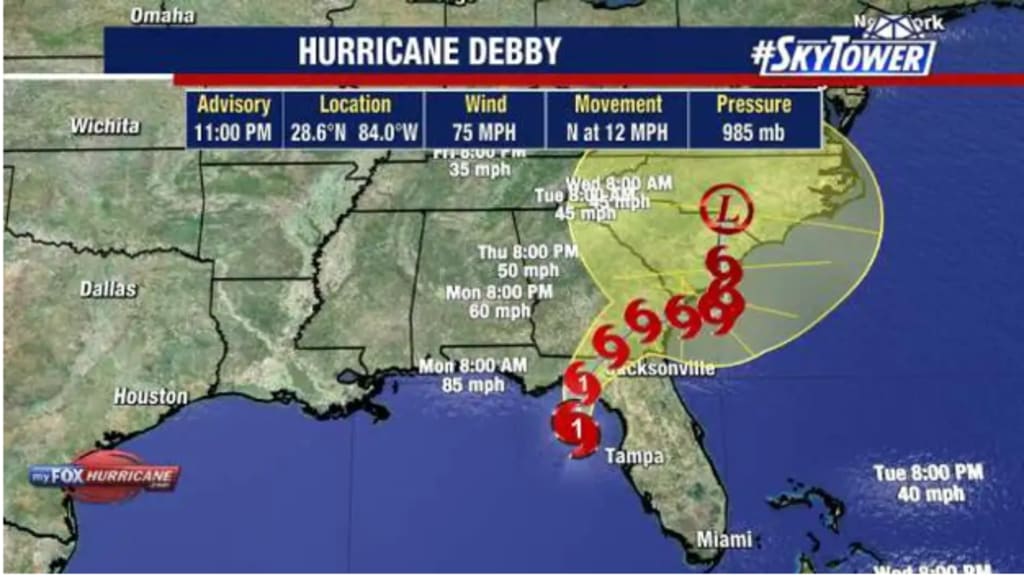
Florida is no stranger to hurricanes, and as we enter the 2024 storm season, preparation is key to staying safe and minimizing damage. Every year, hurricanes sweep through the Sunshine State, leaving behind destruction that can take months or even years to repair. While we can’t control nature, we can certainly control how prepared we are for it.
Key Actions:
Download a reliable weather app such as the National Hurricane Center (NHC) app or NOAA Weather Radar to get real-time storm updates.
Sign up for local emergency alerts through your county’s emergency management website.
Follow trustworthy sources like The Weather Channel, local news stations, and FEMA for detailed hurricane information.
1. Create an Emergency Plan for Your Household
Being caught off guard during a hurricane can be dangerous, so having a solid emergency plan in place is essential. This ensures that everyone in your household knows what to do before, during, and after the storm.
Key Actions:
Identify evacuation routes from your home and community, and plan where you'll stay if evacuation orders are issued. Hotels, friends' homes in safer areas, or official shelters are good options.
Assign responsibilities for each family member, such as gathering supplies, securing pets, or checking on elderly relatives.
Have a communication plan in case you’re separated, with a designated point of contact outside the storm area.
2. Stock Up on Emergency Supplies
When a storm is approaching, stores can run out of essential items quickly. Stock up ahead of time to avoid last-minute shopping madness. The National Hurricane Center recommends having enough supplies to last at least 7 days.
Your Emergency Kit Should Include:
. Non-perishable food (canned goods, dried fruit, protein bars) . Bottled water (1 gallon per person per day) . . . .Flashlights and extra batteries . First aid kit and medications . Manual can opener . Battery-powered radio . Phone chargers, including portable battery packs . Personal hygiene products (soap, hand sanitizer, etc.) . Important documents in a waterproof container (insurance papers, ID, etc.)
4. Fortify Your Home
Your home is your most significant line of defense against the elements during a hurricane. Taking steps to strengthen it now can protect both the structure and the people inside.
Key Actions:
. Install storm shutters or use plywood to cover windows and glass doors. Broken windows can lead to serious damage from flying debris.
. Clear your yard of any objects that could become projectiles in high winds. Patio furniture, potted plants, and outdoor decor should be moved inside.
. Trim trees and shrubs around your property to reduce the chance of branches falling on your house.
. Inspect your roof and make any necessary repairs. Loose shingles can become hazardous in strong winds.
. Secure entry points like doors and garage doors, which can be vulnerable to high winds.
5. Review Your Insurance Coverage
One of the most important, yet often overlooked, steps in hurricane preparation is making sure you have adequate insurance coverage. Standard homeowners' policies often don’t cover flood damage, which is common during hurricanes.
Key Actions:
. Review your home insurance policy to ensure it covers wind and storm damage.
. Consider purchasing flood insurance if you don’t already have it. Even if you don’t live in a high-risk flood zone, hurricanes can bring torrential rain that leads to unexpected flooding.
. Take inventory of your belongings by photographing valuable items and keeping receipts. This will be helpful in case you need to file an insurance claim.
6. Plan for Your Pets
Pets are part of the family, and they need to be included in your emergency plan. Many shelters may not accept animals, so you’ll need to make alternative arrangements ahead of time.
Key Actions:
Find pet-friendly shelters or hotels that accept pets in case of evacuation.
. Prepare a pet emergency kit with food, water, leashes, carriers, and any medications they may need.
. Make sure your pet is microchipped and has up-to-date ID tags in case they get lost during the storm.
About the Creator
Keep reading
More stories from writers in Education and other communities.
The Clock That Forgot to Hurry
In the heart of an old marketplace stood a tiny watch-repair shop that almost no one noticed anymore. Bright digital billboards flashed above it. Smart stores sold devices that measured time with perfect precision. People hurried past the shop every day, glancing only at their phones, trusting machines to tell them when to run, when to stop, when to breathe. Inside that narrow shop lived an elderly watchmaker named Kareem. Kareem had repaired clocks for more than fifty years. His hands were thin, steady, and remarkably gentle. He treated every broken watch not as a machine, but as a small life that had lost its rhythm. What made his shop unusual was a sign hanging above the door: “Time repaired here. Hurry not included.” Most customers smiled at the line and ignored it. Only a few understood. Among them was a young woman named Sara. Sara worked in a fast-growing technology firm across the city. Her days were filled with deadlines, meetings, notifications, and endless planning. She measured life in tasks completed and emails answered. Success followed her closely — promotions, bonuses, praise — yet sleep avoided her, and peace had become a stranger. One evening, after a long day that refused to end, Sara noticed her wristwatch had stopped. Annoyed, she searched for the nearest repair shop and found herself standing before Kareem’s quiet door. The bell above it rang softly as she entered. Clocks covered every wall — large wooden ones, tiny silver ones, antique pocket watches, all ticking at different rhythms, like a choir that refused to sing in perfect unison. Kareem looked up and smiled. “My watch stopped,” Sara said quickly. “I need it fixed. Urgently.” Kareem nodded. “Of course. Please sit.” He examined the watch carefully, opening it with slow, deliberate movements. “You seem in a hurry,” he observed. “I always am,” Sara replied. “Time is expensive.” Kareem smiled gently. “No. Time is generous. We are the ones who are wasteful.” She frowned, uncertain whether he was joking. “Come back tomorrow,” he said. “It will be ready.” “Tomorrow?” she protested. “It’s a simple battery change.” “Not this one,” Kareem replied calmly. “This one has forgotten how to rest.” Something in his tone made her pause. The next evening, she returned. While Kareem worked, Sara noticed a large antique clock in the corner that had no hands. “How do you know the time on that one?” she asked. “I don’t,” Kareem replied. “It reminds me to look at life instead.” She laughed politely, though uneasily. Over the following weeks, her watch failed repeatedly — mysteriously, always after particularly stressful days. Each time, she returned to the tiny shop. Slowly, conversations replaced urgency. Kareem told her stories — of clocks that survived wars, of watches passed through generations, of people who came not to fix timepieces, but to escape time itself. One evening, he said, “Do you know why clocks break more often now than before?” “Because they’re cheap?” Sara guessed. “Because people force them to run faster than they were made to,” Kareem replied. The sentence followed her home. Gradually, Sara began to linger. She arrived earlier, sat longer, listened more. In the ticking chorus of the shop, her thoughts slowed. Her breathing softened. For the first time in years, she felt minutes pass without panic. One night, after a particularly quiet repair, Kareem handed her the watch and said, “This one is fixed. But you are not.” She smiled weakly. “I know.” He hesitated, then reached beneath the counter and placed a small brass pocket watch in her hand. “This was my wife’s,” he said softly. “She died young. For years, I blamed time for taking her too soon. Then I realized — time did not steal her. I simply forgot to cherish her while she was here.” Sara’s eyes filled with tears. “Keep this,” he said. “Not to count minutes. To remember them.” From that day, something changed. Sara stopped checking her phone during meals. She walked home instead of driving. She called her parents more often. She refused meetings that stole her nights. Her success did not disappear. But her life returned. Months later, she found the shop closed. The sign still hung there, but the door was locked. A neighbor told her quietly, “The watchmaker passed away last week. Peacefully. In his sleep.” Sara stood there for a long time. That night, she opened the small brass watch. Inside, engraved faintly, were the words: “The best moments are not measured. They are lived.” Years later, when Sara opened her own small café near the river, she placed that pocket watch above the counter. Beneath it, she hung a sign: “Time welcome here. Hurry left outside.” And people, without knowing why, always felt calmer when they entered
By Muhammad yaseen7 days ago in Education
10 Times Rotten Tomatoes and I Disagreed
***Disclaimer*** I will be ranking these movies in the following manner: The greater the divide between Rotten Tomatoes and I, the higher up on the list (and I am referring to the critic's score, not the audience score). I will also show Rotten Tomatoes' score on each one in addition to my score. I am curious to know what everyone thinks, please let me know in the comments below!
By Madison "Maddy" Newton5 days ago in Geeks
Killing him slowly
There’s an intruder in my house again. He stumbles through the door, wet carrier bags in hand. He’s bought me offerings. I show my appreciation, letting him caress my beautiful body. He wants to touch me. I rub myself against his legs. He sighs, dropping the bags. He can’t resist touching me. Running his hand slowly down my spine, I arch my back towards his caress, let out a low purr. It’s what we both need.
By N J Delmas3 days ago in Horror




Comments
There are no comments for this story
Be the first to respond and start the conversation.