
How to Write a Critical Essay: Step-by-Step Guide for Students
"Mastering the Art of Analysis: A Comprehensive Guide to Crafting Effective Critical Essays"

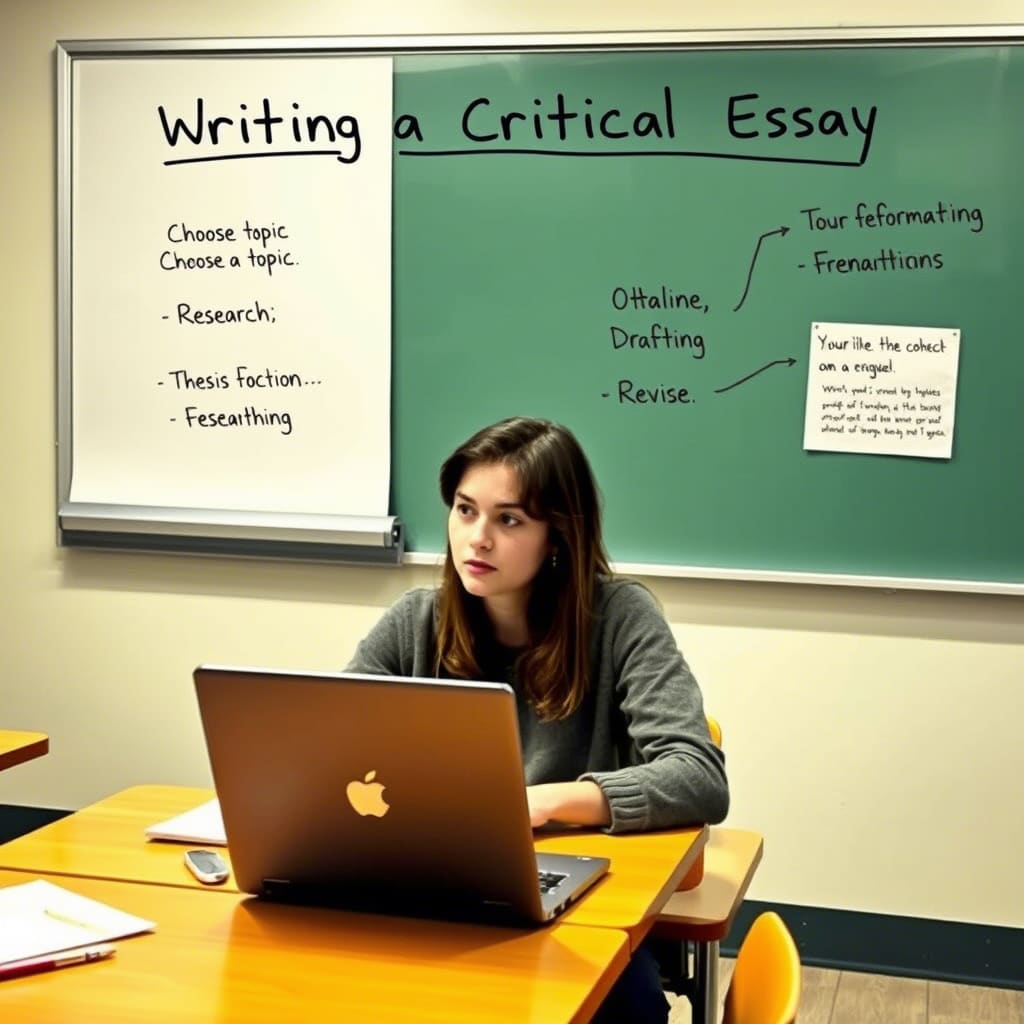
Crafting a critical essay can be a daunting task, but with a structured approach, you can excel in academic writing. Whether you're analyzing literature, evaluating an argument, or critiquing a film, this comprehensive guide will help you create a compelling and insightful critical essay.
What Is a Critical Essay?
A critical essay is an academic paper that evaluates, interprets, and analyzes a text, argument, or concept. Unlike descriptive or narrative essays, a critical essay requires you to present a well-reasoned argument supported by evidence. The primary goal is to offer a thoughtful critique, not merely a summary.
Step-by-Step Guide to Writing a Critical Essay
Step 1: Understand the Assignment
Before diving into the writing process, thoroughly read and understand your assignment guidelines. Pay close attention to:
- Main Objectives: What is the purpose of the essay? Are you evaluating a text, comparing theories, or analyzing data?
- Required Length: How long should your essay be? This will affect the depth of your analysis.
- Formatting Style: Are you required to use APA, MLA, Chicago, or another citation style?
- Specific Requirements: Are there particular questions or themes your instructor wants you to address?
Step 2: Develop a Strong Thesis Statement
Your thesis statement is the cornerstone of your essay. It should clearly present your main argument or perspective. A strong thesis is:
- Clear and Concise: It should be specific and to the point.
- Debatable: It should present an argument that can be supported or refuted.
- Relevant: It should directly address the assignment prompt.
Example:
"While many readers appreciate 'To Kill a Mockingbird' as a coming-of-age narrative, its profound exploration of racial injustice positions it as a seminal critique of societal norms in the American South."
Step 3: Gather Evidence and Examples
To support your thesis, you'll need credible and relevant sources. Consider using:
- Direct Quotes: Extracts from the primary text that support your argument.
- Scholarly Articles: Research papers and academic journals that provide expert analysis.
- Historical Context: Background information that helps situate your argument.
- Expert Opinions: Insights from authorities in the field.
- Real-World Examples: Concrete examples that illustrate your points.
Step 4: Create a Detailed Outline
Organizing your thoughts before writing ensures a coherent and structured essay. A detailed outline might include:
- Introduction:
- Hook (a question, surprising fact, or quote)
- Background information
- Thesis statement
- Body Paragraphs:
- Each paragraph should focus on one main argument.
- Include evidence (quotes, statistics, examples) to support your argument.
- Provide analysis to explain how the evidence supports your thesis.
- Conclusion:
- Restate the thesis.
- Summarize key points.
- Offer a thought-provoking final statement.
Step 5: Write an Engaging Introduction
Your introduction should grab the reader's attention and set the stage for your argument. Start with a hook, such as:
- A provocative question
- A surprising fact or statistic
- A relevant quote from the text
Then, provide necessary background information and clearly state your thesis.
Step 6: Develop the Body Paragraphs
Each body paragraph should follow the PEE (Point, Evidence, Explanation) structure:
- Point: State your main argument for the paragraph.
- Evidence: Provide a quote, example, or statistic that supports your point.
- Explanation: Analyze how the evidence supports your thesis.
Step 7: Craft a Powerful Conclusion
Your conclusion should reinforce your thesis and leave a lasting impression. Avoid introducing new arguments. Instead:
- Restate your thesis in a compelling way.
- Summarize your key points.
- Offer a final thought or call to action that resonates with your argument.
Step 8: Edit and Proofread
Before submitting your essay, take the time to revise and proofread. Check for:
- Clarity: Ensure your arguments are clear and easy to follow.
- Grammar and Punctuation: Use tools like Grammarly to catch errors.
- Coherence: Make sure your ideas flow logically from one paragraph to the next.
- Citation: Verify that all sources are properly cited.
Additional Tips for Success
- Use Transition Words: Words like "moreover," "however," and "therefore" help guide the reader through your argument.
- Avoid Plagiarism: Always cite your sources and use quotation marks for direct quotes.
- Seek Feedback: Have a friend or tutor review your essay for additional insights.
Need Help with Your Critical Essay?
Writing a high-quality critical essay requires time and effort. If you need expert assistance, consider seeking professional academic support services. They can provide guidance, editing, and feedback to help you succeed.
Ready to elevate your critical essay writing skills? Visit our comprehensive guide for more detailed tips and resources to help you craft a compelling essay that impresses your professors and enhances your analytical and writing skills. Good luck!
About the Creator
CollegeWritingHub
📚 Helping students with academic writing & essay tips 🚀 Struggling with essays? Get expert guidance & improve your writing! Check out this service for top-notch academic help.
Keep reading
More stories from CollegeWritingHub and writers in Education and other communities.
Mastering Essay Writing: The Power of Transitions
A strong essay effectively links related ideas and sentences to create a smooth and logical flow. One of the most essential tools for achieving this coherence is the use of transitions. These words and phrases act as bridges, guiding readers from one thought to the next while maintaining clarity and consistency.
By CollegeWritingHub11 months ago in Education
US Urges Its Citizens to Flee Venezuela Amid Reports of Paramilitaries
The United States has issued a strong warning urging its citizens to immediately leave Venezuela, citing growing security risks and alarming reports of armed paramilitary groups operating across the country. The advisory, released by the US State Department, reflects escalating concern over the deteriorating safety situation as political instability, armed violence, and lawlessness intensify.
By Aarif Lashari8 days ago in Education




Comments
There are no comments for this story
Be the first to respond and start the conversation.