
How to Survive in the New Nuclear Age
Adapting to an Era of Uncertainty, Deterrence, and Technological Risk

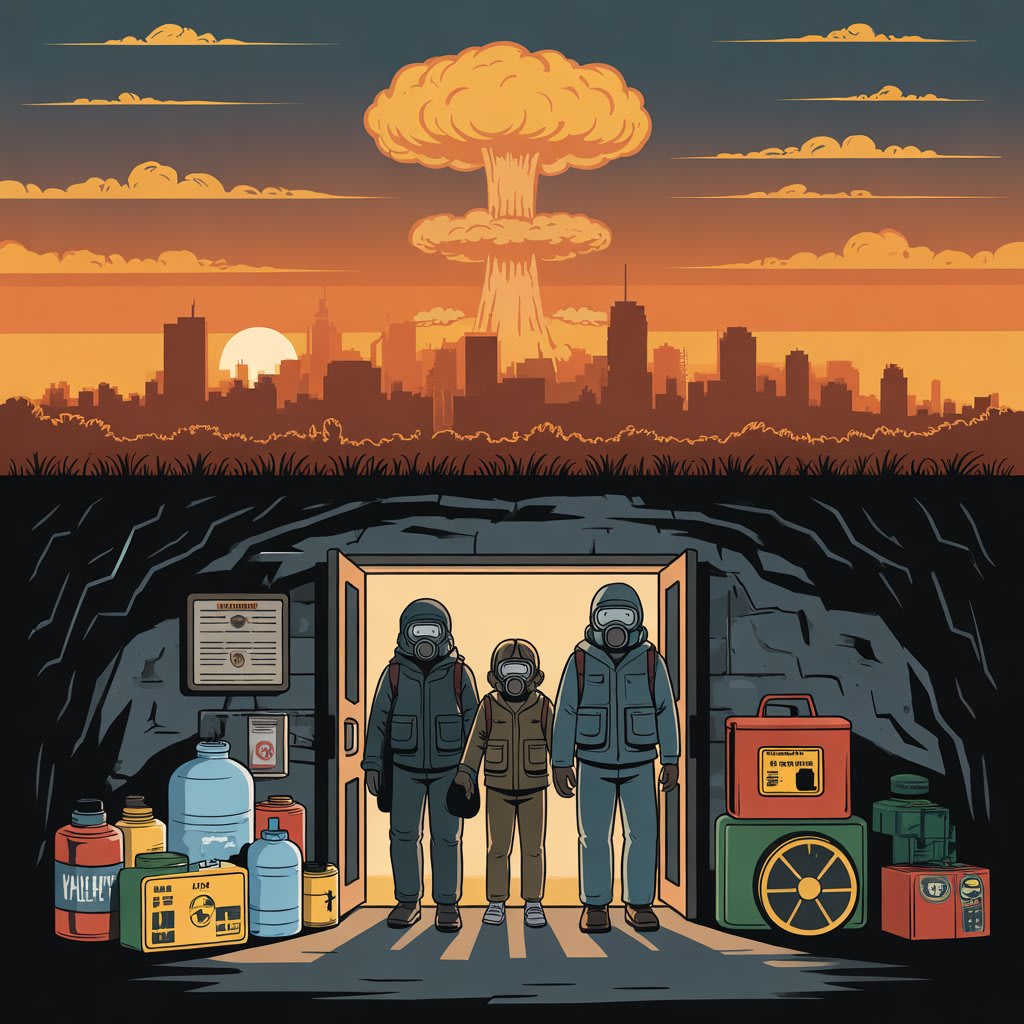
The 21st century has not only brought us remarkable advances in science and technology, but also a new wave of geopolitical tension centered around nuclear weapons. With more countries developing or modernizing their nuclear arsenals, and with AI potentially involved in military decisions, the world is entering a new nuclear age. Unlike the Cold War era, where a bipolar standoff between the U.S. and USSR shaped nuclear diplomacy, today's world is marked by a multipolar threat environment and less predictability. To survive in this new nuclear age, both individuals and nations must adopt updated strategies grounded in awareness, resilience, and diplomacy.
Understanding the Modern Nuclear Landscape
To survive, the first step is understanding. Today’s nuclear threat does not just come from large-scale warheads fired between two superpowers. Instead, it includes:
Tactical Nuclear Weapons: Smaller, battlefield-oriented warheads that some states view as "usable."
New Entrants: Countries like North Korea, and potentially others in the future, challenge global stability.
Modernization Programs: Russia, the U.S., China, and others are updating their delivery systems, warheads, and early-warning systems.
Cyber and AI Threats: Cyber-attacks on nuclear command systems or the use of AI in early-warning decisions increase risks of miscalculation.
This complexity requires a multi-faceted survival strategy, rather than reliance on Cold War-style deterrence alone.
National-Level Survival Strategies
1. Strengthening Diplomacy and Arms Control
Reviving and strengthening arms control agreements is crucial. Treaties like the New START, the Treaty on the Prohibition of Nuclear Weapons (TPNW), and bilateral confidence-building measures reduce the chances of misunderstandings escalating into conflict. Nations must invest in dialogue, transparency, and verification mechanisms to manage the growing risks.
2. Building Resilient Infrastructure
Governments should ensure that critical infrastructure — power grids, water supplies, communication systems — are hardened against electromagnetic pulse (EMP) attacks and fallout damage. Decentralized and redundant systems can maintain order during crises.
3. Investing in Civil Defense
While often neglected in recent decades, civil defense planning is a practical necessity. Shelters, emergency communication systems, and public drills can save lives if a nuclear detonation ever occurs. Countries like Switzerland still maintain civil defense shelters for every citizen — a model others can learn from.
Individual and Community Preparedness
You don’t need to be a government to prepare. Individual action, community organization, and psychological readiness can dramatically improve survival odds.
1. Know the Basics of Nuclear Survival
If you’re near a blast:
Avoid looking at the flash – It can cause temporary or permanent blindness.
Take cover immediately – In the first few seconds, blast pressure and flying debris are the most immediate threats.
Move to a fallout shelter or indoors – Preferably underground or in the center of a building, away from windows.
2. Stock Emergency Supplies
Basic supplies should include:
Non-perishable food and water (3+ days per person)
First-aid kit
Flashlights, batteries, hand-crank radio
Potassium iodide (KI) tablets to reduce radioactive iodine absorption
Respirator masks or at least cloth masks to filter dust and particles
3. Fallout Awareness
Fallout consists of radioactive particles that settle on surfaces. It is most dangerous in the first 24-72 hours. To minimize exposure:
Seal windows and doors with plastic and tape.
Avoid going outside unless absolutely necessary.
Decontaminate yourself by removing clothes and washing thoroughly if exposed.
4. Build Community Networks
Individual survival is harder than collective resilience. Neighborhoods that plan together — sharing resources, building shelters, organizing first-aid — are more likely to weather disasters. Mutual support can also ease psychological stress and reduce panic.
Mental and Psychological Resilience
Survival isn’t only physical. In a nuclear scenario, the emotional toll is immense — fear, grief, and uncertainty can paralyze individuals and communities. Training yourself and your family for emergency thinking is just as vital.
Practice emergency drills: Treat them seriously, not as "paranoid" exercises.
Educate yourself and others: Misinformation can spread faster than fallout in times of crisis.
Stay informed but not obsessed: Follow trustworthy sources but avoid doomscrolling.
Global Digital Awareness
In the age of digital warfare, survival also involves being aware of:
Cyber-attacks on nuclear warning systems
AI-decision making in military responses
Misinformation campaigns that can manipulate public perception or panic
Digital literacy is now part of nuclear survival. Knowing how to verify information, protect personal data, and recognize propaganda may seem small — but it helps maintain social cohesion during crisis.
Advocating for a Safer Future
One of the best survival strategies is helping reduce the chances of a nuclear war ever happening. As a citizen, you can:
Support political candidates and leaders who advocate for arms reduction.
Participate in peace-building forums and initiatives.
Educate younger generations about nuclear risks and diplomacy.
The fewer people treat nuclear weapons as “just another policy tool,” the better our collective odds.
Conclusion: Survival in the Age of the Unthinkable
Surviving the new nuclear age is not about living in fear, but living with awareness. In this complex, unpredictable world, nuclear risks are not science fiction. They are a real — albeit preventable — danger. But humanity has the tools, technology, and wisdom to avoid catastrophe if we stay informed, prepared, and committed to peace.
From national-level strategy to individual shelter-building, from community preparedness to advocating for disarmament — survival today is about being proactive. The more we accept the reality of the threat, the better we can work together to avoid ever having to face it.
About the Creator
Hamza khan
Experienced article writer with a passion for crafting engaging content. Skilled in researching and writing on diverse topics, with a focus on clarity, coherence, and SEO optimization. Proven track record of delivering high-quality articles
Keep reading
More stories from Hamza khan and writers in Education and other communities.
A Nation Waiting for Rescue" SWAT PAKITAN INCIDENT.
The Helicopters of Divine Mercy In the land of Pakistan, the so-called "Fortress of Islam", the blessed "State of Light and Joy", and a society supposedly composed of God’s chosen people, one finds a curious contradiction. A place built upon the ideology of faith, yet soaked in fear and farce. Surrounded by daily turmoil, meaningless speeches, the ridiculous objections of the Islamic Ideological Council, institutional corruption, and a religious hypocrisy that knows no shame — the people here live in a perpetual state of existential absurdity.
By Hamza khan9 months ago in Humans
Scaling Smart: How Consultants Support Business Growth and Efficiency
Business growth sounds exciting. More sales, more customers, and greater market visibility. But growth can also create stress. Costs may rise. Teams may struggle to keep up. Systems that once worked smoothly may start to break down. This is why many companies look for expert guidance. They want to understand how consultants support business growth and efficiency to deliver real, lasting results.
By Nicole Metz7 days ago in Education
Empowering Your Financial Journey: The Role of Wellness and Coaching
Financial success is not only about numbers, budgets, and investment strategies. It is also deeply connected to mindset, habits, and overall well-being. Many people work hard to improve their financial situation, yet they often overlook the emotional and behavioral aspects that influence financial decisions. Empowering your financial journey means recognizing that financial wellness and coaching can play a powerful role in building lasting stability and confidence.
By Mario Payne4 days ago in Education


Comments
There are no comments for this story
Be the first to respond and start the conversation.