
A Nation Waiting for Rescue" SWAT PAKITAN INCIDENT.
In a land where prayer replaces planning and spectacle overshadows sense, we survive disasters only to repeat them—with hashtags, helicopters, and helplessness.

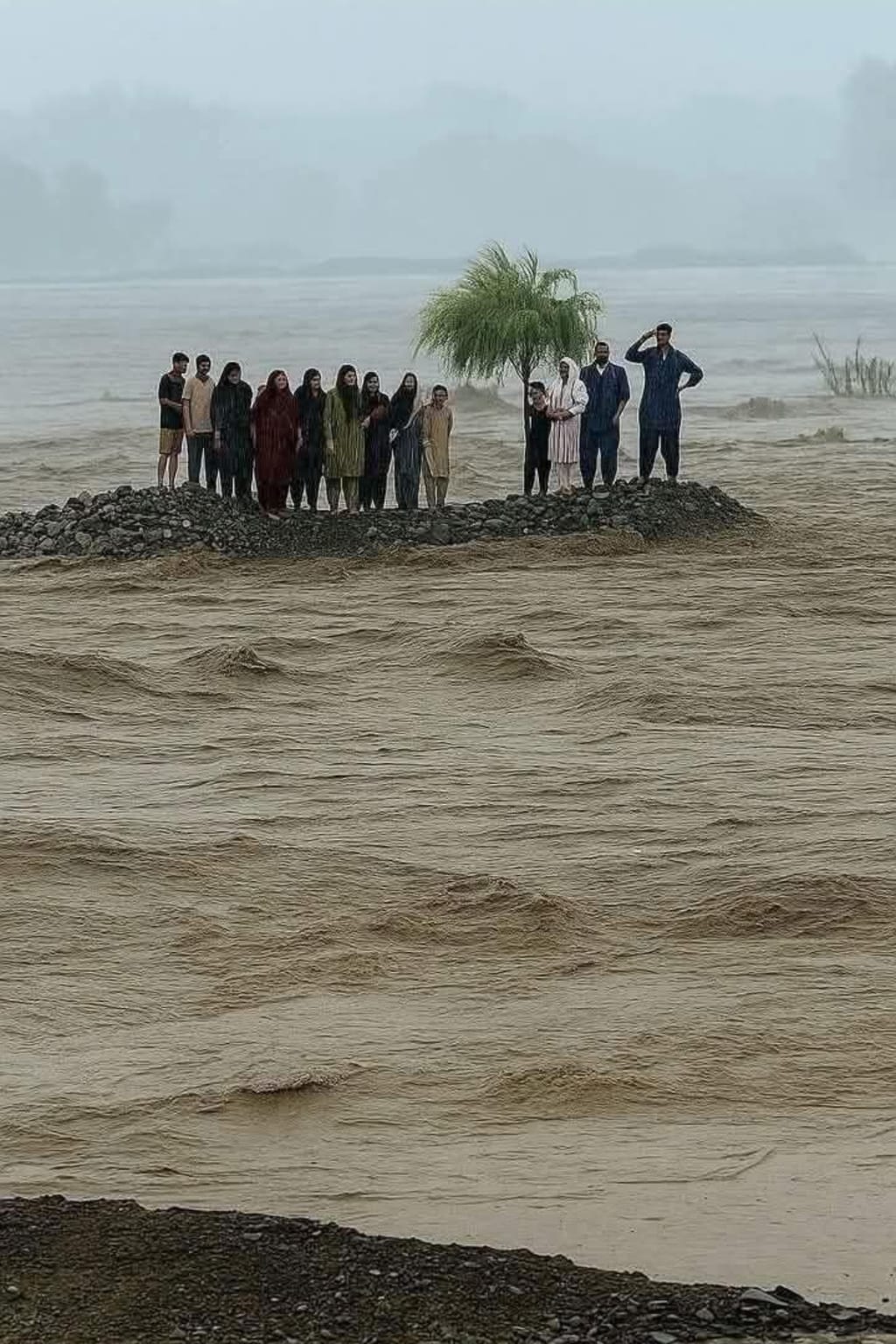
The Helicopters of Divine Mercy
In the land of Pakistan, the so-called "Fortress of Islam", the blessed "State of Light and Joy", and a society supposedly composed of God’s chosen people, one finds a curious contradiction. A place built upon the ideology of faith, yet soaked in fear and farce. Surrounded by daily turmoil, meaningless speeches, the ridiculous objections of the Islamic Ideological Council, institutional corruption, and a religious hypocrisy that knows no shame — the people here live in a perpetual state of existential absurdity.
This land is not something separate from us — we are this land. We could be those people, in fact, we are those people. We are surrounded by a society where child marriage is still debated with alarming seriousness, where men dream nightly of being embraced by eternally virgin houris in heaven, and where fourteen-year-old girls are discussed as if they are commodities up for negotiation. Amidst this circus of faith and farce, people live, breathe, and die — often forgotten, often ignored.
We are not travelers but voyeurs, engaging in a kind of cultural tourism of our own dystopia. We visit remote, marginalized areas under the guise of “exploring nature”, but what we really seek is an escape — not from society, but from our own dullness. Locals, long used to visitors, have now learned to objectify as well as they are objectified. They, like us, stare at tight jeans and heaving chests, as if visual relief is all that remains in a land where joy is forbidden and expression is policed.
Young men, jobless and bitter, sit idle with naswar under their tongues, watching women from afar like prisoners imagining escape through the barred windows of desire. These men do not know what freedom looks like — but they think it wears lipstick and sunglasses.
We throw plastic bags, milk cartons, juice boxes, cigarette packs — polluting the very nature we claim to adore. We defile rivers and mountains with our consumption, taking selfies beside flowing streams while our cousins back in Lahore, Chakwal, Mianwali, or Muridke scroll through our social media stories, silently wishing they were rich enough to be irresponsible too.
Then, something goes wrong — a landslide, a flash flood, an accident. And suddenly, we become victims of the very chaos we helped create. Then comes the cry: “Ya Allah Khair, Ya Allah Khair!” — the mantra of helplessness, the soundtrack of a nation that believes prayer will replace planning.
The rescue helicopters arrive, too late to save us, but just in time for a spectacle. Our drowning is broadcast live. The longer we struggle, the better the ratings. Exclusive footage of our final moments loops on every TV channel. There is no dignity in our death — just content. Provincial and federal governments engage in a blame game, hurling accusations over poor infrastructure and zero emergency planning. Meanwhile, the bloated, mud-filled bellies of the dead float silently, waiting for someone to care.
In this "radiant nation", the human being holds no more significance than a fly. Whether it is nature or the state, both are indifferent to our cries. The sacred phrases “Insha’Allah”, “Masha’Allah”, and “Astaghfirullah” are used like band-aids — not to heal, but to hide. They cover every flaw, every failure. The phrase “Insha’Allah” has become a way of saying, “We won’t do anything, but let’s see what God decides.”
We are the world’s most absurd people.
We live in the illusion of piety, yet are drunk on hypocrisy. We worship not God, but the performance of worship. Our public morality is strict, yet our private vices run rampant. We pray five times a day but cheat, bribe, and lie between every salah. We do not build systems — we build excuses. We do not fix problems — we bury them beneath imported phrases and holy-sounding hashtags.
This absurdity defines not just our institutions but our very culture. We do not believe in order — we believe in spectacle. The rescue helicopter has become our religious symbol: not of salvation, but of spectacular failure. The sound of its blades is the soundtrack of our national panic, our dependence on last-minute miracles, our refusal to prepare, plan, or prevent.
The same society that demands "modesty" from women is addicted to voyeurism. The same people who shame girls for jeans upload edited selfies with filters on full glow. The same government that bans Valentine’s Day also issues tenders for importing iPhones for ministers. This contradiction is not just accidental — it is systemic. It is cultural. It is spiritual rot.
And amid all this, the common man — the real Pakistani — floats like driftwood. Useless, forgotten, helpless. He lives in a house made of prayer mats and unpaid bills. He survives in a city of mosques but no hospitals, sermons but no sewage systems. He is told to be patient, that things will change, that heaven awaits — but for now, please die quietly. Do not disturb the narrative.
Nature has no patience for our contradictions. It will drown us, bury us, burn us — indifferent to whether we prayed Fajr or not. But still, we chant “Ya Allah Khair, Ya Allah Khair” — as if divine mercy can clean up what human negligence has destroyed.
We are not victims of fate. We are victims of our own refusal to face reality. In this blessed state, it is not sin to be incompetent — only to admit it. We have built a country of sacred slogans and empty promises.
And so the next time the mountains tremble or the rivers rise, the next time we scream for help, the helicopter may or may not arrive. But the chant will echo: “Ya Allah Khair, Ya Allah Khair.”
Not a prayer.
A punchline.
About the Creator
Hamza khan
Experienced article writer with a passion for crafting engaging content. Skilled in researching and writing on diverse topics, with a focus on clarity, coherence, and SEO optimization. Proven track record of delivering high-quality articles
Keep reading
More stories from Hamza khan and writers in Humans and other communities.
Swat Valley in 2010: The Aftermath of Operation Rah-e-Rast
Introduction The year 2010 holds deep historical significance for the Swat Valley in Pakistan. While the military operation Rah-e-Rast was officially launched in 2009, its aftermath defined 2010. This period was marked by the slow return of peace, the rehabilitation of millions of displaced civilians, the rebuilding of destroyed infrastructure, and the psychological recovery of a society that had endured years of militant control.
By Hamza khanabout a month ago in Humans
If Your Partner Has These 15 Qualities, Never Let Them Go
Choosing the right partner is one of the most important decisions a person can make. The person you build a life with will influence your happiness, your growth, your confidence, and even the direction your future takes.
By Navigating the World2 days ago in Humans


Comments (1)
پردي مڑه دروغ سله وايي