
How to Streamline the Product Development Cycle Using Prototyping
Product Development Cycle

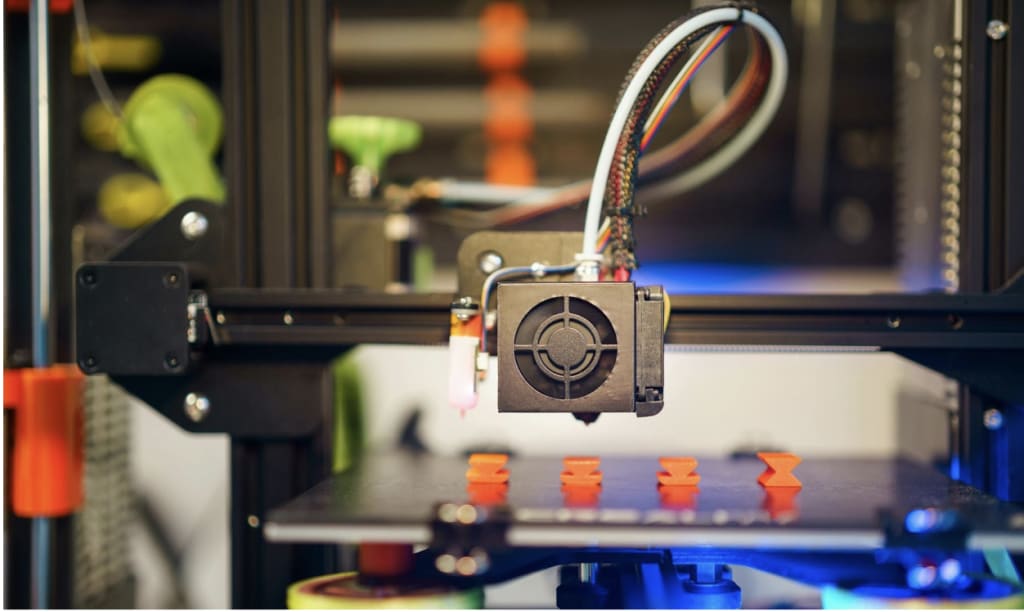
Businesses must produce creative items fast without compromising quality in today's cutthroat market. Prototyping is among the best methods for doing this. Before committing to full-scale manufacturing, companies can find design problems, test concepts, and improve functionalities by producing early versions of their products. CNC machined prototypes are notable among prototyping methods for their accuracy and adaptability, providing a clear route to expediting the product development cycle.
This post examines how prototyping aids companies in cutting expenses, minimizing design faults, and quickening the product development process.
Things to Know About Product Development Prototyping
Making a functioning or non-functional model of a product in order to test its usability, performance, and design is known as prototyping. It ensures that concepts are feasible and achieve the desired outcomes by bridging the gap between the conceptual and production stages.
Prototypes come in various varieties:
Conceptual Prototypes: Pay attention to form, size, and appearance.
Functional Prototypes: Highlight the product's functionality and capabilities.
Industrial prototypes closely mimic the finished product, down to the materials and procedures used.
Each kind has a distinct function in the development cycle and can assist in identifying problems that could otherwise appear later in the production cycle when fixes are more expensive.
The Role of Prototyping in Streamlining Development
It is important to understand the roles of prototyping in streamlining development, let us look at them below:
1. Recognizing Design Errors Early
Designers can see and test their ideas in concrete ways via prototypes. Before production starts, this procedure assists in identifying any design defects including mismatched parts, poor structural integrity, or difficulties with the user interface.
For example, engineers can verify dimensions, tolerances, and material behavior under real-world situations by creating exact reproductions of their designs using prototypes. Physical prototypes give a more realistic picture of how the product will work than digital simulations do.
2. Making Decisions Faster
Cross-functional teams can make decisions more quickly when they have a physical prototype. The prototype can be evaluated concurrently by the design, engineering, and marketing teams, who can offer comments and make suggestions for improvements.Additionally, iterative prototyping establishes a feedback loop in which each iteration advances the product toward perfection. This iterative technique is more effective with CNC-machined prototypes since they can be made quickly without sacrificing accuracy.
3. Cutting Production Expenses
Prototyping reduces production waste and expensive rework by spotting defects early. For instance, engineers can replace a weak material with a stronger one without losing money if they find it during prototyping.Furthermore, the knowledge gathered from prototypes can direct tooling design, guaranteeing that molds and dies are made accurately the first time, thereby saving even more time and money.
4. Improving Client satisfaction
Prototyping is essential to customer-focused product development. Before the design is finalized, it gives stakeholders and potential buyers a sneak peek at the product, allowing for insightful feedback.With their high fidelity and material precision, CNC-machined prototypes assist companies in presenting clients with realistic models, guaranteeing that their expectations are fulfilled and lowering the possibility of post-launch discontent.
Methods of Prototyping
These are methods of prototyping that you need to know about:
- The use of CNC machines
Using a subtractive manufacturing technique called CNC machining, a prototype is made by removing material from a solid block. It can create intricate geometries and is incredibly accurate.
CNC-machined prototypes have the following benefits:
- High accuracy and close tolerances.
- Compatibility with a variety of materials, including plastics and metals.
- Quick turnaround for manufacture in small quantities.
- Perfect for functional validation and testing.
2. 3D printing
Using digital files, 3D printing, also known as additive manufacturing, creates prototypes layer by layer. It works especially well with intricate, lightweight designs and conceptual prototypes.
Benefits:
- Cost-effective for intricate designs.
- Rapid small-scale model production.
- Traditional procedures do not allow for the creation of novel shapes.
3. Injection Molding
Prototypes that closely match finished goods in terms of material and finish are made using injection molding. It is especially helpful for products that are produced in large quantities.
Benefits:
- Creates robust prototypes for evaluating their functionality.
- Perfect for assessing materials at the manufacturing level.
4. Sheet Metal Fabrication
Products including enclosures, brackets, and panels are tested using sheet metal prototypes. The automobile and aerospace sectors benefit from this approach.
Benefits:
- Precise material property testing.
- Adaptable design modifications throughout the prototype stage.
How Prototyping Speeds Up the Product Development Cycle
Prototyping can help speed up the development of the product cycle in the following ways:
Iterative Evaluation and Enhancement: Iterative development is supported by prototyping, which enables designers to continuously test and improve their designs. Every iteration improves the product's functionality and appearance while removing defects.
Reduced Lead Times: Rapid prototyping is made possible by contemporary technology like 3D printing and CNC prototypes, which drastically cut lead times. Instead of weeks, businesses can get from concept to testing in a matter of days.
Effective Preparation of Tools: By ensuring proper tooling design, prototypes reduce mistakes in production molds and dies. This stage speeds up the shift to mass manufacturing and decreases downtime.
Prototyping and Cost Reduction
Financial risks are reduced by prototyping in several ways:
Optimization of Materials: Businesses can test various materials for strength, weight, and cost-effectiveness through prototyping. To cut costs, testing with CNC-machined prototypes, for example, can determine whether a lighter material will function well.
Preventing Design Errors in Manufacturing: If a design defect is found after manufacturing has started, costly recalls or rework may result. Prototypes prevent these expenses by identifying these problems early.
Reduced Development Expenses: Since rapid prototyping technologies do not require substantial trial-and-error throughout production, they lower the overall cost of development.
The Future of Prototyping
The process is becoming even quicker and more effective thanks to developments in prototyping technologies. Because it strikes a balance between speed and accuracy, hybrid manufacturing—which blends 3D printing and CNC machining—is becoming more and more popular.
By anticipating possible problems in the conceptual stage and eliminating the need for physical models, AI-driven design tools are also revolutionizing prototyping.
Conclusion
An important component of contemporary product development is prototyping. Prototyping, whether by CNC machine, 3D printing, or injection molding, enables companies to find errors, improve designs, and save time and money.
Businesses can accelerate their product development cycles and bring high-quality, creative goods to market more quickly by investing in efficient prototype techniques. In addition to lowering financial risks, prototyping encourages creativity and keeps companies ahead of the competition.
About the Creator
ruchi gupta
Link Outreach expert https://www.upwork.com/freelancers/ruchilinkbuilder
Contact me on skype https://join.skype.com/invite/SdiUz9fiFhQc
Keep reading
More stories from ruchi gupta and writers in Education and other communities.
Trust and Safety Moderation in Digital Platforms: A Quick Guide by Orania Limited
In this post,Orania Limited reviews the significance of trust and safety moderation in Digital platforms, unveiling the hidden mechanisms that keep online spaces secure and respectful. You’ll explore innovative strategies and cutting-edge technologies used to anticipate and mitigate risks, ensuring a safe digital environment. Orania Limited also offers a glimpse into the future, revealing emerging trends that promise to revolutionize how we interact online.
By ruchi gupta2 years ago in Education
Twenty Years of Medical Experience: Knowledge That Will Redefine Future Healthcare
Medicine has changed profoundly over the last two decades. Scientific breakthroughs, digital innovation, and evolving healthcare policies have reshaped how medical professionals diagnose illnesses, treat patients, and manage healthcare systems. Conditions that were once difficult to detect or treat now benefit from advanced imaging, improved medications, and minimally invasive procedures. These developments have significantly improved survival rates and overall patient outcomes.
By Yousuf A. Gaffar, M.D6 days ago in Education


Comments
There are no comments for this story
Be the first to respond and start the conversation.