
How to Start a Podcast: A Beginner's Guide!
"The Art of Sharing Your Voice!"


So, you're thinking about starting your own podcast? That's fantastic! Podcasting is a great way to share your ideas, connect with an audience, and explore your creativity. Whether you're passionate about storytelling, sharing your expertise, or just having interesting conversations, podcasting can be an incredibly rewarding experience. In this article, we'll walk you through the process of starting your own podcast, from coming up with an idea to launching your first episode.
1.Find your niche.
Passion and knowledge: Determine your areas of knowledge and passion first. What subjects do you enjoy discussing? What skills or expertise do you possess that you think others would find useful?
Research on Audiences: Think about who your intended audience is. What categories of information appeal to them? Which issues or queries do they have that your podcast might be able to answer?
Here is a beginners guide to start your new podcast show.
2.Planning your Podcast.
Format and Style: Choose your podcast's format and tone. Will it be a solo commentary, a storytelling tale, or an interview-style show? Consider which format will work best for your audience and content.
Duration and Frequency of Episodes: Decide on the length of each episode and the frequency of new episode releases. Since podcasting is all about consistency, make sure your schedule is something you can actually keep to.
Here is a beginners guide to start your new podcast show.
3.Recording and Equipment.
Recording Space: To record your episodes, choose a peaceful, cozy area. For optimal audio quality, reduce distractions and background noise.
Equipment: Make an investment in headphones, audio recording software, and a decent microphone. Although it doesn't have to cost a fortune, high-quality gear can significantly raise the podcast's production value.
Here is a brief description on qualities to consider while purchasing podcast equipments.
1.Microphones: Look for dynamic microphones with a cardioid polar pattern to minimize unwanted noise and handle various recording environments. Consider options with both USB and XLR connectivity for versatility .
2.Headphones: Opt for over-ear closed-back headphones to provide isolation and accurate monitoring of audio, essential for editing and mixing. Closed-back headphones block out ambient noise, ensuring a crisp playback .
3.Audio Interfaces and Podcast Mixers: Depending on your recording needs, choose between audio interfaces and podcast mixers. Audio interfaces are ideal for computer-based recording, while mixers offer additional controls and convenience, suitable for recording away from a computer and connecting call-in guests .
4.Acoustic Treatment: Consider acoustic tiles or panels that absorb sound energy to minimize reverb and resonance, creating a polished audio experience for your listeners .
5.Accessories: Invest in pop filters to dampen harsh plosives, shock mounts to minimize unwanted sound, and boom arms for precise microphone positioning. Additionally, consider a windscreen to reduce outdoor noise during outdoor recordings .
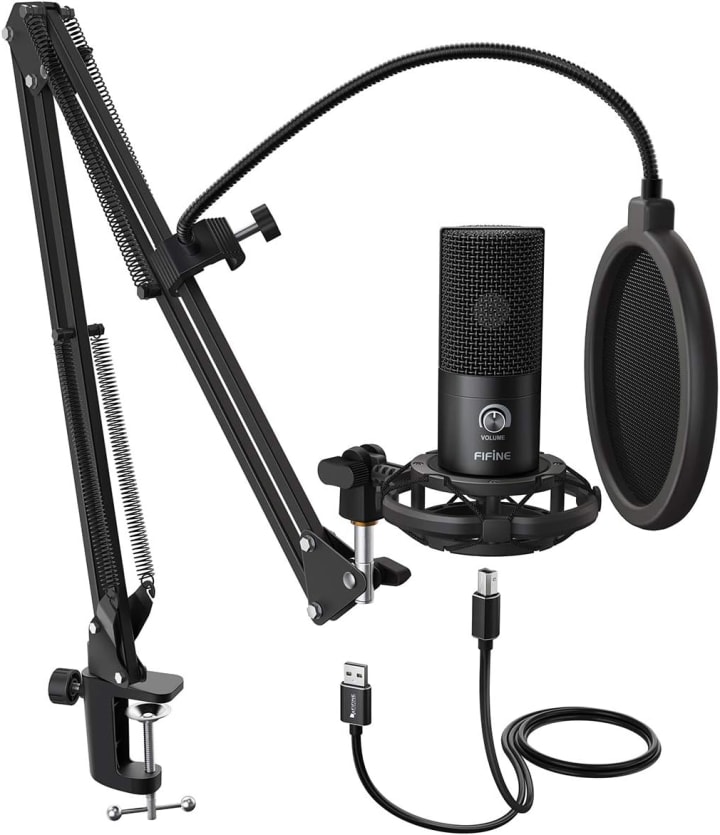
Click Here to purschase podcast equipments.
4.Production and Editing.
Editing Software: Develop your editing skills to make your episodes shine. Make sure there are no unneeded pauses, add sound effects or music, and maintain a seamless transition from beginning to end.
Cover image and Branding: Make a logo that embodies your podcast and create a visually striking cover image. Maintaining a consistent brand makes your podcast stand out and get recognized by your listeners.
5.Distribution and Hosting.
Pick a Hosting Platform: Decide on a platform for hosting podcasts that works for you. Think about things like analytics, storage capacity, and convenience of distribution to well-known podcast directories.
Send in to Directories: To reach a large audience, submit your podcast to directories such as Google Podcasts, Spotify, Apple Podcasts, and others.
6.Interact with the People in Your Audience.
Social Media Presence: Establish a social media presence to interact with listeners and promote your podcast. Talk to your audience, share behind-the-scenes stuff, and drop hints.
Feedback and Improvement: Seek input from your viewers and make use of it to make your material better. You can learn more about your listeners' interests and desires by interacting with them.
Here is a beginners guide to start your new podcast show.
7.Start a Podcast
Create Buzz: By releasing teasers and sneak peaks, you can increase interest in your podcast before it launches. To generate interest in your podcast, schedule promotional events and think about a launch date.
Take Off Confidently: Once everything is set up, confidently start your podcast. To encourage its growth, share it on social media, with friends, and with family.
In Conclusion.
Starting a podcast can be an exciting and fulfilling endeavor. With the right preparation, passion, and dedication, you can create a podcast that resonates with listeners and makes a meaningful impact. So, what are you waiting for? Get out there and start sharing your voice with the world through the power of podcasting!
About the Creator
What Caused the Big Bang?
Understanding the Big Bang Theory The Big Bang does not describe an explosion in space. Instead, it describes an expansion of space itself. At the beginning, all matter, energy, space, and time were compressed into an extremely small, hot, and dense state.
By shahkar jalala day ago in Education
Eating with Purpose: How Smart Nutrition Transforms Health and Lifestyle
Smart nutrition has emerged as a critical element of modern wellness, emphasizing intentional, balanced, and sustainable dietary choices. Unlike restrictive or fad diets that prioritize short-term results, smart nutrition focuses on long-term health, encouraging a thoughtful approach to the foods we consume daily. By understanding how nutrients affect the body, individuals can enhance energy, optimize performance, and foster mental clarity. This holistic approach reshapes not only physical health but also lifestyle habits, creating meaningful and lasting transformations.
By Matthew Pothoff2 days ago in Education


Comments
There are no comments for this story
Be the first to respond and start the conversation.