
How to Select the Best STM32 Microcontroller for Your Project?
A Comprehensive Guide to Navigating the STM32 Family and Choosing the Right MCU for Your Needs
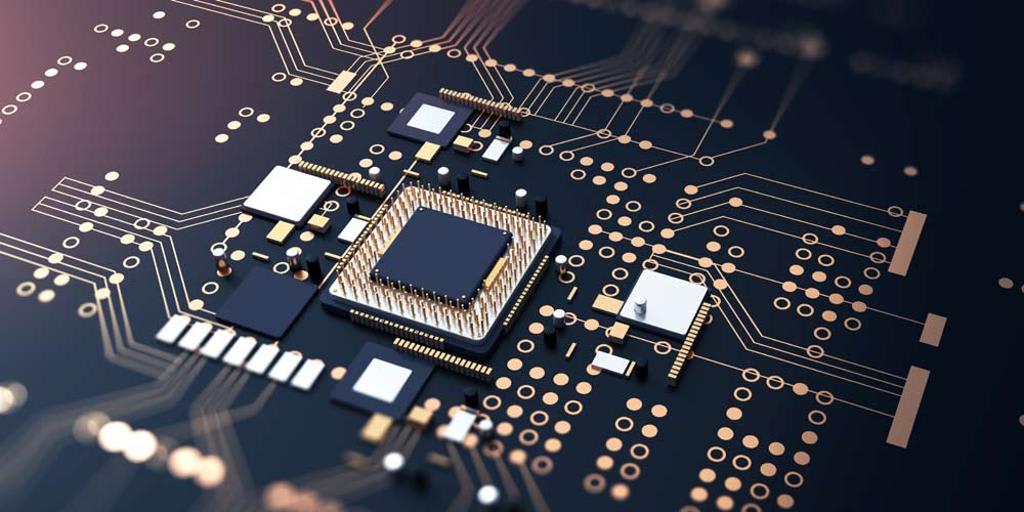
Choosing the right microcontroller is a critical step in the design and development of embedded systems. The STM32 family from STMicroelectronics offers a vast range of options, with 3,954 variants listed on Digi-Key, providing solutions for various applications, from simple home automation devices to complex industrial systems. This blog will guide you through the essential factors to consider when selecting the best STM32 microcontroller for your project.
STM32 Overview
STM32 is a comprehensive family of 32-bit microcontrollers based on ARM Cortex-M architectures. These microcontrollers are divided into several subfamilies, each designed to cater to different performance, power, and application requirements. Here is a brief overview of the main series:
F Series: The original series balancing performance and cost, suitable for general-purpose applications.
L Series: Designed for low-power applications, ideal for battery-operated devices.
U Series: Combines low power with high performance, catering to energy-efficient yet demanding applications.
H Series: High-performance series for applications requiring significant processing power.
G Series: Budget-friendly series offering a mix of performance and cost efficiency.
C Series: Ultra-low-cost series, perfect for highly cost-sensitive projects.
W Series: Features wireless capabilities, ideal for IoT and connectivity applications.
MP Series: Microprocessor series for applications needing robust processing capabilities.
Key Factors to Consider
When selecting an STM32 microcontroller, consider the following factors:
Performance Requirements
Evaluate the processing power needed for your application. Consider factors such as clock speed, CPU core type (Cortex-M0, M3, M4, M7, or M33), and the presence of any hardware accelerators or Digital Signal Processing (DSP) features. High-performance series like STM32F4, STM32F7, and STM32H7 are ideal for demanding applications requiring intensive processing.
Power Consumption
For battery-operated or energy-efficient applications, prioritize microcontrollers with low power consumption. The STM32L series offers ultra-low-power options, while the STM32U series provides a balance of low power and high performance. Understanding the power requirements of your application will help you choose the right series that maximizes battery life and efficiency.
Memory Needs
Assess the amount of Flash and RAM required for your application. Larger applications with complex firmware will require more memory. The STM32F4 and STM32H7 series offer significant memory capacities. It is crucial to estimate your memory needs accurately to avoid running into limitations during development.
Peripheral Requirements
Identify the peripherals needed for your project, such as ADCs, DACs, GPIOs, communication interfaces (UART, SPI, I2C, CAN, USB, Ethernet), and timers. Different STM32 series provide varying levels of peripheral integration. For example, the STM32F3 series is known for its advanced analog features, while the STM32F7 and H7 series offer extensive connectivity options. Ensuring the microcontroller supports all necessary peripherals can streamline your development process.
Development Tools and Ecosystem
Consider the availability of development tools, libraries, and community support. STM32 microcontrollers are supported by the STM32Cube ecosystem, which includes software libraries (HAL, LL), middleware, and tools like STM32CubeMX for configuration and STM32CubeIDE for development. A robust ecosystem can significantly reduce development time and effort.
Cost Constraints
Balance the features and performance requirements with your budget. Entry-level series like STM32F0 or cost-efficient series like STM32G0 can be ideal for budget-sensitive projects without compromising essential functionality. The STM32C series is the most cost-effective option, perfect for projects where minimizing cost is a primary concern.
Package and Pin Count
The physical size and pin count of the microcontroller may impact your PCB design. Ensure the selected microcontroller fits within your design constraints and provides the necessary I/O count. Smaller packages are ideal for space-constrained applications, while larger packages can offer more I/O flexibility.
Practical Selection Steps
Step 1: Define Your Application Requirements
List out the core requirements of your application, including performance, peripherals, memory, and power consumption. Having a clear understanding of your project’s needs will help you narrow down your options.
Step 2: Match Requirements with STM32 Series
Refer to the STM32 product selection guides or use tools like STM32CubeMX to filter microcontrollers that match your requirements. This step ensures that you consider only the microcontrollers that meet your specific needs.
Step 3: Evaluate Development and Support Ecosystem
Ensure the chosen microcontroller is well-supported by development tools, libraries, and the community to facilitate easier development and troubleshooting. The STM32Cube ecosystem offers extensive support, making development more straightforward.
Step 4: Consider Future Scalability
Think about potential future requirements. Choosing a microcontroller with a bit more performance or memory headroom can save you from needing a redesign if your application evolves. Scalability is an important factor to ensure your design can adapt to future demands.
Step 5: Prototyping and Testing
Once you've narrowed down your options, obtain samples or development boards to prototype and test the microcontroller in your application environment. Prototyping helps identify any unforeseen issues and ensures the selected microcontroller performs as expected in real-world conditions.
Additional Resources
For a more detailed guide on choosing the best STM32 microcontroller for your project, including technical specifications and pricing, download our comprehensive PDF guide.
Conclusion
Selecting the best STM32 microcontroller involves a thorough understanding of your project's requirements and matching them with the features offered by different STM32 series. By considering factors such as performance, power consumption, memory, peripherals, development ecosystem, cost, and package size, you can make an informed decision that ensures the success of your embedded system project. The STM32 family offers a versatile range of microcontrollers suitable for various applications, making it easier to find the perfect match for your project’s needs.
By following this guide, you'll be well-equipped to select the most suitable STM32 microcontroller for your project, ensuring optimal performance, efficiency, and development ease.
About the Creator
Institutional Email: What It Is, What It’s For, and How to Use It
There’s a huge difference between “having an email” and having an institutional email. A personal inbox is fine for everyday stuff. An institutional email works like an official key: it verifies who you are inside a school, university, or company—and it unlocks doors a personal email simply can’t.
By News Trends Go3 days ago in Education



Comments (1)
Congrats on your great work.