
How to Read Price Action Patterns Like a Pro Trader: VIP Indicators Guide
A complete beginners guide
Introduction
Did you know that most traders end up losing money in the financial markets? Many of these losses stem from misreading fundamental price action patterns.
Regardless of whether you're trading stocks, forex, or cryptocurrencies, understanding market dynamics doesn’t necessarily require complex algorithms or expensive software. Many successful traders achieve their results by mastering price action patterns, an essential aspect of market analysis that provides insights into potential price movements.
Price patterns serve as indicators of past trends and can offer clues about future market directions. However, without proper training, these crucial patterns often go unnoticed.
This guide will break down how to effectively recognize these signals using established trading strategies and pattern analysis techniques.
The Basics of Price Action Trading
Price action trading is a method of analyzing financial markets by focusing strictly on price movement rather than complex technical indicators. This strategy enables traders to make informed decisions based on price fluctuations.
What Is Price Action Trading?
Price action trading is a disciplined approach where traders assess market trends by studying raw price data. Instead of relying on multiple indicators, this method emphasizes on price movement patterns to make trading decisions. It is useful across various asset classes, including stocks, forex, and cryptocurrencies.
Key Components of Price Movements
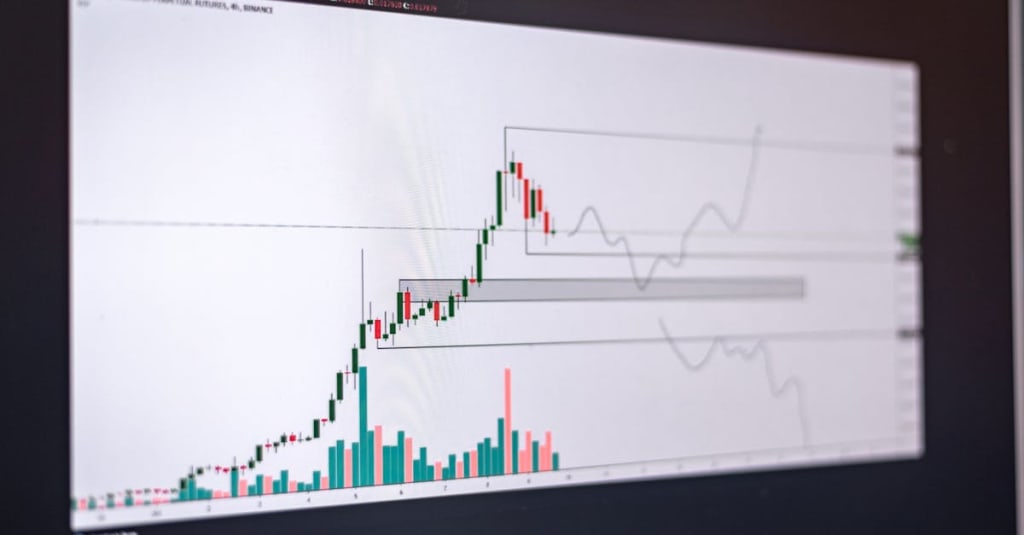
Price Bars and Candlestick Patterns – Traders examine the size, shape, and position of price bars on charts.
Volume Analysis – While optional, volume can provide additional confirmation of price trends.
Support and Resistance Levels – These act as psychological barriers where price movements tend to react strongly.
Recognizing these elements helps traders anticipate price fluctuations. Uptrends typically show higher highs and higher lows, whereas downtrends present lower highs and lower lows.
The Importance of Recognizing Patterns
Pattern recognition plays a vital role in successful trading strategies. These patterns provide insights into market behavior and help predict price movement.
Traders who become experienced in identifying patterns gain an advantage in multiple ways such as :
They can spot trading opportunities across different asset classes.
Patterns assist in determining entry and exit points, improving trade precision.
Skilled pattern recognition allows traders to make informed decisions based on market structure rather than relying solely on formulas.
Since markets are dynamic, flexibility is crucial when analyzing chart patterns.
Essential Chart Patterns Every Trader Should Know
To master price action trading, understanding key chart patterns is essential. These patterns help traders anticipate potential market movements and execute informed trades.
Support and Resistance Levels
Support and resistance zones represent critical price points where market forces converge. Support forms when buying pressure prevents further price declines, while resistance occurs where selling pressure halts price advances.
These levels develop due to supply and demand dynamics. Support levels indicate areas where buyers perceive value, while resistance levels reflect points where sellers become more aggressive.
Trend Patterns and Breakouts
Price patterns generally fall into three categories:
Continuation Patterns – Indicate that the existing trend is likely to persist.
Reversal Patterns – Suggest a potential change in trend direction.
Bilateral Patterns – Show uncertainty, with price potentially breaking in either direction.
Some of the most reliable patterns include:
Flag Patterns – Occur after a strong move, followed by a brief consolidation before the trend resumes.
Triangle Patterns – Indicate price consolidation; ascending triangles suggest bullish sentiment, while descending triangles indicate bearish pressure.
Head and Shoulders – A statistically reliable reversal pattern that often signals a shift in market direction.
Volume analysis plays a crucial role in confirming breakouts. A strong breakout is usually accompanied by increased volume, reflecting higher market participation.
Understanding Candlestick Patterns
Candlestick patterns provide valuable insights into market sentiment and potential price movements. Originating from Japanese rice traders centuries ago, these visual indicators remain relevant in modern trading.
Basic Candlestick Formations
Candlesticks consist of three main components:
Body – Represents the range between the opening and closing prices.
Wick (Shadow) – Displays the highest and lowest price levels during a given timeframe.
Color – Reflects market direction (green for bullish, red for bearish).
Key candlestick formations include:
Doji – Signals indecision in the market.
Marubozu – Indicates strong buying or selling pressure.
Hammer & Hanging Man – Suggest potential trend reversals.
Shooting Star – Represents resistance and possible bearish movements.
Advanced Candlestick Patterns
More complex patterns involve multiple candlesticks forming larger signals. For example:
Engulfing Pattern – Occurs when a larger candle completely engulfs the previous one, signaling strong momentum.
Morning Star – A three-candle pattern suggesting a potential bullish reversal.
Three White Soldiers & Three Black Crows – Indicate strong bullish or bearish trends, respectively.
Confirming candlestick patterns using volume and additional technical analysis enhances their reliability.
Utilizing Indicators Effectively
While price action is powerful on its own, integrating indicators can provide further confirmation of market trends. The most effective trading setups combine complementary indicators rather than redundant ones.
Optimal Indicator Combinations
Some of the most effective indicators include:
Trend Indicators – Identify the overall market direction.
Momentum Indicators – Measure the strength of price movements.
Volume Indicators – Confirm the validity of price trends.
Combining indicators like the Relative Strength Index (RSI) with Bollinger Bands helps traders gain multiple perspectives on market behavior. However, using too many indicators can lead to confusion and over-analysis.
Common Pitfalls in Pattern Trading
Even experienced traders can fall into common traps. Understanding and avoiding these mistakes can improve trading success.
False Pattern Identification
One of the biggest challenges traders face is mistaking random price fluctuations for valid patterns. Proper validation techniques, including volume confirmation, can help filter out false signals.
Poor Entry Timing
Many traders enter positions too early without waiting for confirmation. To improve timing, traders should:
Wait for clear breakouts.
Avoid trading directly on key support/resistance levels.
Confirm patterns across multiple timeframes.
Risk Management Errors
Poor risk management is a leading cause of trading losses. Common mistakes include overexposure to a single trade and failing to use stop-loss orders. Establishing clear risk parameters and consistent position sizing strategies helps mitigate these risks.
Conclusion
Mastering price action trading requires patience, discipline, and a deep understanding of chart patterns. By focusing on high-probability setups, confirming patterns with volume, and maintaining solid risk management strategies, traders can improve their success rate.
Successful trading isn’t about following every signal; it’s about consistency and discipline. Understanding market patterns, avoiding common mistakes, and refining trading strategies over time can help traders achieve sustainable profitability.
The road to trading starts with knowledge. Take your first step now!"
Disclaimer: This article contains affiliate links. I may earn a commission at no extra cost to you. Thanks for your support!
About the Creator
Keep reading
More stories from writers in Education and other communities.
The Story of Black History Month
In the early 1900s, history books in the United States told an incomplete story. The contributions, struggles, and achievements of Black Americans were largely ignored or erased. One man recognized that this absence was not accidental—and that correcting it was essential for the future of the nation.
By Organic Products 3 days ago in Education


Comments
There are no comments for this story
Be the first to respond and start the conversation.