
How to Master the Art of Balancing Education, Career, and Personal Life
Practical Strategies for Building Harmony in a Busy World

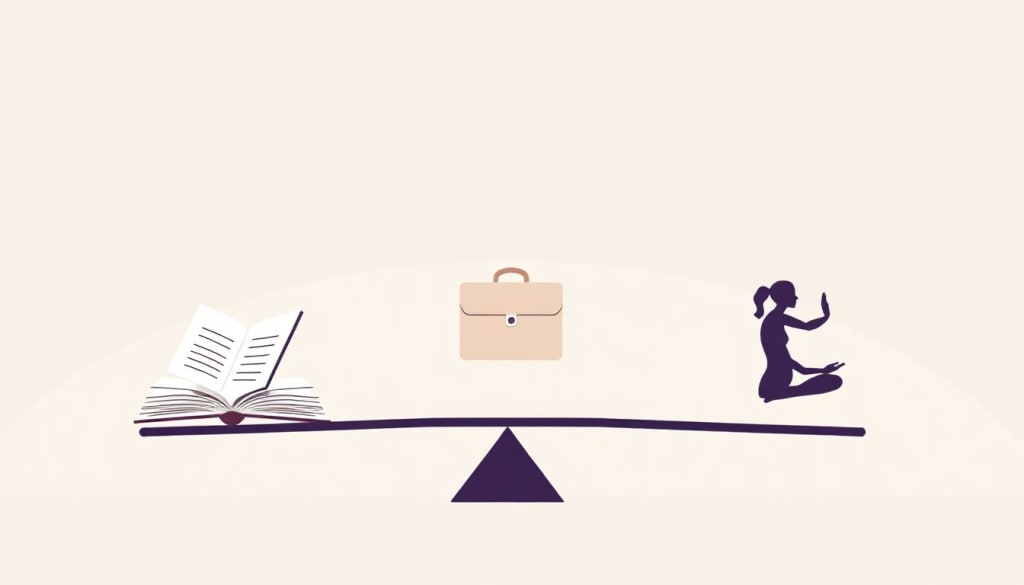
Are you juggling demanding coursework, a growing career, and the desire for a fulfilling personal life? You're not alone. The modern world often presents a seemingly impossible trifecta, leaving many feeling overwhelmed and perpetually behind. This article will explore proven strategies to not only survive but thrive, creating a harmonious existence where each crucial aspect of your life receives the attention it deserves. We'll use practical techniques, mindset shifts, and real-world examples to help you achieve this elusive balance.
The pursuit of knowledge, professional advancement, and personal well-being are not mutually exclusive. With the right approach, you can build a life that is both successful and satisfying. This guide will equip you with the tools to proactively manage your time, set realistic expectations, and cultivate resilience in the face of competing demands.
Understanding the Interplay and Challenges
The Myth of Perfect Balance
Many people chase a perfect equilibrium between life's demands. This idea of flawless work-life balance often causes more stress. True balance is not static; it shifts and changes with your life. Expecting everything to be perfectly equal at all times is an unrealistic goal. It only sets you up for disappointment and feelings of failure.
This pressure to "have it all" can actually make things harder. Instead, think of balance as a dynamic state. Some days, your job needs more attention. Other days, your studies or personal life might take priority.
Identifying Your Core Priorities
To achieve better balance, first understand what truly matters to you. What are your long-term goals for your education? What do you want your career to look like in five years? How do you define a fulfilling personal life? Answering these questions requires careful thought.
List your top priorities for each area: education, career, and personal life. This clear understanding guides your decisions. It helps you decide where to invest your time and energy. Knowing what’s important helps you say no to less critical tasks.
Common Roadblocks to Balance
Many obstacles prevent people from finding their ideal balance. Overcommitment is a common trap: taking on too many tasks at once. Poor time management also plays a big part. People often lack a clear plan for their day. Not setting firm boundaries for work or study time lets these areas spill into your personal life.
Perfectionism can also slow you down. Trying to make everything flawless uses up valuable time and energy. External pressures from work, school, or family also add to the challenge. For example, a student working full-time might struggle with study deadlines and family commitments. These everyday scenarios show why a strategic approach is necessary.
Strategic Time Management Techniques
Prioritization Frameworks
Effective time management starts with knowing what to do first. The Eisenhower Matrix is a good tool for this. It sorts tasks into four boxes: urgent/important, important/not urgent, urgent/not important, and not urgent/not important. Focus your energy on the important tasks, especially those that are not yet urgent. This stops small issues from becoming big problems.
Another method is the Pareto Principle, or the 80/20 rule. This means 20% of your efforts produce 80% of your results. Identify the few key tasks that make the biggest impact. Prioritize these high-impact activities in your studies and career. This helps you get more done with less effort.
Effective Scheduling and Calendar Blocking
Your calendar is more than just a place for appointments. Use it to block out specific times for different activities. Schedule focused work blocks, study sessions, and even personal time. Treat these blocks like unmissable meetings. This protects your time for important tasks.
For example, dedicate 9 AM to 12 PM for deep work on a project. Then, block 6 PM to 7 PM for a gym workout. This method helps you stay organized. It makes sure each part of your life gets its dedicated slot. Consistent calendar blocking builds good habits and reduces last-minute stress.
The Power of Saying "No"
Learning to say "no" is a critical skill for balancing demands. Every "yes" to a new request means a "no" to something else, often your own well-being. Setting boundaries protects your time and energy. It helps you avoid overcommitment. Declining non-essential requests frees up time for your priorities.
You do not need to be rude when you decline. You can say, "I appreciate the offer, but I cannot take on anything new right now." Or, "My schedule is full, so I must respectfully decline." This keeps your focus on what matters most. Saying "no" lets you guard your personal balance.
Optimizing Your Educational and Career Pursuits
Integrating Learning with Your Career Path
Connect your education directly to your career goals. See how new knowledge can help you advance professionally. For example, a certification in project management can boost your job prospects. Take courses that add value to your current role or desired future path. This makes your learning more relevant and rewarding.
"Lifelong learning is not just about gaining new skills; it's about staying relevant and finding new opportunities in your chosen field," states Dr. Emily Chen, a career development expert. Look for professional development programs. Attend workshops that build skills useful in both school and work. This smart integration boosts your overall progress.
Setting Realistic Academic and Professional Goals
Break down big goals into smaller, manageable steps. This applies to both your studies and your job. A large research paper can become weekly writing targets. A big work project can be split into daily tasks. This approach makes goals less daunting. It helps you track progress.
Make sure your goals are SMART: Specific, Measurable, Achievable, Relevant, and Time-bound. For instance, instead of "study more," aim for "study Chapter 3 for one hour every Tuesday night." For work, instead of "improve sales," aim for "increase monthly sales calls by 10% by next quarter." Realistic goals prevent burnout.
Leveraging Technology for Efficiency
Technology offers many tools to streamline your tasks. Note-taking apps like Evernote or OneNote help you organize lecture notes. Project management software such as Trello or Asana keeps work tasks on track. These tools can improve your study habits and work performance. They ensure no detail is missed.
Online collaboration platforms like Google Workspace or Microsoft Teams make group projects easier. They also simplify communication with colleagues or study groups. Use calendar apps to set reminders for deadlines. These digital helpers reduce mental load. They allow you to focus on the content, not the process.
Nurturing Your Personal Life and Well-being
The Non-Negotiable Importance of Self-Care
Self-care goes beyond just relaxation; it is fundamental for your overall success. It includes getting enough rest, eating nutritious food, and regular exercise. Mental health practices, like meditation or journaling, are also vital. Neglecting these areas harms your focus and energy. Self-care directly impacts your ability to perform well at school or work.
Stress has a clear impact on performance. "Stress reduces productivity by an estimated 40%," according to a recent study by the American Psychological Association. Make self-care a fixed part of your schedule. Think of it as an investment in your productivity. Prioritize activities that recharge your mind and body.
Cultivating Meaningful Relationships
Even with a busy schedule, maintaining social connections is important. Relationships provide support and reduce feelings of isolation. Schedule regular, dedicated time with family and friends. This could be a weekly dinner or a quick video call. During these times, be fully present. Put your phone away.
Maria, a marketing manager, dedicates every Saturday morning to her children's activities. She ensures her phone is off, giving them her full attention. This approach prioritizes quality time over just being there. Strong social ties give you a vital support system. They help you handle stress better.
Hobbies and Decompression Strategies
Pursuing hobbies offers a needed break from academic and career pressures. Hobbies are essential for stress relief and personal satisfaction. They let your mind shift gears and engage in something enjoyable. This helps prevent burnout. Look for activities you can fit into short windows.
Maybe you enjoy reading, painting, or gardening. Even a 30-minute walk outside can make a difference. Find simple ways to decompress. Listen to music, practice a craft, or cook a new recipe. These activities reset your brain. They help you return to your studies and work with fresh energy.
Mindset Shifts and Long-Term Sustainability
Embracing Flexibility and Adaptability
Life rarely follows a perfect plan. Unexpected challenges will always arise. The key to lasting balance is flexibility. Be ready to adjust your schedule when things change. A sudden project at work or an unexpected illness might derail your plans. Do not get discouraged. Instead, learn to pivot.
If a study session gets cancelled, reschedule it without guilt. If a social event needs to be moved, find another time. The ability to adapt keeps you in control. It prevents small setbacks from becoming major stressors. A flexible mindset helps you navigate life's natural ups and downs with greater ease.
Practicing Mindfulness and Self-Compassion
Mindfulness helps you stay present and manage stress effectively. It involves paying attention to the current moment. This practice can improve your focus during study or work. When you feel overwhelmed, take a few deep breaths. Observe your thoughts without judgment.
"Mindfulness practices help you stay present and reduce the mental clutter that often comes with a busy schedule," notes Dr. Alex Kim, a clinical psychologist. Also, be kind to yourself. Periods of imbalance are normal. Do not criticize yourself for not being perfect. Treat yourself with the same understanding you would offer a friend.
Regular Review and Adjustment of Your Balance Strategy
Balancing education, career, and personal life is an ongoing process. It is not a goal you reach and then forget. Regularly assess your current situation. Ask yourself: Is my current plan working? Do I feel overly stressed in one area? Are my priorities still aligned?
Set aside time each month to review your schedule and commitments. Make necessary adjustments to your strategies. Maybe you need to cut back on a volunteer activity. Perhaps you need to dedicate more time to a personal hobby. This continuous evaluation ensures your balance strategy remains effective. It helps you stay aligned with your evolving needs.
Conclusion
Achieving a harmonious balance between education, career, and personal life is an ongoing journey, not a fixed destination. By implementing strategic time management, setting clear priorities, nurturing your personal well-being, and adopting a flexible mindset, you can move from feeling overwhelmed to feeling in control. Remember that progress, not perfection, is the ultimate goal. Consistently applying these principles will empower you to build a life that is not only successful but also deeply fulfilling.
...
Thank you for reading! 🌷
🙌 If you enjoyed this story, don’t forget to follow my Vocal profile for more fresh and honest content every day. Your support means the world!
About the Creator
vijay sam
🚀 Sharing proven affiliate marketing tips, smartlink strategies, and traffic hacks that convert. Follow for insights, tools, and real results to help you earn smarter—whether you're just starting or scaling up!
Top 10 Essential Skills for Success in 2026
By 2026, the job market is no longer driven only by degrees or titles. Technology, especially Artificial Intelligence (AI), automation, and remote work, has changed how companies operate and how people work. Many routine tasks are now handled by machines, while humans are expected to do work that requires thinking, judgment, creativity, and emotional understanding. This shift means that skills — not just education — determine success. The following 10 skills are considered essential for 2026 because they combine technology awareness with human intelligence. Let’s understand them one by one, step by step.
By Talha khan7 days ago in Education
How, Too
Many people wonder how, too. You are not alone, and I am an expert. I will teach you how, too! First, you need to remit a small application fee and fill out an application describing the nature of your financial situation and how often payments will be made, as this will have great bearing on how well I teach you how, too.
By Harper Lewis3 days ago in Fiction



Comments
There are no comments for this story
Be the first to respond and start the conversation.