
How to Master Cover Letter Writing Without Overcomplicating It
The Easy Way to Write a Strong Cover Letter


Most people freeze when they hear the words cover letter. They imagine a long, formal document where every sentence has to be perfect. They picture a hiring manager with a red pen, judging every comma. No wonder writing one feels stressful.
But here’s the truth: a cover letter isn’t supposed to be complicated. It’s not a test of big words or fancy grammar. It’s simply a note that introduces you to an employer and shows them why you’d be a good fit. Think of it like shaking someone’s hand and saying, “Nice to meet you, here’s what I can bring.”
If you want to, you can always use a professional cover letter writing service to save time. But once you understand the basics, you’ll realize you can write your own cover letters quickly — and confidently — without overthinking.
Cover Letters Are Conversations, Not Exams
One way to simplify the process is to stop thinking of a cover letter as a “school assignment.” Forget the idea that you need to write like a professor. Instead, imagine it’s a conversation.
Picture yourself sitting across the table from the hiring manager in a quiet café. They ask, “Why do you want this job?” You wouldn’t launch into a complicated speech. You’d say something natural, like:
“I’ve always loved solving problems, and I think your company does really interesting work. I’d be excited to contribute my skills and learn from your team.”
That’s it. That’s the heart of your cover letter.
When you start thinking of it this way like you’re talking, not writing an essay, the stress melts away.
Why Simplicity Wins
Some people believe that sounding “smart” means using big words. But simplicity often wins. Hiring managers are busy. They scan dozens of letters in a day. A clear, short message will always grab attention faster than a long, complicated one.
Think about how you read your own emails. If someone writes you a five-paragraph essay just to ask a question, you might get annoyed. But if they ask clearly in two sentences, you’re more likely to respond. Employers feel the same about your cover letter.
Mistakes That Make Things Harder
Here are a few habits that overcomplicate cover letters:
Writing too much. If your letter is longer than one page, it’s too long.
Copy-pasting the same letter for every job. Employers can spot generic writing right away.
Repeating your resume. Your letter should add context, not copy bullet points.
Sounding robotic. “I am writing to formally express my deep interest…” sounds stiff.
Skipping proofreading. Typos make you look careless, even if your skills are great.
Avoid these, and you’ll already be ahead of many other applicants.
A Recipe, Not a Puzzle
Think of your cover letter like a recipe. You don’t need 20 ingredients. Just a few basics:
Greeting – Say hello to a real person if you can.
Introduction – Share your excitement for the role.
Body – Give two or three short examples of your skills or achievements.
Closing – Thank them and invite a conversation.
That’s it. Four simple parts.
If you can remember this recipe, you can write a cover letter in under an hour.
Stories Make You Memorable
Here’s a secret: stories are stronger than claims.
For example, instead of saying, “I have strong leadership skills,” tell a tiny story:
“At my last job, I trained two new employees and created a short guide to help them learn faster.”
That one sentence shows leadership better than simply stating it. Humans remember stories. Employers do too.
Practice by Talking
Here’s a unique trick. Instead of writing first, talk it out.
Record yourself answering this question:
“Why do you want this job, and what can you bring?”
Then listen back and write down what you said. You’ll notice your spoken words are often clearer and more natural than your written ones. That’s the voice you want in your cover letter.
Everyday Writing Helps Too
You don’t need to study business language to write good cover letters. Everyday writing skills are enough.
Think about times you’ve written clearly before:
Explaining a process to a friend.
Writing a social media post that people liked.
Even sending a text that made someone smile.
These are all forms of communication. If you’ve ever used a medical paper writing service, you’ve seen how organized and easy-to-follow professional documents can be.
Or if you’ve looked at a biology paper writing service, you’ll notice every point is backed by facts. Those same principles — clarity and proof — work in your cover letter.
Even if you’ve struggled with essays before and thought, “Maybe I should just pay to do my literature essay,” you still learned something valuable: storytelling. A cover letter is basically a short story about you, told in a professional but friendly way.
A Different Perspective: Imagine You’re the Employer
Here’s another unique way to approach it. Switch seats. Imagine you’re the person hiring. You’ve got 50 letters on your desk. Which ones do you like reading?
Probably not the ones that go on and on without a point. You’d want something short, easy to read, and genuine.
Now ask yourself: if you were the boss, would you enjoy reading your own letter? If the answer is no, simplify it.
The Power of Short Letters
Short letters often feel more confident. Why? Because you’re saying, “I don’t need to overwhelm you. Here’s who I am in a nutshell.”
Here’s an example:
Dear Mr. Lee,
I’m excited to apply for the Customer Service Associate role at BrightMart. In my last job, I resolved more than 40 customer requests per day, while keeping a 95% satisfaction rating. I love helping people and believe I can bring that energy to your team.
Thank you for considering me. I’d be happy to discuss how I can support BrightMart’s customer-first mission.
Best regards,
[Your Name]
That’s under 100 words, yet it gets the job done.
A Fun Analogy: Cover Letters as Movie Trailers
Think of your resume as the full movie. It’s the detailed story of your career.
Your cover letter? That’s the trailer.
It’s short. It grabs attention. It makes the employer want to see more.
If you make your trailer too long, people lose interest. But if it’s short, sharp, and exciting, they’ll definitely want the full film — your resume and an interview.
Overcoming Writer’s Block
Sometimes the hardest part is just starting. If you’re staring at a blank page, try this:
Write one sentence about why you want the job.
Write one sentence about one skill you have.
Write one sentence thanking the reader.
Boom — you already have the skeleton of a letter. Add a greeting and a sign-off, and you’re done.
Practice with Old Letters
Here’s a good exercise: take an old cover letter you wrote months ago. Rewrite it using the simple recipe. Compare the two. You’ll see how much clearer and friendlier the second version feels. That’s how you improve.
The Human Touch Wins Every Time
Hiring managers are people. They don’t want perfection. They want someone who feels real. When you write simply, with small stories and a touch of personality, you stand out.
So instead of worrying, “Am I saying this right?” ask yourself, “Does this sound like me?” If the answer is yes, then you’re on the right track.
To Sum Up
Mastering cover letters doesn’t mean making them complicated. In fact, it’s the opposite. The simpler you keep it, the stronger it becomes.
Think of it as a conversation, not an exam.
Use the recipe: greeting, introduction, body, closing.
Tell small stories instead of making big claims.
Keep it short — under one page.
Be yourself.
Over time, writing cover letters will stop feeling like a chore. Instead, you’ll see it as an opportunity: your chance to introduce yourself, share your story, and show why you’d be a great fit.
And once you see it that way, you’ll never overcomplicate it again.
Check Out More About Writing
Are Students Benefiting from Business Paper Writing Services?
Why Are Online Chemistry Homework Services Becoming Popular?
About the Creator
Keep reading
More stories from Robert Barrett and writers in Education and other communities.
Do Biology Papers Prepare Students for Real Scientific Research?
Biology is one of the most important sciences that helps us understand life, nature, and health. Students studying biology spend a lot of time writing essays, lab reports, and research-style papers.
By Robert Barrett6 months ago in Education
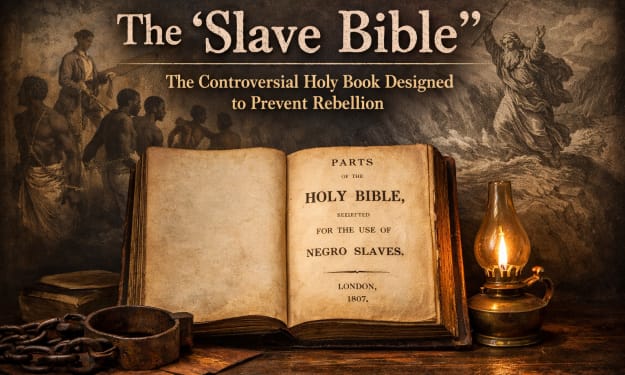
The “Slave Bible”: The Controversial Holy Book Designed to Prevent Rebellion
In the early nineteenth century, a heavily edited version of the Bible was printed with a singular and deeply troubling purpose: to control enslaved Africans and discourage rebellion. Today, this rare publication—commonly known as the “Slave Bible”—is one of the most controversial religious texts in history. Only four copies are known to exist in the world.
By Irshad Abbasi 5 days ago in Education
Metaverse in Education Market Expected to Expand Significantly, Reaching USD 99.8 Billion by 2033
Metaverse in Education Market Overview The Metaverse in Education market refers to the use of immersive virtual environments, 3D digital campuses, and interactive simulations to deliver structured learning experiences. It combines virtual reality, augmented reality, digital avatars, blockchain-based credentials, and cloud platforms to create persistent and collaborative education spaces. The global market is expected to reach USD 99.8 billion by 2033, rising from USD 3.1 billion in 2023, reflecting a strong CAGR of 41.5% from 2024 to 2033.
By Roberto Crum5 days ago in Education
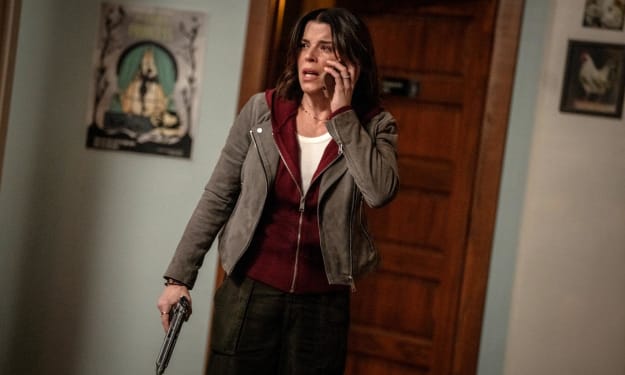
"Scream 7" (2026): Running out of Fresh Screams
This is the seventh time we’ve had a Ghostface crisis. Scream 7 is the latest edition of the Scream franchise. Sydney Prescott and her family are under attack by another anonymous killer dressed in a Ghostface costume. While having issues with her daughter, Tatum, they run from the bloody murders, trying to determine who is behind it all.
By Marielle Sabbag6 days ago in Horror


Comments
There are no comments for this story
Be the first to respond and start the conversation.