
How To Install A Drywall
Complete Guide to Install a Drywall

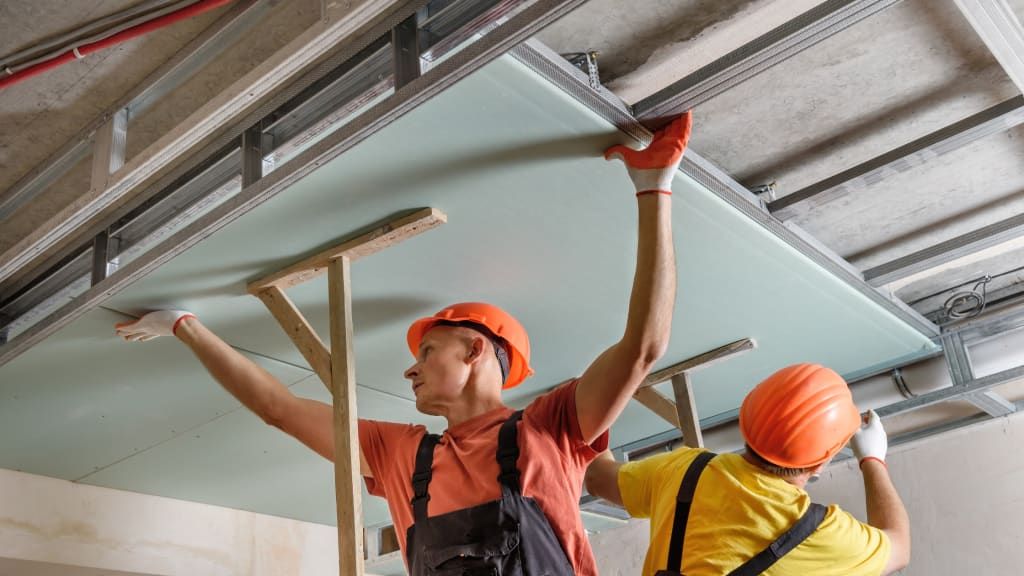
Drywall is probably one of the most basic materials used in erecting walls and ceilings. Either you are trying to build a new room, or you simply want to reface your house; knowing how to install a drywall is a practical skill. Actually, people may find this process complicated because it requires all the right equipment, materials, and instructions; however, doing it yourself should not be a daunting task.
Drywall, more commonly known as gypsum board or plasterboard, is a building board that constitutes a core made of gypsum press-bonded to two layers of paper. Drywalls are used as constructions for wall and ceiling partitions. Drywall is very popular among the population in use due to easier cutting, less weight, fire resistance, economized, easy smoothing with paints, etc.
Types of Drywall
Standard Drywall
This is the most common type used in homes. It's good for general interior walls and ceilings.
Moisture-Resistant Drywall
This type is ideal for areas with high humidity, like bathrooms and kitchens. It's made with a moisture-resistant core and a green paper facing.
Fire-Resistant Drywall
Often used for garages and areas requiring a fire barrier, this drywall has a fire-resistant core.
Soundproof Drywall

This type helps to reduce sound transmission and is commonly used in media rooms or apartments.
Each type of drywall costs differently, you can contact some Drywall Estimating Services to know the exact costs.
Tools and Materials You’ll Need
For the purpose of guiding you in completing the task of drywall installation with confidence, the following are steps to consider, and tools that will come in handy. Before starting, it’s important to have the right tools. Here’s a list:
- Drywall sheets (4x8 ft. sheets are standard, but larger sizes are also available)
- Measuring tape
- Drywall saw or utility knife
- Drywall lift (optional for ceilings)
- Screw gun or drill
- Drywall screws
- Drywall joint compound (mud)
- Taping knives
- Drywall tape (paper or fiberglass)
- Sandpaper or sanding block
- Stud finder (to locate where the studs are in the wall)
- Level
- Safety gear (gloves, safety glasses, dust mask)
How To Install A Drywall?
1. Preparing the Area
You must prepare the area before hanging the drywall. Here's what you do:
- Clear the Area: Remove the furniture and cover the floor with a drop cloth or plastic to catch any debris or dust.
- Locate Studs: Use a stud finder to mark the location of studs in the walls. This will help you secure the drywall sheets in place later.
- Measure the Wall: Measure the height and width of the wall to determine how much drywall you'll need.
- Cut the Drywall: Use your utility knife to cut drywall sheets to fit the measurements of your wall.
2. Drywall Installation on the Ceiling
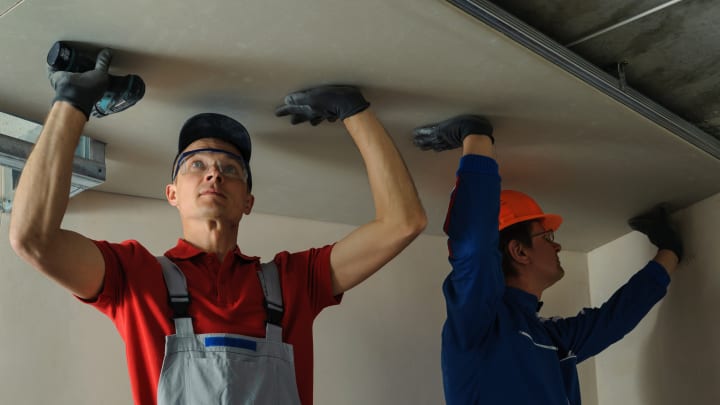
If you are installing a ceiling, be more cautious as the drywall sheets are quite heavy. Here is how to install them:
- Lift drywall: Use a drywall lift or enlist the services of a helper in lifting the drywall sheets up. Ensure the top edge of the sheet is flush with the ceiling.
- Attach the drywall to the Ceiling: Use drywall screws and a screw gun; attach it to the ceiling joist, start at the center of the sheet, and work your way out, so the screws should be about 12 to 16 inches apart.
3. Installing Drywall on Walls
For walls, the whole process is similar to installing on the ceiling but does require a bit more maneuvering.
- Align drywall: The drywall is positioned against the wall with the long edge as horizontal or vertical. Horizontal installation will help to reduce some of the seams, but at times, vertical installation is preferred for stability.
- Hang the drywall: Just as in the ceiling, using a screw gun, secure the drywall to the studs. The screws should be placed 12 inches in the center along the edge and 16 inches in the center in the field of the drywall sheet.
4. Cutting Holes for Fixtures
When you are putting drywall around fixtures such as light switches, outlets, or pipes, the holes must be cut out of the drywall. How to do this
- Hanging: The hanging of the drywall sheet after measuring the place of the fixture or pipe.
- Scoring: Use a utility knife to make scratches on the drywall where the fixture will pass.
- Making the hole: After scoring the drywall, use a drywall saw in order to cut a hole. However, the hole should be about an inch more than the size of the fixture as this will make allowances for adjustments.
5. Taping and Mudding the Seams
Once the drywall is up, the seams between the sheets have to be taped and mudded for a smooth finish.
- Apply drywall tape: First, you will apply drywall tape across the seams where sheets of drywall meet. You can either use paper tape or fiberglass mesh tape. Simply press the tape down so it adheres well to the surface.
- Apply joint compound: Using a taping knife, apply a thin layer of joint compound, also known as mud, over the tape. Try to smooth it out as much as possible.
- Sand between coats: After the first coat dries, lightly sand it down with sandpaper or a sanding block to remove any bumps or ridges. Apply additional coats of joint compound, sanding between each coat until the seams are smooth and even.
6. Finishing the Drywall
After mudding and sanding, you’ll need to give the drywall a final touch:
- Final sanding: Fine-grit sandpaper is used for surface sanding. All the dust of sanding should be removed before proceeding.
- Priming of drywall: A coat of drywall primer is applied on the surface so that sealing of the surface can be done by it. It develops a base for paint. Primer helps paint to stick properly on the surface and gives an even, smooth appearance.
- Paint the wall: Once the primer has dried, you can paint the drywall of your choice. Two coats are usually necessary to ensure that the installation of drywall is fully covered.
7. Clean-Up
Cleaning is done at the end of installation and painting. Take off all coverings of the floor; these include shreds of drywall or leftover material. The room will be dust-free, and you are ready to have fun in the newly installed walls!
The Final Thought
Drywall installation can be a pretty easy do-it-yourself job that saves you money yet gives your house a professional finish. Taping and mudding are actually sensitive areas that may determine how well your walls turn out in the end. You should know how to install a drywall if you ever renovate a living room or build a new space, installing drywall is a task that will be a great addition to your home.
About the Creator
Drywall Estimatings
We provide 100% accurate and reliable cost estimating and material takeoff services to help you win more bids in the competitive construction industry. With Drywall Estimating, you get 24/7 support and quick responses within 5-10 minutes.
Keep reading
More stories from writers in Education and other communities.
How Regulatory Rules Are Reshaping the Complexity of Modern Lending Facilities
Lending facilities are a core component of the financial system, enabling banks and financial institutions to provide liquidity, manage credit flow, and support economic stability. In today’s highly regulated financial environment, regulatory compliance, financial regulations, and lending rules have become central to how these facilities function. As oversight increases, lenders must navigate a growing web of requirements that directly affect the structure, speed, and accessibility of lending facilities.
By Eric Kleiner5 days ago in Education
Scaling Smart: Growing Your Small Business on a Tight Budget
Growing a small business doesn’t require massive capital or a large team—it requires intelligent decision-making and a resourceful mindset. Many successful companies started with limited budgets and used creativity and strategic planning to expand. If you're working with constrained resources, here’s how you can still scale effectively and sustainably.
By Alexander Schifter5 days ago in Education




Comments