
How to Increase Rotary Evaporator Speed for Maximum Efficiency in Your Lab
Increasing the speed of your rotary evaporator can significantly enhance lab efficiency. By optimizing rotation speed, temperature, and vacuum pressure, you can speed up solvent evaporation and save time. This post shares tips for improving rotary evaporator speed and highlights the AKRE-2002 Handwheel Lift Rotary Evaporator, designed to boost efficiency and deliver more accurate results.

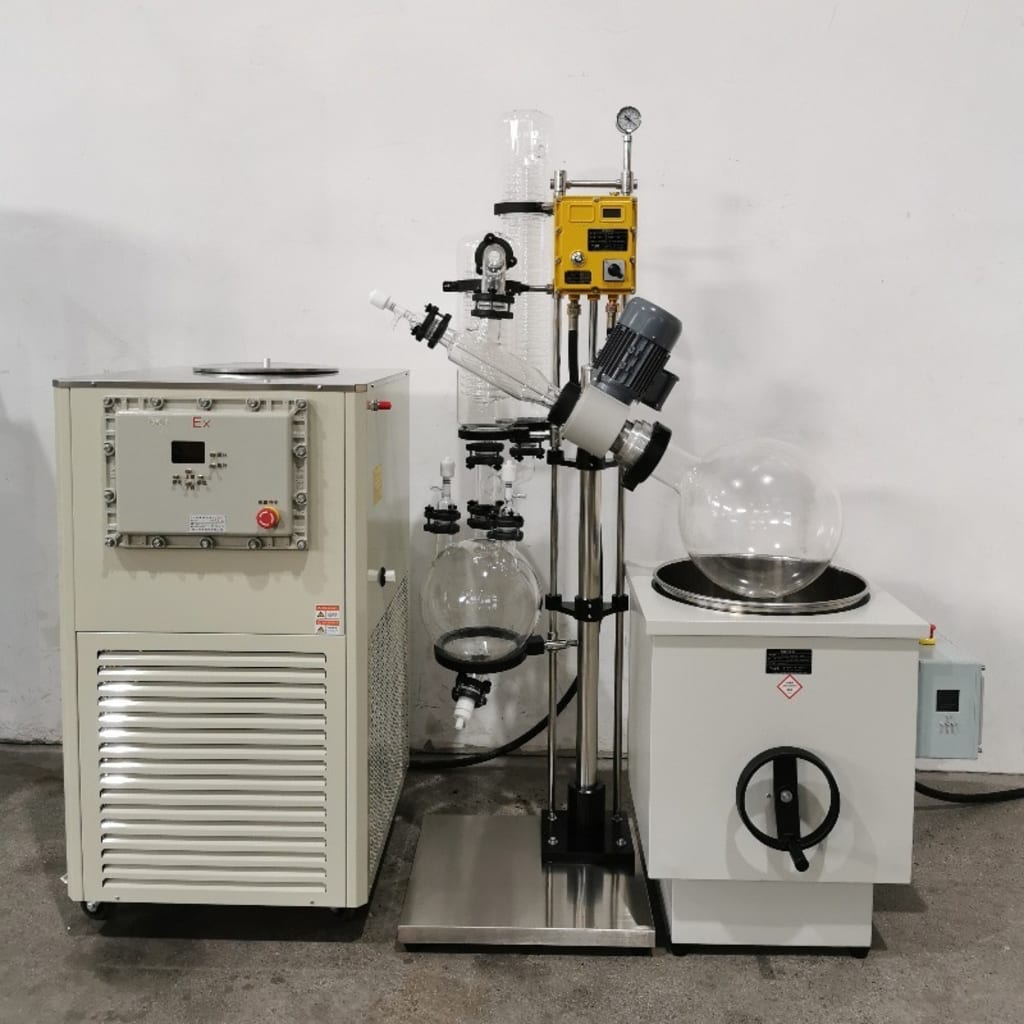
In laboratory settings, especially within chemistry, pharmaceuticals, and research, rotary evaporators are essential for solvent removal and concentration tasks. While these machines are known for their efficiency, did you know that optimizing the speed can further enhance performance, saving both time and resources? In this post, we’ll walk you through how to increase rotary evaporator speed for maximum lab efficiency.
Understanding Rotary Evaporator Speed
Rotary evaporators work by rotating the sample in a heated bath under reduced pressure. The rotation speed influences how quickly the solvent evaporates. By increasing the rotation speed, the sample's surface area exposed to the heat increases, accelerating the evaporation process. However, adjusting the speed too high without proper temperature and vacuum control can lead to sample degradation or loss.
Why Speed Matters
Increasing the rotary evaporator’s speed isn’t just about saving time. It’s also about improving the consistency and reliability of your results. Faster solvent removal means more consistent and reliable concentrations, which is essential in research environments where precision is paramount. Here’s how speed affects your processes:
Faster Evaporation: Higher speeds allow for faster solvent removal, reducing the overall time spent on evaporation.
Improved Efficiency: By decreasing the time required for evaporation, you can move on to the next steps of your experiment more quickly, increasing overall lab throughput.
Reduced Sample Degradation: Properly adjusted speed helps ensure that your sample is not exposed to unnecessarily high temperatures or long exposure times, preserving the integrity of the sample.
Key Factors for Speed Optimization
Sample Viscosity and Solvent Type: Solvents with higher viscosity or higher boiling points will require slower speeds to prevent foaming or bumping. Lighter, more volatile solvents can be processed at higher speeds.
Vacuum Pressure: Lower vacuum pressure lowers the boiling point of the solvent, enabling it to evaporate at a lower temperature. Adjusting both the vacuum and speed is essential to find the right balance for maximum efficiency.
Temperature Control: Maintaining a consistent, optimal temperature helps keep the evaporation process running smoothly. Too high a temperature can damage your sample, while too low a temperature might slow down the process.
Tips to Increase Rotary Evaporator Speed
Adjust the Rotation Speed: Modern rotary evaporators, like the AKRE-2002 Handwheel Lift Rotary Evaporator, allow for precise control of the rotation speed. Increasing the speed can improve efficiency, but it should be balanced with the appropriate temperature and vacuum settings.
Maintain Consistent Temperature: Use a high-quality heating bath that ensures temperature consistency. Rapid fluctuations in temperature can slow the evaporation process and affect the quality of your results.
Optimize Vacuum Pressure: Adjust the vacuum system to find the optimal pressure for solvent evaporation. Too low a vacuum pressure may lead to bumping or cavitation, while higher pressure can cause slower evaporation.
Use an Efficient Condenser: A high-efficiency condenser recycles vapor into liquid form quickly, minimizing solvent loss and speeding up the process.
The AKRE-2002 Handwheel Lift Rotary Evaporator
The AKRE-2002 Handwheel Lift Rotary Evaporator is designed to offer precision and speed in rotary evaporation. With features like adjustable rotation speed and consistent heating, this model helps increase the efficiency of your lab processes, making it a perfect choice for labs looking to improve their evaporator’s performance.
Explore the AKRE-2002 Rotary Evaporator here
Optimizing the speed of your rotary evaporator can dramatically improve lab efficiency. By understanding the key factors that affect speed—such as sample type, vacuum pressure, and temperature—you can achieve faster, more reliable results. The AKRE-2002 Handwheel Lift Rotary Evaporator is an excellent tool for labs looking to increase their efficiency and precision.
If you’re ready to take your lab to the next level, upgrading to the AKRE-2002 can help you achieve faster and more reliable results.
#RotaryEvaporator #LabEfficiency #Chemistry #Pharmaceuticals #ResearchLab #ScientificEquipment #EfficiencyBoost
About the Creator
equilrxnlab
We specialize in the research and production of efficient chemical instruments,committed to providing exceptional solutions for laboratories worldwide.
URL:equilrxnlab.com
E-mail: [email protected]
ContactUs equilrxnlab.com/contact-us/
Keep reading
More stories from equilrxnlab and writers in Education and other communities.
Exploring the Neuroprotective Power of Hemp Seed Water Extract: The Role of Cutting-Edge Lab Instruments in Research
Hemp seeds have been used in traditional medicine for centuries, but it's only in recent years that scientists have begun to uncover the incredible potential of hemp seed water extract. Beyond its nutritional benefits, research is increasingly pointing to its neuroprotective effects—an exciting development for anyone interested in natural health and neuroscience.
By equilrxnlababout a year ago in Education
Mum Says University “Failed” Son Who Took His Own Life After Grade Error
The day the email arrived was supposed to be a turning point. For months, the family had been waiting for it the final confirmation that years of late nights, student loans, and quiet sacrifice had been worth it. Instead, the message contained a mistake that would unravel a young man’s confidence and, according to his mother, expose a system that failed him when he needed it most.
By Omoogun oluwaseun mercy6 days ago in Education
The Devil's Triangle
The sails ruffled in the breeze as we cruised along. The Sea Breeze was a mid-size catamaran that sailed out of Royal Naval Dockyard in Bermuda. We had booked this trip weeks in advance and were now looking at our Captain, Spike and two boat hands. Paddy and Wilson seemed like nice guys, joking around with the passengers and telling us some stories about Bermuda that only locals would know. Their island accents sounded almost British but they were pleasant to listen to.
By Barbara Gode Wilesa day ago in Fiction




Comments
There are no comments for this story
Be the first to respond and start the conversation.