
How to Become an Ethical Hacker
Unlocking the World of Cybersecurity Legally and Professionally
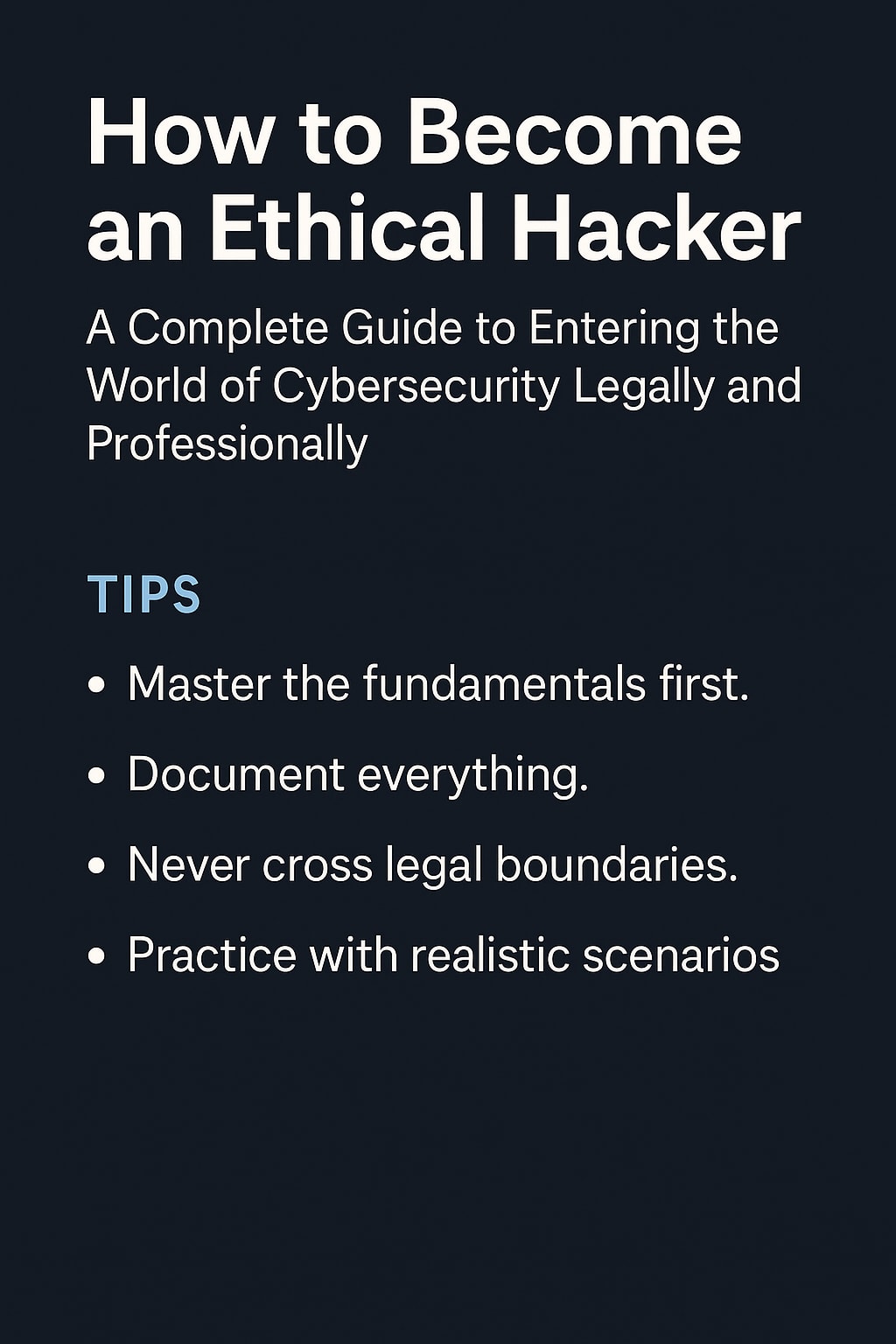
In today’s digital world, cybersecurity threats are constantly evolving. From financial data breaches to personal information leaks, the internet is filled with risks. This is where ethical hackers come in — cybersecurity experts who help organizations protect their systems and data by finding and fixing vulnerabilities before malicious hackers can exploit them.
But how do you become an ethical hacker? In this article, we’ll explore what ethical hacking is, the skills required, certifications you can pursue, and some pro tips to help you start your journey in this exciting field.
What is Ethical Hacking?
Ethical hacking, also known as penetration testing or white-hat hacking, involves legally breaking into computers and devices to test an organization’s defenses. The primary goal is to identify security weaknesses and fix them before they can be misused by cybercriminals. Ethical hackers follow strict rules and laws, ensuring their actions are authorized and documented.
Unlike black-hat hackers, who exploit vulnerabilities for personal or financial gain, ethical hackers work for the greater good — protecting data, networks, and people.
Essential Skills for Ethical Hackers
To become a successful ethical hacker, you need a mix of technical knowledge, problem-solving skills, and creativity. Here are the key skills you should develop:
Networking Knowledge: Understand how networks operate, including routers, switches, firewalls, and VPNs.
Operating Systems: Familiarity with Windows, Linux, and macOS systems is crucial, especially command-line interfaces.
Programming Skills: Learn languages like Python, JavaScript, Bash, and C/C++ for scripting and exploiting vulnerabilities.
Web Application Security: Know how web servers, APIs, and web applications work.
Cryptography: Understand encryption, decryption, hashing, and how to secure data transmission.
Social Engineering: Learn about human vulnerabilities, as hackers often target people before machines.
Recommended Certifications
Certifications not only validate your skills but also improve your chances of landing a job in cybersecurity. Here are some globally recognized options:
CEH (Certified Ethical Hacker) — Offered by EC-Council, this is one of the most popular certifications for aspiring ethical hackers.
CompTIA Security+ — A great entry-level certification that covers basic security concepts.
OSCP (Offensive Security Certified Professional) — A more advanced, hands-on certification for penetration testers.
CISSP (Certified Information Systems Security Professional) — Best for experienced cybersecurity professionals.
How to Start Your Journey as an Ethical Hacker
Build a Strong Foundation:
Start by learning about computer networks, operating systems, and programming. Free resources like YouTube tutorials, blogs, and online courses can be helpful.
Practice in Safe Environments:
Never practice hacking on real systems without permission. Use legal platforms like:
Hack The Box
TryHackMe
OverTheWire
VulnHub
Stay Updated:
Cybersecurity is a rapidly changing field. Follow industry blogs, Twitter accounts, and YouTube channels like LiveOverflow and The Cyber Mentor.
Join Communities:
Connect with like-minded people through forums like Reddit’s r/netsec or Discord servers for ethical hackers.
Contribute to Open Source Projects:
Gain practical experience by participating in security projects or bug bounty programs like HackerOne and Bugcrowd.
Pro Tips for Aspiring Ethical Hackers
Master the Basics Before Advanced Tools:
Don’t rush into using hacking tools without understanding how they work. Learn networking and OS fundamentals first.
Document Everything:
Good ethical hackers keep detailed notes of their findings and processes for legal and reporting purposes.
Think Like a Hacker, Act Like a Professional:
Always stay within legal boundaries and maintain ethical integrity.
Participate in Capture The Flag (CTF) Competitions:
These hacking challenges improve your problem-solving skills and expose you to real-world scenarios.
Never Stop Learning:
Cybersecurity trends and vulnerabilities change daily. Regularly attend webinars, conferences, and online workshops.
Why Ethical Hacking is Important
Ethical hacking is more important than ever in a world where cyberattacks are increasing. From protecting national infrastructure to securing personal data, ethical hackers play a vital role in safeguarding our digital lives.
By choosing this career, not only can you earn a good income, but you’ll also contribute to making the internet a safer place.
Picture Suggestion
Image Title: Ethical Hacker at Work
Description:
A focused young professional sitting at a computer in a dark room illuminated by multiple screens displaying code, network maps, and security warnings. The individual is wearing headphones, with a coffee cup on the desk, symbolizing late-night ethical hacking sessions.
Alt Text for SEO:
“Ethical hacker analyzing network vulnerabilities on a multi-screen computer setup.”
Conclusion
Ethical hacking is a challenging and rewarding career path. With the right skills, certifications, and continuous learning mindset, anyone passionate about cybersecurity can become an ethical hacker. It’s a profession that not only pays well but also provides the satisfaction of protecting people and organizations from digital threats.
So, start small, stay curious, and dive into the world of ethical hacking today!
About the Creator
Umar Khattak
"Passionate learner, tech enthusiast, and aspiring cybersecurity expert. Dedicated to mastering creating impactful content, and exploring the world of AI, IoT, and blockchain.
Keep reading
More stories from Umar Khattak and writers in Education and other communities.
Trapped Between Books, Politics, and Religion: The Hidden Struggles of Our Schoolchildren
When we think of schools, we imagine classrooms filled with eager students, patient teachers, and an environment built on curiosity and knowledge. But behind the smiling photographs and polished annual reports, there's a darker truth many hesitate to speak about — the subtle, sometimes aggressive, infiltration of political and religious influence in our educational systems. Schools, once meant to shape thinkers and innovators, are increasingly turning into platforms for ideological control, leaving students emotionally torn and intellectually stifled.
By Umar Khattak10 months ago in Education
The Little Library on Maple Street
On a quiet street lined with tall oak trees and painted mailboxes, there was a tiny library that most people didn’t notice. It was called the Maple Street Library, and it was small—just a single room tucked between a bakery and a flower shop. But for anyone who walked through its little glass doors, it was a place where magic happened.
By Waleed khan5 days ago in Education
How BIM Improves MEP Coordination for Large-Scale Projects?
In large-scale construction projects—such as hospitals, airports, commercial towers, data centers, and industrial facilities—MEP (Mechanical, Electrical, and Plumbing) systems account for nearly 30–50% of total project cost. Yet, they are also the most coordination-intensive disciplines.
By Matt Sharon5 days ago in Education




Comments
There are no comments for this story
Be the first to respond and start the conversation.