
How the World’s Top Economies Rose to Power
Natural resources, innovation, education, governance, and global influence.

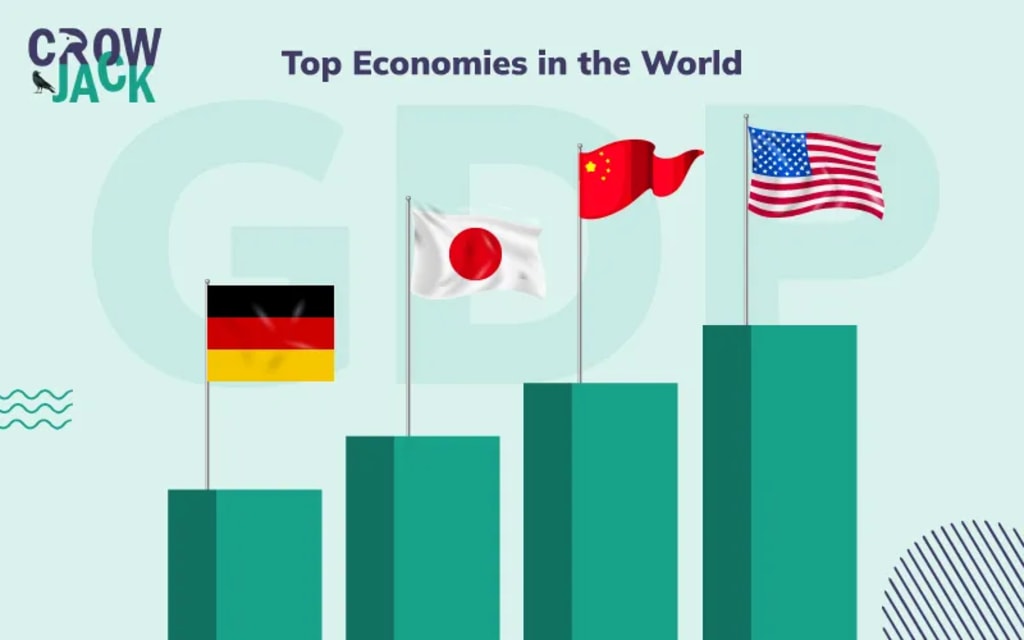
The world’s largest economies reached their positions through a mixture of factors which include: natural resources, innovation, education, governance, and global influence. In this article, I’ll get into the economic journeys of the top 5 economies, exploring the factors that have propelled them to economic prominence.
1. United States: A History of Innovation and Influence
GDP: Approximately $25 trillion (as of 2024).
The United States stands as the world’s largest economy undeniably, a position it has maintained for decades at this point. This economic dominance is rooted in several key factors:
Historical Development: The U.S. highly benefited from early industrialization, starting in the late 18th century. Industries like steel, automobiles, and manufacturing laid the foundation for its economic power.
Natural Resources: The country’s abundant natural resources, which include oil, natural gas, and minerals, fueled its industrial growth.
Innovation and Technology: Being a global leader in technological innovation, from the creation of the internet to advancements in software, biotechnology, and aerospace. This culture of innovation is supported by world-class universities, strong institutions, and a thriving entrepreneurial ecosystem.
Global Influence: The U.S. dollar is the world’s primary reserve currency, and the country’s military and economic power ensure its influence across the globe.
Diversified Economy: A highly diversified economy, with strong sectors in finance, technology, healthcare, and entertainment, contributing to its sustained growth and resilience.
2. China: The World’s Manufacturing Powerhouse
GDP: Approximately $18 trillion (as of 2024).
China’s rapid economic ascension is one of the most significant developments in modern history. Key factors include:
Economic Reforms: China’s rise began with the economic reforms which opened the country to foreign investment, encouraged private enterprise, and integrated China into the global economy.
Manufacturing Dominance: China became the world’s manufacturing powerhouse, leveraging low labor costs, vast human resources, and significant investments in infrastructure. The country became the “factory of the world,” producing goods for global markets.
Export-Led Growth: China’s strategy of producing goods for export, combined with a focus on trade, has been a major driver of its economic growth.
State-Led Capitalism: The Chinese government plays a significant role in directing the economy, with state-owned enterprises (SOEs) dominating key sectors like banking, energy, and telecommunications.
Technological Ambitions: China has focused on becoming a leader in technology, with substantial investments in artificial intelligence, 5G, and renewable energy amongst many others.
3. Japan: From Post-War Miracle to Technological Leader
GDP: Approximately $5 trillion (as of 2024).
Japan’s economic story is one of resilience and innovation being the exception in the list. Japan’s ascension is nothing short of a miracle at this point:
Post-War Economic Miracle: After World War II, Japan underwent rapid industrialization and economic growth, known as the “Japanese economic miracle.” This growth was driven by government policies, technological innovation, and a focus on export-oriented manufacturing.
Technological Innovation: Japan became a global leader in electronics, automotive manufacturing, and robotics. Companies like Toyota, Sony, and Honda are recognized worldwide, I’m sure you’ve heard about them.
Skilled Workforce: Japan’s highly educated and disciplined workforce has been a crucial factor in its economic success. The country’s emphasis on quality and efficiency in manufacturing set global standards.
4. Germany: The Industrial Heart of Europe
GDP: Approximately $4.5 trillion (as of 2024).
Germany’s economy is known for its industrial strength and export prowess:
Industrial Strength: Germany has a strong industrial base, particularly in automotive manufacturing, engineering, and chemicals. Companies like Volkswagen, Siemens, and BASF are global leaders, sound familiar?
High-Quality Exports: Germany’s economy is export-driven as well, with a focus on high-quality, precision-engineered products. The country’s reputation for quality has allowed it to dominate global markets in sectors like automobiles and machinery.
Skilled Workforce: Germany’s education system, particularly its vocational training and apprenticeship programs, has ensured a highly skilled workforce, contributing to the country’s industrial strength.
European Union Membership: As a key member of the European Union, Germany benefits from access to a large single market and influences European economic policies, further boosting its economy.
5. India: A Rising Economic Power
GDP: Approximately $3.8 trillion (as of 2024).
India’s economic growth is fueled by a mix of reforms and demographic factors:
Economic Liberalization: India’s economic liberalization in the 1990s, which included reducing tariffs, deregulating markets, and encouraging foreign investment, spurred significant economic growth.
IT and Services Sector: India has become a global leader in IT services, outsourcing, and software development. Companies like Tata Consultancy Services (TCS) and Infosys have positioned India as the “back office of the world.” India produces over 1.5 million engineering graduates annually, making it one of the largest sources of engineering talent in the world.
Large Domestic Market: With a population of over 1.4 billion, India has a large domestic market that drives demand for goods and services, contributing to economic growth.
Demographic Dividend: India has a young and growing population, which is expected to drive future economic growth, provided the country can create jobs and improve education and infrastructure.
Comparative Analysis: What Drives Economic Success?
While population size can provide a foundation for economic growth, it is not the sole determinant of wealth. The biggest economies have used a combination of factors to achieve their current status:
- Innovation and Technology
- Governance and Policy
- Global Influence and Trade
Conclusion
The world’s largest economies have achieved their positions through a complex combination of historical factors, governance, innovation, population dynamics, and global influence. While population size can be a significant factor, it is the combination of effective policies, technological advancement, and integration into the global economy that truly determines a nation’s wealth.
Thanks for reading ☺️
About the Creator
real Jema
If you could say one thing and be heard by the entire world, what would that be?
Taher Saifuddin: Transforming Toronto’s Classrooms with Inclusive and Future-Focused Education
In the heart of Canada’s most diverse city, Toronto educator Taher Saifuddin is quietly leading a transformation in the way learning is delivered, measured, and experienced. With over two decades of experience, Taher is recognized for his dynamic role in teaching, academic leadership, and digital innovation across Toronto’s private and independent schools.
By Dena Falken Esq5 days ago in Education
What People Get Wrong About Consulting
Many people talk about consulting, but few understand what it truly involves. Movies, social media, and word of mouth often shape a narrow view. This creates confusion for students, business owners, and even new consultants. The topic of common misconceptions about consulting matters because these beliefs affect career choices and business decisions. When ideas are wrong, expectations break down fast.
By Nicole Metz5 days ago in Education
Center Stage with Paul Stewart
*** I'm keen to republish the interviews I did for my series with Vocal creators. It's been a few years and I thought it might be nice to revisit these wonderful conversations. I'll be releasing them one at a time for a few weeks/months.
By Heather Hubler3 days ago in Interview




Comments
There are no comments for this story
Be the first to respond and start the conversation.