
How the World’s Largest paper company makes ⅓ of cardboard boxes in America.
Satisfying work

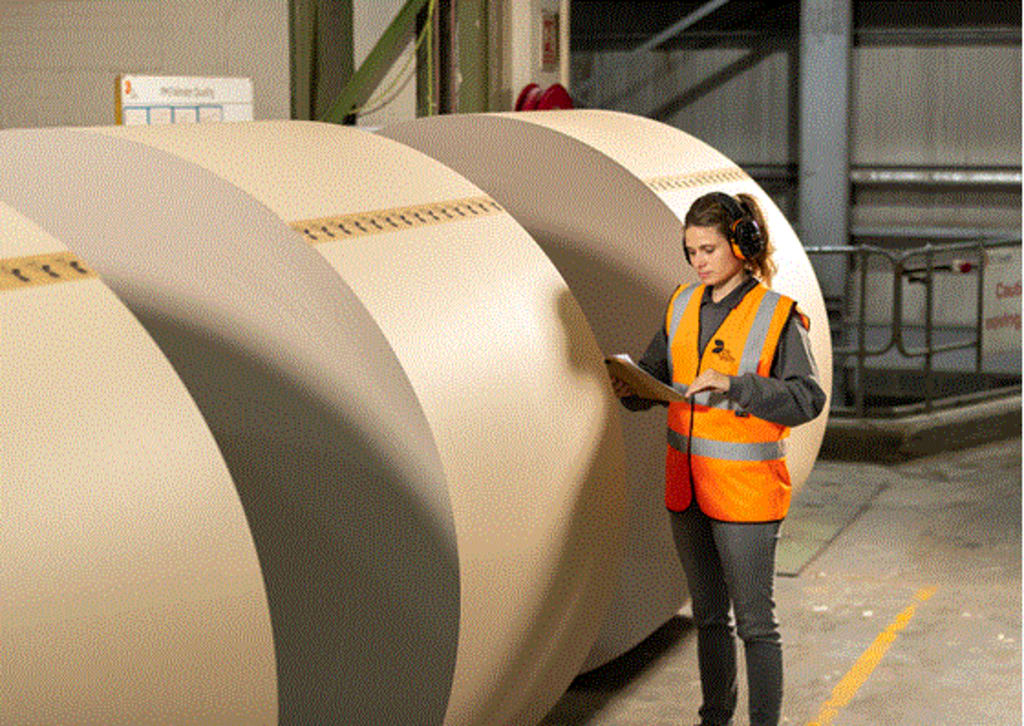
There is an extensive cluster of pine trees destined to become corrugated packaging. Crafting a single box involves utilizing material from thousands of trees and passing through the hands of numerous workers. While some may perceive it as merely a box, the reality is far more intricate. If you've used a cardboard box in the US today, there's a one in three chance that it originated from International Paper, the world's largest paper company. Cardboard, or as insiders prefer to call it, corrugated packaging, is indispensable for numerous industries, safeguarding items during transportation via trucks and ships.
The good news is that cardboard is among the most recycled materials globally. Despite its extensive reuse, questions linger about the ongoing need to fell millions of trees and the feasibility of crafting environmentally friendly cardboard. A facility in Georgia, part of International Paper's network, operates ceaselessly to meet the demand spurred by online shopping, grocery stores, and more. However, insiders refrain from using the term "cardboard," opting instead for "corrugated packaging," emphasizing the layered structure beneath the outer sheets.
The journey begins with living trees, as demonstrated by Forester Alex Singleton in a forest area previously sold to International Paper. Harvested trees are replanted, but it takes decades for the new crop to mature. Foresters argue that harvesting is a part of a process that turns forests into investments, supporting planting and maintenance. Critics counter that replanting doesn't equate to letting forests grow naturally.
The southern US, referred to as America's wood basket, produces a significant share of the world's pulp and paper products. This productivity, or exploitation, depending on the perspective, involves about 300 trucks daily transporting freshly cut trees to mills like the one in Georgia. The process begins at the wood yard, where trees are debarked and turned into chips. The chips then undergo pulping, a process that separates fibers from lignin, the natural glue in wood.
While the mill makes strides in reducing coal usage and capturing processing gases, the carbon released in processing trees surpasses emissions from burning fossil fuels. However, the mill generates about 75% of its own energy and emphasizes sustainability.
Recycling plays a pivotal role, with the mill recycling 500 tons of used cardboard daily. The recycling process involves pulping and blending used cardboard with fresh fibers. The resulting mixture moves through a paper machine, drying and forming sheets of paper. These rolls then reach box plants, like the one in Illinois, where they are transformed into sturdy boxes. The corrugator gives the packaging its strength with distinctive wavy layers.
Despite the high recycling rates for cardboard, the industry still relies on cutting down trees, mainly due to limitations on how many times old cardboard can be recycled. International Paper emphasizes responsible forest management, with over 90% of its fiber sourced from the southern US. Foresters argue that providing a market for landowners encourages reforestation.
However, the debate extends to what defines a forest, with concerns raised about the replacement of natural forests with tree farms. The role of large trees in preserving carbon and other ecological benefits is highlighted by environmental groups. The balance between industry and conservation, while challenging, is seen as achievable with good-faith efforts from all parties involved.
About the Creator
Keep reading
More stories from Nathaniel Teeman and writers in Education and other communities.
The Growth Trap: How Self-Improvement Can Derail Your Success
The growth mindset has become a symbol of ambition and resilience. It promotes the belief that anyone can improve their skills and intelligence through effort, learning, and perseverance. While this concept has inspired many to push past their limits and embrace challenges, it also has a lesser-known side. When taken too far or misunderstood, the pursuit of self-improvement can actually backfire. What begins as a healthy desire to grow can spiral into stress, burnout, and self-doubt, quietly sabotaging the very success it aims to create.
By Jeb Kratzig4 days ago in Education
Wesley Farnsworth: On Authentic Christian Community with Evidence, Human Rights, and Critical Thinking
Wesley Farnsworth is an author, speaker, and communications professional whose work centers on faith, transformation, and the formation of authentic Christian community. With more than 16 years of experience in visual storytelling, branding, and digital communication—including service in military public affairs—he helps individuals, churches, and nonprofits communicate with clarity, integrity, and purpose.
By Scott Douglas Jacobsen4 days ago in Education



Comments
There are no comments for this story
Be the first to respond and start the conversation.