

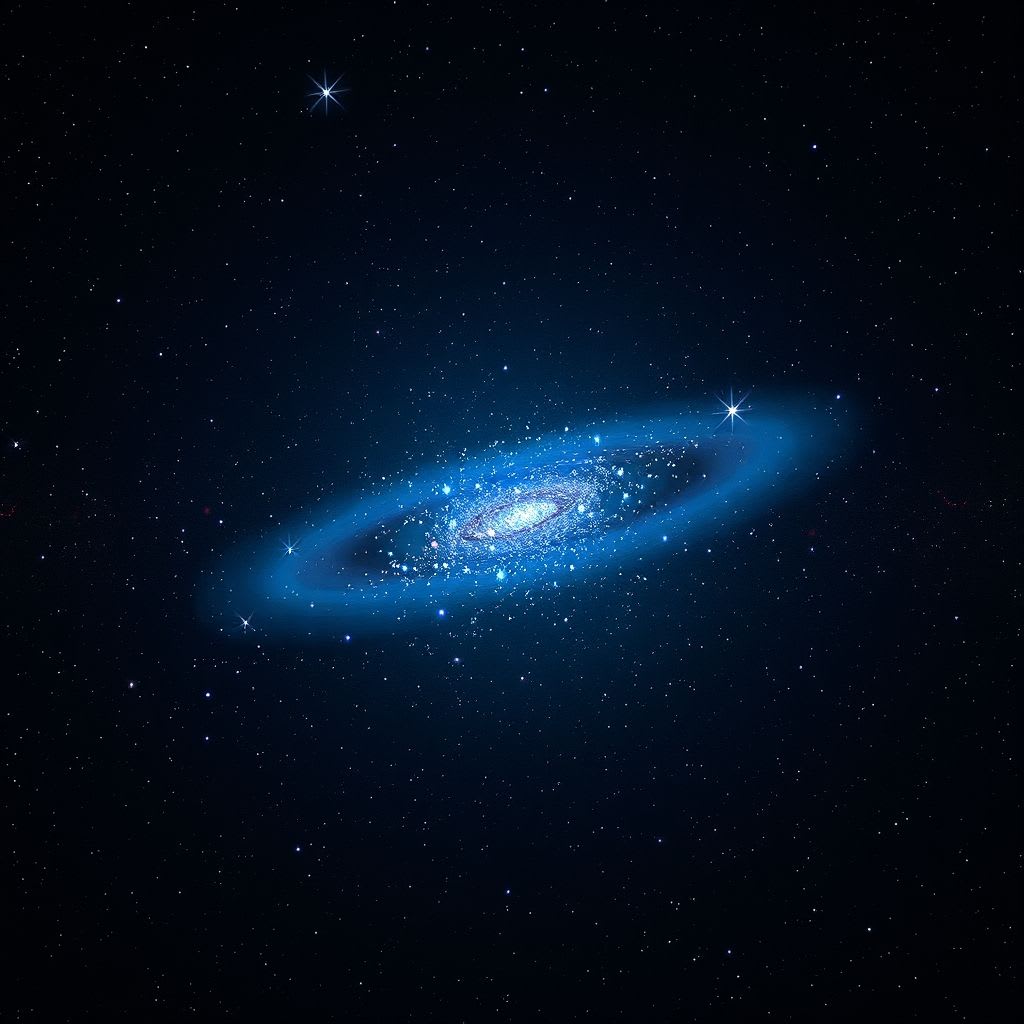
When we look up at the night sky, the stars may appear scattered randomly across the cosmos. Yet, the truth is that most stars are not born in isolation. Instead, they emerge together in vast groups known as star clusters. These cosmic families can contain hundreds, thousands, or even millions of stars, bound by their shared origin. For astronomers, star clusters are not just beautiful sights they are natural laboratories that help us uncover the secrets of how stars form and how galaxies evolve.
The Birthplace of Stars: Giant Molecular Clouds
Every star cluster begins its journey inside giant molecular clouds vast regions of cold gas and dust stretching across tens or even hundreds of light-years. Though these clouds look dark and unremarkable through telescopes, they hide the essential building blocks of new stars.
Gravity slowly pulls parts of the cloud together, creating dense knots called protostellar cores. When many of these cores collapse almost simultaneously within the same cloud, they give birth not to a single star but to an entire stellar community: the foundation of a cluster.
Cosmic Triggers: What Sets Star Formation in Motion
The collapse of a molecular cloud isn’t always spontaneous. Often, some dramatic event provides the push needed to start the process. Examples include:
- Shockwaves from exploding supernovae — the death of a massive star can send ripples of energy through space, compressing nearby gas clouds and sparking new generations of stars.
- Turbulent gas motions — within the cloud itself, swirling eddies and currents create denser pockets where stars can form.
- Gravitational interactions — neighboring clouds or galactic tidal forces can squeeze and disturb a cloud, triggering collapse.
Star cluster formation is rarely a single event it’s a cascading process. The birth of some stars can stimulate the birth of others, leading to a whole region of the galaxy “lighting up” with new stellar life.
Two Types of Star Clusters
Astronomers generally categorize clusters into two main types, each with its own personality and story.
- Open clusters — These are relatively small groups of stars, often numbering in the hundreds. They are usually found in the disk of the galaxy and shine brightly in the night sky. One of the most famous examples is the Pleiades in the constellation Taurus, often called the “Seven Sisters.” Open clusters are spectacular but temporary. Over time, gravitational interactions with other stars and galactic tides cause them to scatter, releasing their members into the galaxy.
- Globular clusters — These are ancient, massive, and tightly bound spheres containing hundreds of thousands or even millions of stars. They orbit in the halos of galaxies, including our Milky Way, and are among the oldest surviving structures in the universe. Their age often more than 10 billion years makes them valuable fossils for astronomers studying the early history of galaxies.
The Life Cycle of a Cluster
After a cluster forms, it doesn’t remain surrounded by its natal gas for long. Radiation from hot young stars and powerful stellar winds sweep away the remaining material. What’s left is a tightly knit group of stars bound by gravity at least for a time.
Open clusters typically survive for a few hundred million years before dispersing. Globular clusters, however, can endure for billions of years thanks to their immense gravitational pull.
Regardless of type, clusters leave a lasting impact on their galaxies. Supernovae within clusters enrich the interstellar medium with heavy elements like carbon, oxygen, and iron ingredients essential for planets and life. The dispersal of clusters also helps populate the galaxy with stars, weaving them into the galactic disk.
Why Star Clusters Metter to Science
From an astronomer’s perspective, star clusters are invaluable because they allow for direct comparison between stars. All stars in a cluster are born at roughly the same time and from the same material. This means differences in brightness, size, or lifespan can be attributed primarily to differences in stellar mass, making clusters perfect “test cases” for theories of stellar evolution.
For example, by observing clusters, scientists discovered that massive stars live fast and die young, while smaller stars like our Sun burn fuel slowly and survive for billions of years. Clusters also reveal which stars eventually become white dwarfs, neutron stars, or black holes.
Cosmic Communities in the Night Sky
When you spot a bright grouping of stars through binoculars or a telescope, you might be looking at a cluster an ancient stellar family sharing a common origin. Some, like the Pleiades, are relatively close neighbors just a few hundred light-years away. Others, like massive globular clusters, are remote and mysterious, shining faintly on the edge of visibility.
Each cluster tells a story: of the gas cloud it came from, of the stars that lived and died within it, and of the galaxies that continue to evolve around them. Together, they remind us that stars are not just solitary points of light but part of a grander cosmic community.
Star clusters are more than celestial ornaments. They are the living chronicles of the universe evidence of creation, evolution, and the ongoing cycle of birth and dispersal that has shaped the cosmos for billions of years.
About the Creator
Keep reading
More stories from Holianyk Ihor and writers in Education and other communities.
How Supernovae Enrich the Cosmos with Heavy Elements
When we gaze at the night sky, the stars seem eternal and unchanging. In reality, the universe is a restless laboratory, where stars are born, live, and die forever transforming the chemical makeup of space. Among the most spectacular events in a star’s life is the supernova: a cosmic explosion so powerful that it forges the universe’s heaviest elements, such as gold, uranium, and lead. Without these titanic events, neither Earth nor we ourselves would exist.
By Holianyk Ihor5 months ago in Education
How Snowboarding Supports Mental Focus and Stress Relief
Snowboarding is more than a winter sport. It is also a powerful way to support mental focus and reduce daily stress. Many people turn to snowboarding for the thrill. Others discover that it helps them feel calm, clear, and balanced. Time on the mountain can quiet the mind in ways few activities can match.
By Dr. Shawn Keller6 days ago in Education
Competitive Distance Running Excellence Built on Repeated High Race Placements
Competitive distance running rewards athletes who can perform well again and again. One strong finish is impressive, but multiple high placements in recent races show true consistency. These results point to smart training, clear focus, and the ability to manage pressure over time. This article explores how competitive distance running athletes achieve repeated success, why high placements matter, and what helps runners stay near the front of the field.
By Daniel Podorabout 20 hours ago in Education


Comments
There are no comments for this story
Be the first to respond and start the conversation.