
How San Diego Developers Are Changing Health in 2027?
Healthcare transformation isn’t starting in hospitals anymore — it’s starting in code

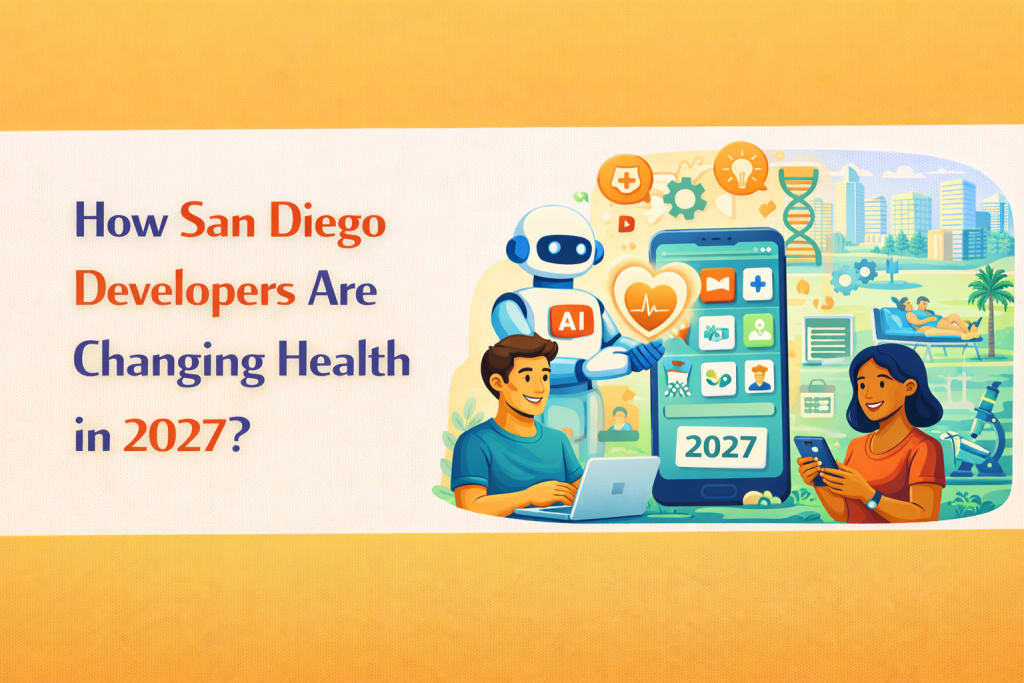
If someone asked ten years ago where healthcare innovation happened, the answer would likely have pointed toward research labs, pharmaceutical companies, or major hospital networks. Today, the answer increasingly includes software development teams.
By 2027, healthcare transformation is no longer driven solely by medical breakthroughs but by the digital infrastructure shaping how patients interact with care. Mobile apps, AI-driven diagnostics, remote monitoring platforms, and data-driven treatment planning are redefining the relationship between technology and medicine.
Behind this transformation lies a deeper shift: developers are becoming active participants in healthcare innovation. And in certain ecosystems, this collaboration between engineers and medical professionals is accelerating faster than expected.
San Diego has emerged as one of the environments where this intersection is particularly visible, creating a ripple effect across the digital health landscape.
The digital health market is expanding faster than traditional healthcare models
The scale of change becomes clearer when looking at industry data. The global digital health market has experienced sustained growth, with projections suggesting compound annual growth rates approaching 20% through the end of the decade. Telehealth adoption surged during recent years and has stabilized at levels significantly higher than pre-pandemic norms.
Studies indicate that nearly 80% of healthcare organizations now invest in digital tools aimed at improving patient engagement or operational efficiency. Meanwhile, remote patient monitoring alone is expected to grow dramatically as wearable technology becomes more sophisticated and accessible.
These numbers reflect a broader transition: healthcare is moving from episodic treatment toward continuous, technology-enabled care.
As Apple CEO Tim Cook once noted when discussing health technology, “Healthcare is where technology can make one of its greatest contributions to humanity.” That statement increasingly resonates as software becomes embedded within daily health management.
Collaboration between clinicians and developers is reshaping product design
Healthcare technology differs fundamentally from consumer software. Applications must operate within strict regulatory frameworks, protect sensitive data, and integrate seamlessly with clinical workflows.
This complexity demands collaboration between multiple disciplines. Developers cannot work in isolation; they must understand medical terminology, patient safety considerations, and real-world clinical constraints.
Regions with strong healthcare ecosystems naturally encourage this collaboration. Developers gain opportunities to test ideas with healthcare professionals, refining usability and improving accuracy before products reach patients.
Research suggests that interdisciplinary teams — combining engineering, medical expertise, and design thinking — produce healthcare solutions that achieve higher adoption rates because they align more closely with real-world needs.
Artificial intelligence is changing how healthcare decisions are made
AI has become one of the most transformative forces in modern healthcare. Rather than replacing clinicians, AI systems augment human decision-making by identifying patterns within large datasets.
Key applications include:
- Predictive analytics identifying health risks earlier.
- Automated triage systems guiding patient interactions.
- Personalized treatment recommendations based on historical data.
- Natural language processing that simplifies medical documentation.
Industry forecasts estimate that AI-driven healthcare technologies could reach hundreds of billions in global value within the next decade. Adoption is accelerating as healthcare providers recognize efficiency gains and improved patient outcomes.
A healthcare technology analyst recently summarized the trend: “AI isn’t changing medicine overnight — it’s quietly improving thousands of small decisions that collectively reshape care.”
Patient expectations are redefining healthcare interfaces
Modern patients increasingly expect healthcare technology to function with the same simplicity as consumer apps. Frictionless scheduling, transparent communication, and personalized experiences are becoming baseline expectations.
Surveys indicate that more than 60% of patients prefer digital interactions for non-emergency healthcare needs, reflecting growing comfort with remote services.
This shift places pressure on developers to rethink interface design. Medical apps must balance clarity with depth, presenting complex information without overwhelming users.
Accessibility also plays a critical role. Interfaces must accommodate diverse populations, including older adults and individuals with disabilities, ensuring equitable access to digital care.
Remote monitoring and wearable technology are reshaping preventive care
Wearable devices and remote monitoring platforms are transforming healthcare from reactive treatment to proactive prevention. Continuous data collection enables clinicians to identify trends before conditions escalate.
Market projections suggest that remote patient monitoring technologies could grow at annual rates exceeding 18%, driven by aging populations and increased demand for personalized care.
Developers play a central role in translating raw health data into meaningful insights. Designing dashboards that present information clearly, securely, and accurately becomes essential for both patients and clinicians.
The integration of wearable data with mobile applications allows individuals to participate more actively in managing their health, fostering a sense of ownership and engagement.
Investment momentum driving innovation cycles
Financial investment continues to accelerate healthcare technology development. Venture capital firms increasingly recognize digital health as a long-term growth sector, funding startups focused on AI diagnostics, mental health platforms, and chronic disease management tools.
Funding enables experimentation, allowing teams to explore innovative solutions without immediate pressure for profitability. Ecosystems attracting sustained investment often experience faster innovation cycles because resources support collaboration and risk-taking.
Investment also signals confidence, attracting talent and encouraging partnerships between startups, research institutions, and healthcare providers.
The cultural influence of interdisciplinary ecosystems
Innovation rarely emerges from isolated industries. When engineers collaborate with scientists, clinicians, and designers, new ideas flourish.
Interdisciplinary environments encourage experimentation with emerging technologies such as augmented reality for surgical training, AI-driven imaging analysis, and digital therapeutics designed to complement traditional treatment methods.
These collaborations highlight an important shift: healthcare innovation is becoming less about individual breakthroughs and more about integrated ecosystems where diverse expertise converges.
Why mobile app development San Diego reflects broader changes in healthcare innovation
The increasing recognition of mobile app development San Diego reflects a broader industry movement toward specialized innovation hubs. Healthcare technology thrives in environments where regulatory knowledge, clinical expertise, and technical talent coexist.
Rather than relying solely on traditional tech centers, companies are exploring ecosystems aligned with industry-specific needs. This approach enables faster iteration, stronger collaboration, and deeper understanding of healthcare challenges.
The result is not simply better apps but more meaningful healthcare solutions designed with real-world context in mind.
Looking ahead: developers as architects of the future healthcare experience
As healthcare moves deeper into the digital era, developers will play an increasingly influential role in shaping patient experiences. Technology will not replace human care, but it will redefine how care is delivered, accessed, and understood.
By 2027, the most impactful innovations may not be singular breakthroughs but the cumulative effect of countless improvements in usability, accessibility, and intelligent automation.
The transformation underway demonstrates that healthcare innovation is no longer confined to traditional medical institutions. It emerges wherever technology, expertise, and human-centered design intersect — and in that evolving landscape, software developers are becoming architects of the future of health itself.
About the Creator
Ash Smith
Ash Smith writes about tech, emerging technologies, AI, and work life. He creates clear, trustworthy stories for clients in Seattle, Indianapolis, Portland, San Diego, Tampa, Austin, Los Angeles, and Charlotte.
The Great Wealth Shift Accelerates
The Great Wealth Shift Accelerates The precious metals market has entered a period of extreme turbulence—and for prepared investors, that turbulence is opening the door to a historic transfer of wealth. Silver surges more than 60% in weeks, collapses 20% overnight. Gold demand smashes all-time records. Meanwhile, powerful players scramble to secure physical supply at discounted prices. This is not random volatility. It is a structural reset, shifting value away from leveraged paper markets and toward real, tangible metal.
By Lakhwinder Singh7 days ago in Education
The Story of George Peake
In the early winds of American history, long before cities rose and skylines filled the horizon, a quiet but determined innovator walked across the unsettled fields of what would one day become Cleveland, Ohio. His name was George Peake, a man born in 1722, who lived a remarkable 105 years — a lifetime that stretched across centuries of change.
By TREYTON SCOTT5 days ago in Education



Comments
There are no comments for this story
Be the first to respond and start the conversation.