
How Quantum Chemistry Explains Chemical Bonding
The Invisible Forces Behind Molecular Bonds

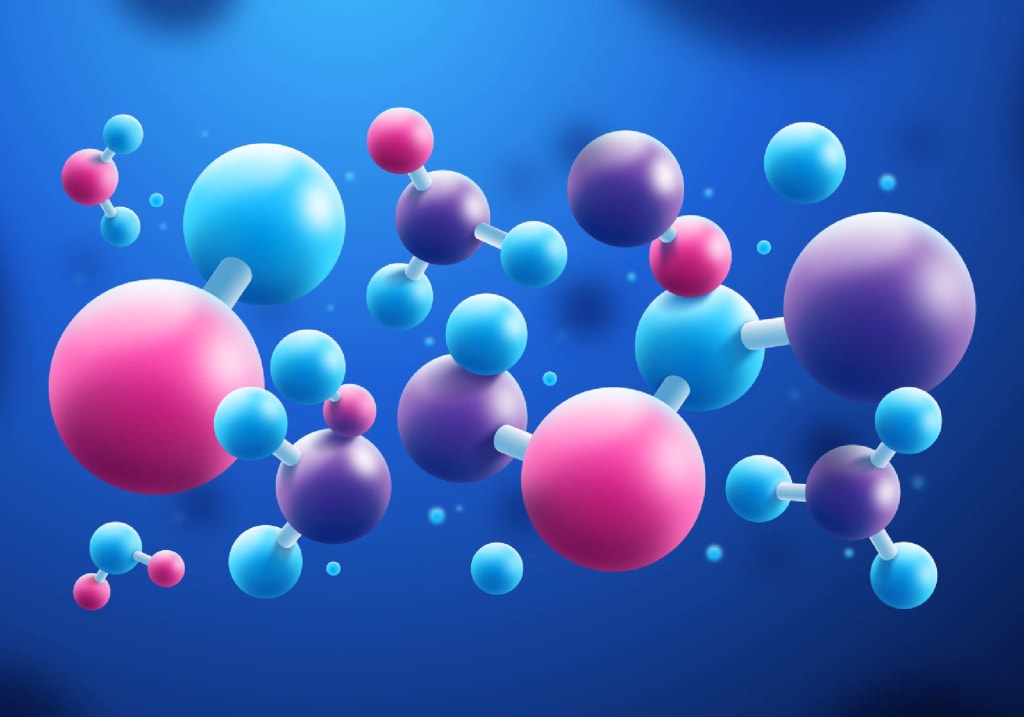
I sometimes wonder about how everything holds together when I look at the world around me. It is almost a magic at the atomic level, I mean! Of course, there’s no magic; it’s science. Quantum chemistry is one of the coolest fields around, granting us access behind the curtain to see how atoms glue together to make molecules. In this post, I will explain how quantum chemistry explains what makes everything up… bonds.
What is Quantum Chemistry?
What is quantum chemistry, then? Quantum chemistry looks at what the tiniest things of atoms and molecules do and how electrons react. They bond all of those atoms together to make everything we see around us. Without molecules, you wouldn’t have any life; you would not have any materials; you would not have anything.
I thought I was hearing about it for the first time when I first heard about it. There is still something that astonishes me: that we can actually predict how atoms will connect, if we only understand the electrons.
Role of Electrons in Chemical Bonds
Let’s get to the real heart of bonding, that are electrons. These tiny particles zoom around the nucleus of an atom, not in strict orbits, but in what we call “electron clouds.” In quantum chemistry, electrons aren’t thought of as fixed points. Instead, they act more like a blurry cloud, showing where they might be found.
How Do Electrons Bond Atoms Together?
Whenever atoms come close to each other, their electron clouds overlap. This overlap leads to the formation of different types of bonds — mainly covalent and ionic bonds.
In covalent bonds, atoms share electrons. This is a bit like two people sharing space together. For example, water molecules have covalent bonds between hydrogen and oxygen. However, in ionic bonding, one atom transfers an electron to the other. This is what happens in table salt, where sodium and chlorine bond together by “giving and taking” an electron.
Schrödinger’s Equation
When I first read about Schrödinger’s equation, I thought, Okay, this is going to be complicated math! But honestly, the idea behind it is simple enough: it tells us how electrons are likely to exist near the nucleus. It functions as a map, indicating that the likelihood of finding an electron is high at certain locations and low at others.
The equation by Schrödinger himself once admitted that we cannot obtain a perfect picture of atomic behavior, but we get pretty close to it with it. Scientists can figure out where the electrons hang out and how they will affect the way atoms bond by calculating these “probable” zones. That’s a big deal!
Why Molecular Orbitals Matter in Bonding
In meeting two atoms together, electron clouds will combine to form molecular orbitals. The strength of the bond is told to us in these orbitals. Imagine them as paths in which electrons move between the atoms to keep the atoms from splitting.
Here’s a quick breakdown:
- Bonding Orbitals: These bring atoms together, creating a stable connection.
- Antibonding Orbitals: These, on the other hand, can weaken the bond if they dominate.
The explanation for some stable molecules, but others breaking apart easily, involves bonding orbitals. For example, the bonding orbitals on oxygen gas (O2) are enough to stabilize them. It’s almost like the ‘glue’ that holds atoms together.

Quantum Chemistry in Real Life
That quantum chemistry doesn’t just live in textbooks; it is in everything we do every day. Take water, for example. The molecule can dissolve because water molecules are bonded in a way such that other substances are able to be dissolved by it; hence the name universal solvent. Life as we know it couldn’t exist without this property.
So the same science we can use to simplify and twist the basic molecules of things like medicines or the metals in our phones is this same science. However, quantum chemistry lets us see why molecules behave as they do, which, in turn, allows scientists to create better materials for everyday use.
New Materials and Medicine
Here’s the part that gets me excited: It is the future possibilities of quantum chemistry. So now researchers are putting these bonding principles to work, creating, for example, super light, super strong fabrics, or medicine that only goes after the cells that need the treatment.
Imagine clothes that won’t tear away, or drug treatments with near-zero side effects. This potential isn’t just theoretical—it's at the end of our atomic bond understanding. Some of the largest science and technology advances may be on the horizon: Quantum chemistry.
About the Creator
Mudassar saleem
I’m a passionate science blogger and educator at Learning Breeze. Learning Breeze simplifies complex science concepts, inspires curiosity and fosters a love of education. Join us to explore and learn together!
Keep reading
More stories from Mudassar saleem and writers in Education and other communities.
Recombinant Vaccines: Changing the Face of Immunization with Organic Chemistry
Vaccines have always been a vital part of disease prevention, but what if I tell you that a new generation of vaccines is revolutionizing this field? This breakthrough is known as recombinant vaccines, an incredible innovation made possible by the principles of organic chemistry. Today, we will talk about how these vaccines are changing vaccination, offering safer and more effective solutions to prevent infectious diseases.
By Mudassar saleemabout a year ago in Education
How Early Hustle Jobs Build Real Mental Toughness for Life
Early hustle jobs—like babysitting, mowing lawns, stocking shelves, or working the drive-thru—might seem small on paper, but they often shape big psychological strengths. These first experiences with responsibility, pressure, and real-world expectations can build mental toughness in ways school alone usually can’t.
By David Lipan4 days ago in Education
Rachel Reviews: The Spiral Archive by Pieter Hendrik
It's difficult for me to know where to start with a review of this book as it was, for me, an entirely unique experience and one that I'll probably never have again. I don't want that to be interpreted as unenjoyable but it has left me scratching my head a little and ruminating on its content, its themes and its characters.
By Rachel Deeming6 days ago in BookClub




Comments
There are no comments for this story
Be the first to respond and start the conversation.