
How long will it take for humans to colonize another planet?
Will humanity be able carry torch of life to the other planets?

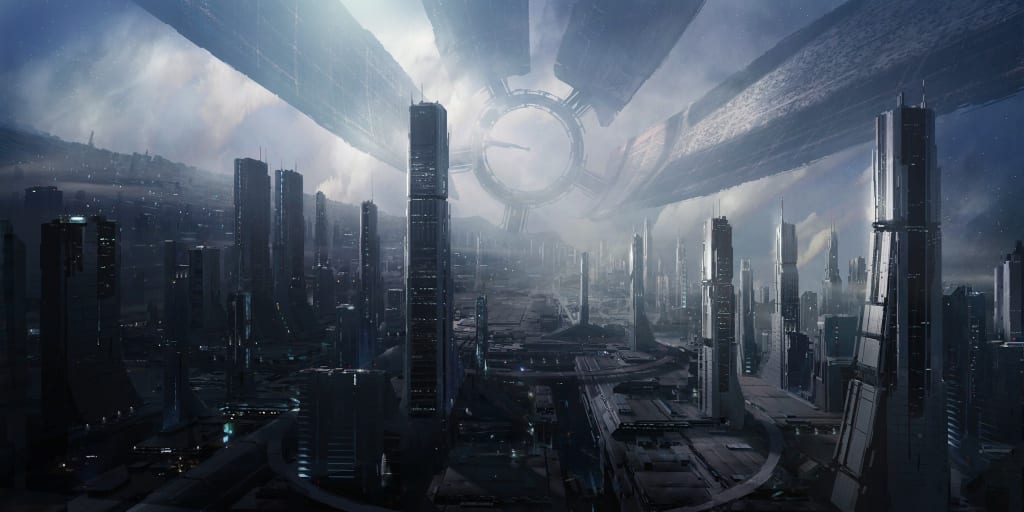
SpaceX CEO Elon Musk has a grand vision of establishing a city of one million people on Mars by 2050. This may seem like an incredibly ambitious goal, especially considering that humans have never set foot on the Martian surface. However, the feasibility of such an endeavor and the timeline for human colonization of other planets depend on various factors.
In the case of Mars, achieving human colonization within a few decades is not necessarily out of reach. Serkan Saydam, the deputy director of the Australian Centre for Space Engineering Research and a professor at the University of New South Wales in Sydney, believes that it is possible to establish a human colony on Mars by 2050.
While there are numerous challenges to overcome, such as developing the necessary technologies for sustainable life support, ensuring the safety and well-being of the colonists, and establishing infrastructure for long-term habitation, Saydam's optimism suggests that significant progress could be made in the coming decades.
It's important to note, however, that the timeline for colonizing other planets beyond Mars would likely be significantly longer and more complex. The distances involved and the technological requirements for interstellar travel pose immense challenges. As of now, the concept of colonizing worlds outside the solar system remains firmly in the realm of science fiction.
In summary, while Elon Musk's vision of a thriving city on Mars by 2050 may appear audacious, experts like Serkan Saydam believe that human colonization of Mars within that timeframe is plausible. However, the prospects of colonizing planets beyond our solar system are far more distant and speculative.
Saydam, a mining engineer with expertise in futuristic mining, emphasizes the crucial role of water in the early stages of establishing a viable colony on Mars. He suggests that water can be extracted from ice and hydrated minerals found on the planet. This availability of water would be instrumental in supporting agricultural activities and cultivating food on Mars, similar to the depiction in the 2015 film "The Martian."
Additionally, Saydam highlights the potential of hydrogen derived from the ice and minerals as an energy source for rocket propellant. This would enable the production of fuel for spacecraft, facilitating transportation between Earth and Mars.
By leveraging these resources, particularly water and hydrogen, Saydam envisions a practical approach to sustain life and enable further exploration and development on the red planet.However, the idea of Mars colonization by 2050 lacks consensus within the scientific community, and some experts hold less optimistic views. Louis Friedman, an astronautics engineer and co-founder of The Planetary Society, expressed skepticism about the feasibility of Mars colonization in the near future. Similarly, Rachael Seidler, a neuroscientist at the University of Florida who collaborates with NASA astronauts, described the notion of colonizing Mars as overly optimistic and somewhat impractical.
Nonetheless, it is likely that humanity will send missions to Mars within the coming decades. China has plans to send human crews to Mars as early as 2033, while NASA aims to send astronauts there by the late 2030s or early 2040s. Once humans reach Mars, the next logical step would be to establish a colony.
However, colonization does not necessarily imply complete independence from Earth. It suggests a certain level of self-sufficiency but acknowledges the need for occasional imports, similar to a remote island. Serkan Saydam draws a comparison between Mars and such an island, stating that most equipment and tools would need to be transported from Earth. Manufacturing complex items like trucks directly on the Martian surface would pose significant challenges.
To make long-term colonization of Mars financially viable, the planet would need to generate some form of economic activity. While space tourism is a potential avenue, Serkan Saydam emphasizes the importance of mineral extraction for the success of colonization. Mining valuable resources like platinum from nearby asteroids could create new space-based economies, attracting further investment and driving exploration efforts.
Despite its challenges, Mars remains the most practical option for extraterrestrial colonization. However, it is not a particularly hospitable planet for human habitation. The Martian atmosphere consists of over 95% carbon dioxide, and its average temperature hovers around minus 80 degrees Fahrenheit (minus 60 degrees Celsius). The journey from Earth to Mars takes approximately 8.5 months, and the planet is exposed to harmful radiation. These factors highlight the inhospitable nature of Mars for potential colonizers.
Undoubtedly, there are potentially more habitable options for human settlement on planets beyond our solar system, known as exoplanets. However, the main hurdle with exoplanets is their immense distance from us. Sending a spacecraft to an exoplanet remains a feat we have yet to accomplish, with Voyager 1 and Voyager 2 being the only probes to have exited our solar system after 35 and 41 years of travel, respectively. Exoplanets are even farther away.
"The closest exoplanet would take several tens of thousands of years to reach with our current technology," explained Frédéric Marin, an astrophysicist specializing in black holes at the Astronomical Observatory of Strasbourg, University of Strasbourg, France.
Given these extensive travel times, the idea of colonizing exoplanets may initially seem implausible. However, Marin, who conducts computer simulations for interstellar travel out of scientific curiosity, anticipates a significant reduction in travel times in the near future, thanks to faster spacecraft.
"In science, we know that every century, the velocity of our propulsion methods increases by a factor of 10," Marin stated. This means that as humanity continues to advance its understanding of space travel and develop faster propulsion systems over the course of centuries, the travel time to reach exoplanets could drop from tens of thousands of years to thousands of years, and eventually to hundreds of years.
Marin outlined a hypothetical scenario in which reaching a potentially habitable exoplanet could be achieved within 500 years. Such a journey spanning centuries would necessitate a spaceship piloted by multiple generations of humans, with most individuals never witnessing the colonization of the exoplanet itself.
Based on Marin's simulations, a starting population of around 500 people would be suitable for a multi-generational colony ship. However, the ethical questions and uncertainties surrounding how humans would cope with spending their entire lives on a spaceship and how subsequent generations would adapt to being born into a life of interstellar travel remain significant challenges. Furthermore, considering the threats of climate change and other terrestrial issues that pose a risk of human extinction, there is no guarantee that interstellar colonization of exoplanets will ever become a reality.
About the Creator
Arjin Arık
Hey,my name is Arjin. I am here for you to read everything that depend on science, language, evolution, pyhsics, chemistry and history. With my huge information source, you will learn a lot of thing here with me:)
Keep reading
More stories from Arjin Arık and writers in Education and other communities.
Alien life and extraterrestrial plantes
Extraterrestrial life refers to the possibility of life existing outside of Earth, originating from sources other than our planet. While no definitive evidence of extraterrestrial life has been found, ongoing efforts are being made to explore this possibility. The potential range of extraterrestrial life spans from simple organisms like prokaryotes to intelligent beings that may have civilizations far more advanced than humanity.
By Arjin Arık3 years ago in Education
Your phones camera isn't as good as you think
When the Visualphone VP210 hit the market in 1999, it advertised a never-before-seen feature: a camera. With only 0.11 megapixels and storage for 20 photos, the Visualphone is a relic compared to modern devices sporting three distinct cameras, each with up to 100 times more resolution. But while this technology has improved dramatically in the 21st century, engineers are rapidly approaching a hard limit on phone camera quality. To understand this limit, we first need to know how phone cameras work.
By Munesh Yadavabout 15 hours ago in Education



Comments
There are no comments for this story
Be the first to respond and start the conversation.