
Alien life and extraterrestrial plantes
Extraterrestrial life

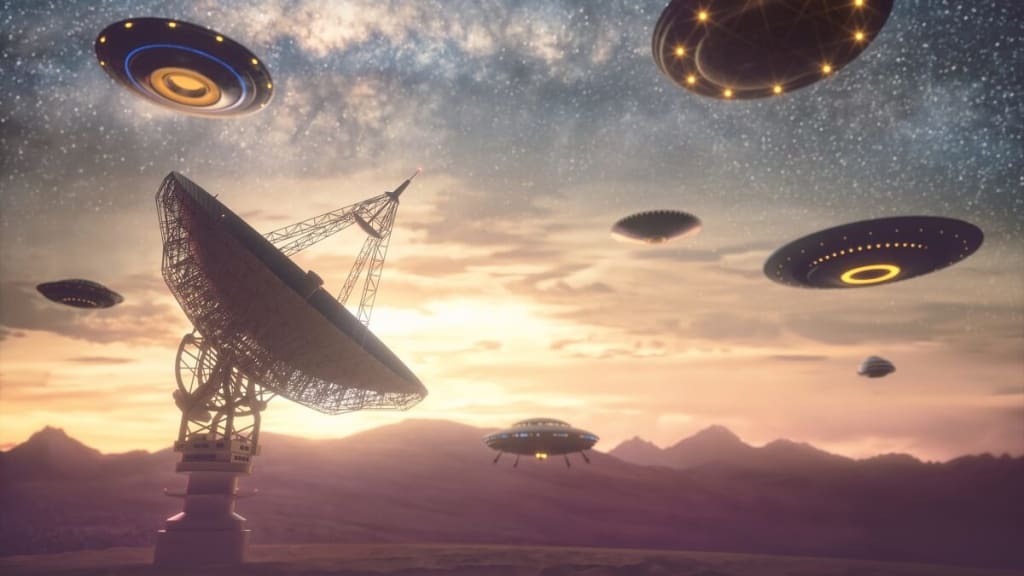
Extraterrestrial life refers to the possibility of life existing outside of Earth, originating from sources other than our planet. While no definitive evidence of extraterrestrial life has been found, ongoing efforts are being made to explore this possibility. The potential range of extraterrestrial life spans from simple organisms like prokaryotes to intelligent beings that may have civilizations far more advanced than humanity.
The Drake equation is a tool used to speculate about the existence of intelligent life elsewhere in the universe. The scientific study of extraterrestrial life is known as astrobiology.
The idea of inhabited worlds beyond Earth has been contemplated since ancient times. Early Christian and philosophical thinkers discussed the notion of multiple worlds with inhabitants. Some pre-modern writers even speculated on the idea of Jesus visiting extraterrestrial worlds to redeem their inhabitants.
In modern times, the search for extraterrestrial life has become an active area of research. Scientists employ various methods, including analyzing telescope and specimen data as well as using radio signals to detect and transmit communications, in the quest for signs of extraterrestrial life.
The concept of extraterrestrial life, particularly intelligent beings, has had a significant cultural impact, particularly in the realm of fiction. Science fiction has played a role in communicating scientific ideas, exploring possibilities, and shaping public interest and perspectives on extraterrestrial life. The topic of communicating with extraterrestrial intelligence has sparked debates, with some advocating for aggressive contact methods and others cautioning against drawing attention to Earth due to the potential risks associated with more technologically advanced societies.
It is important to note that the existence of extraterrestrial life remains speculative until concrete evidence is obtained through scientific exploration and discovery.
The existence of extraterrestrial life extends beyond Earth and encompasses various forms, ranging from simple microorganisms to complex intelligent beings comparable to humans. Scientists consider these different types of life when discussing the possibility of extraterrestrial existence, although they rely on the known hierarchy of life on Earth for simplicity since it is the only known example.
Based on interpretations of the Big Bang theory, the early universe was initially too hot to support life. It took approximately 15 million years for the temperature to cool down to suitable levels, but the necessary elements for life did not yet exist. Only hydrogen and helium were available, and it took another 50 million years for carbon, oxygen, and water to form through stellar fusion. The challenge for life to emerge at this point was not temperature but the scarcity of heavier elements. As planetary systems developed, organic compounds likely formed in the protoplanetary disks of dust grains, eventually leading to the creation of rocky planets like Earth. Although Earth was initially molten and could have destroyed any organic matter, it became more hospitable as it cooled down. Life on Earth originated through a process called abiogenesis, where chemicals combined to form the first living organisms. Alternatively, life may have originated less frequently and then spread between habitable planets through processes like panspermia, where life is transferred by meteoroids.
The concept of the circumstellar habitable zone, also known as the "Goldilocks zone," is an area around a star where the temperature allows water to exist in liquid form on a planet's surface. It is neither too close to the star, where water would vaporize, nor too far away, where water would freeze. However, planetary habitability is a complex matter determined by multiple factors. Simply being in the habitable zone is not enough for a planet to support life or have liquid water. Venus, for example, is in the habitable zone but lacks liquid water due to its atmospheric conditions. Gas giants like Jupiter, even if they orbit close to their stars as hot Jupiters, are not considered habitable. The specific distances of habitable zones vary based on the type of star, and even the star's activity affects local habitability. The duration and boundaries of habitable zones also change as stars evolve.
Life on Earth has demonstrated adaptability across diverse environments, even in extremely hostile conditions. This suggests that life on other celestial bodies could exhibit similar adaptability. However, the origin of life is distinct from its ability to adapt, and the requirements for life's emergence may be more stringent. Therefore, a planet or moon may be habitable but lack any form of life.
Planetary habitability in the Solar System
The Solar System consists of various planets, dwarf planets, and moons, each of which is examined for its potential to support life. However, thus far, the only known lifeforms exist on Earth, and there is no evidence of extraterrestrial intelligence within the Solar System. Scientists have not discovered any large ecosystems, which suggests their absence or the lack of detection thus far.
The inner Solar System, including Venus, is unlikely to harbor life. Venus, despite its similarities to Earth in its early stages, has extreme conditions such as a greenhouse effect, intense surface heat, sulfuric acid clouds, and a thick carbon dioxide atmosphere with high pressure. However, astrobiologists are interested in studying Venus to understand the specific differences that create favorable or hostile conditions for life. Although the conditions on Venus are generally unfavorable, there are speculations about the potential survival of microbial life in high-altitude clouds.
Mars, although a cold and nearly airless desert, shows evidence of past abundant water, with the presence of rivers, lakes, and possibly oceans. It may have been habitable in the past, but the loss of its magnetic field and subsequent removal of the atmosphere made it inhospitable to life. Fossilized remains of ancient life and the possibility of microbial life surviving underground are subjects of interest for future exploration.
The gas giants in the Solar System have inhospitable conditions due to crushing atmospheric pressures. The distant bodies, locked in deep freeze, are also unlikely to harbor life. However, some of the moons around the gas giants provide hope for potential life. For example, Europa, one of Jupiter's moons, has a subsurface ocean beneath a layer of ice, providing a potential environment for chemical reactions. Enceladus, a moon of Saturn, releases water into space through eruptions, indicating the presence of a subsurface ocean. Titan, another moon of Saturn, has liquid bodies on its surface, with rivers, lakes, and a hydrocarbon cycle. Although the cold temperatures on Titan make chemical processes slow, the presence of a subsurface ocean adds to its astrobiological interest, even though accessing it for study is challenging.
Overall, while the Solar System presents diverse environments to study, the search for extraterrestrial life remains ongoing, and future missions and advancements in technology may provide further insights into the potential for life beyond Earth.
About the Creator
Arjin Arık
Hey,my name is Arjin. I am here for you to read everything that depend on science, language, evolution, pyhsics, chemistry and history. With my huge information source, you will learn a lot of thing here with me:)
Keep reading
More stories from Arjin Arık and writers in Education and other communities.
How do we know the age of the universe?
The age of the universe is determined by studying various observations and scientific theories. Currently, it is widely accepted that the universe is approximately 13.8 billion years old. Several key methods and observations contribute to this understanding.
By Arjin Arık3 years ago in Education
From Stove to Strategy: Steve Wolfe’s Take on Scaling Your Food Business from Kitchen to Boardroom
Every food business begins with passion—late nights in the kitchen, handwritten recipes, and the joy of seeing someone love what you’ve made. But when demand grows, passion alone isn’t enough. Scaling your food business from kitchen to boardroom requires a shift in thinking, planning, and leadership.
By Steven Joseph Wolfe5 days ago in Education




Comments
There are no comments for this story
Be the first to respond and start the conversation.