
How LGBTQ Literature is Redefining Children's Stories in 2024
Exploring the Evolution, Impact, and Challenges of LGBTQ-Inclusive Storytelling in Children's Literature


In the past decade, children's literature has flourished, and LGBTQ literature has played a significant role in shaping the next generation of readers and fostering inclusivity. What was once a virtual desert in children’s book sections is now an essential part of modern storytelling.
This change highlights our growing understanding of representation: the importance of it and its life-changing power, especially when it comes to child development. LGBTQ children’s literature for today’s children builds on this foundation to tell nuanced stories not only about identity but also about friendship, family and self-discovery that apply to people of all backgrounds.
In this zeitgeist shift, this in-depth guide discusses how LGBTQ-inclusive storytelling is changing the face of children’s literature in 2024, covering everything from trends and digital innovations to industry movements and unresolved struggles in this exciting space.
A History of LGBTQ Literature for Children
The historically long path of LGBTQ representation in children's literature reveals deep-rooted changes in both societal attitudes and publishing practices. Looking at the data over the years, LGBTQ-themed books have faced enormous challenges, with 45.5% of 2,571 challenged titles in 2022 being about or written by LGBTQ people
1.EMERGING FROM INVISIBILITY INTO INCLUSION
LGBTQ characters had been virtually nonexistent in children's literature before 1969, and even same-sex relationships were often framed in "subtextual" ways 2. The tide began to shift with the publication of “I’ll Get There. It Better Be Worth the Trip” by John Donovan in 1969, which was the first explicit inclusion of LGBTQ themes in young adult literature
- 2.Key Milestones in Publishing
- The 1980s and early 1990s saw watershed moments in LGBTQ children’s literature:
- 1983: “Jenny Lives With Eric and Martin” – First children’s book about a girl with two fathers
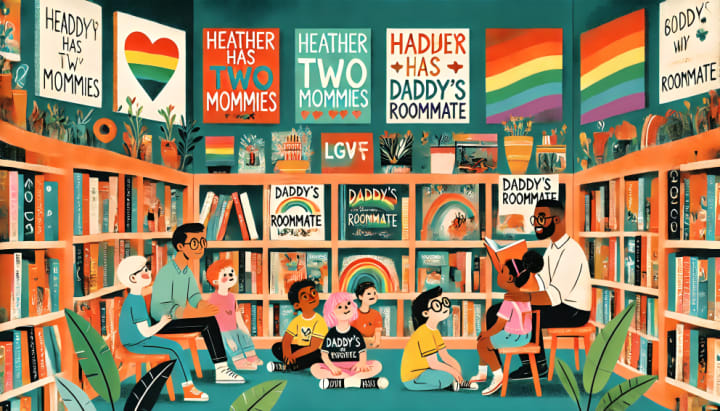
- 1989: “Heather Has Two Mommies” — Groundbreaking same-sex parents story
- 1990: “Daddy’s Roommate” — Pioneering portrayal of gay dads
Breaking Down Stereotypes
Contemporary LGBTQ kiddy lit has moved past plain old representation to tackle deep themes and diverse identities. Nonetheless, research has shown that contemporary LGBTQ-inclusive picture books have their limitations, predominantly featuring White, upper-class characters in most cases
3. But in the wake of this success, publishers are realizing that intersectional storytelling needs to come into play, to include more than just sexual orientation or gender identity in narrative.
And the trouble is far from over, with the American Library Association tracking 1,269 attempts to ban or restrict books in libraries in 2022, the highest number in two decades.
1. Bound by these constraints, independent publishers and authors are challenging the script, writing stories that escape the usual arcs of coming out or conflict and dwell on everyday experience and joy
2.This shift is part of a larger recognition that LGBTQ kids’ books serve two needs at once: They give LGBTQ kids the lived representation they so desperately need and they help other readers comprehend their world. The absence of students in the classroom materials can lead to them feeling like outsiders
3. an all too real experience in a world where narrative settings are often based in Eurocentric locations and they known as being the racist literature where they have nowhere to stand — pointing to the continued need for diversely representative and genuine assets in children literature that considered to be so.
Trends in Representation Today
While modern LGBTQ literature for kids has come a long way to represent real experiences in various identities and styles, Recent studies reveal that in a collection of 4,410 books in the Diverse BookFinder collection, only 2% contain same-sex or queer relationships 4, reflecting both the degree of progress that has been made and the degree of work that is needed.
Diverse Character Portrayals
Contemporary LGBTQ children’s literature shares a greater variety of identities and experiences. More literary characters who are non-binary4 Publishers are working actively to turn out stories that include:
- Characters of different racial and ethnic backgrounds
- Illustrative examples of diverse family types and configurations
- Socioeconomic backgrounds are one of the many dimensions.
- Diverse characters, foils with different backgrounds and capacities
Intersectional Storytelling
Visual representation has turned toward more simultaneous versions of identity. LGBTQ BIPOC youth g besowe difficult behaviors in schools to a larger extent to, even as rates himwere of racial harassment decrease at school Acknowledging the complexity of intersecting identities has nonetheless led authors to offer their own more nuanced portrayals. Books are increasingly populated with characters whose LGBTQ identity is only one dimension of their complex lives.
Beyond Coming Out Narratives
One of the major trends in contemporary LGBTQ literature is a departure from conventional coming-out narratives. Authors are writing stories in which LGBTQ characters go on adventures, solve
mysteries and navigate day-to-day life, without their identity being the primary source of conflict
This change also reflects a broader understanding of the realities of LGBTQ experiences — that they go beyond just self-discovery.
Recent publications show that more and more authors are crafting stories as Kyle Lukoff describes "that’s wholly about a character’s identity, but without that identity being a source of conflict" This method encourages authentic representation while celebrating the joy and normalcy of LGBTQ existence. LGBTQ characters are now Out and Proud in books of every genre, from fantasy to science fiction to everyday slice-of-life .
The evolution of these narratives also mirrors shifting societal attitudes. Though coming-out stories aren’t going away, publishers are aware we need stories where LGBTQ characters are simply there, and flourishing among supportive communities. This trend recognizes the diversity of LGBTQ experience and that not everyone experiences anxiety or adversity on their journey .
Digital Innovation and New Formats
Innovative storytelling on digital platforms are expanding on the possibilities for LGBTQ children’s literature, allowing young readers immersive experiences that reflect diverse, inclusive stories. But these technological changes are reshaping how children find and come across LGBTQ offerings.
Storytelling and interactive storytelling platforms
LGBTQ literature is more available than ever due to digital libraries and interactive platforms. 8 Free Digital Access to Carefully Curated LGBTQ Books Nationwide — Queer Liberation Library With tools such as Libby, readers can discover content in the privacy and safety of their own home Interactive storytelling programs like Drag Story Hour have adapted by providing virtual events and themed programming 9.
Social Media Impact
Online platforms were early storytellers of identity exploration and have always been spaces where LGBTQ youth could find and connect with inclusive content. Studies explain that these platforms present key opportunities for:
It is a time of identity exploration and development
Access to emotional support and resources
Engagement with LGBTQ peers and role models
Instagram, Tumblr, and Twitter have become popular with LGBTQ audiences as platforms for accessing content, and particularly because of their privacy settings Social media activity has also been associated with decreased mental health issues and increased well-being among LGBTQ youth .
How to Storytell with Multimedia?
More publishers and creators have been diversifying the formats used to reach young audiences. The #MyStoryOutLoud campaign is an example of how digital storytelling can amplify LGBTQ voices and create safe spaces. These multimedia approaches can include:
YouTube Channels With Storytime Sessions That Are Inclusive
Screenplays and talkies of LGBTQ life and history
Summer reading programs and virtual book clubs
Digital platforms are especially useful for young people living in rural areas who may have no access to LGBTQ resources and community . Whether they’re adding to the storytelling, creating an interactive experience, or opening opportunities for reader discussion and connection, these innovations carry the potential not only to alter the narratives being told but also to change how LGBTQ literature reaches and is engaged with by young people.
Shifting Paradigm in Publishing Industry
The queer publishing landscape is new, because it’s a radical overhaul of how queer kids can get access to queer literature. LGBTQ fiction sales have never been higher — 6.1 million units sold in the 12 months to May 2023 .
Without Them Change Would Not Be Happening
With over 400 titles in print, this pioneering publisher has made its name publishing cutting-edge LGBTQ-related material416.# Likewise, Bold Strokes Books has been publishing high-quality queer fiction since 2004, and Interlude Press has constructed an impressive catalogue of more than 90 titles that celebrate the range of what diversity within the LGBTQ community looks like 16.
- Key sales milestones include:
- 2,173% increase on pre-pandemic figures
- 2 12-month period, 11% increase compared to한채형12-month period, 11% increase compared to
- 2 million units 2↑ 40% jump in LGBTQ romance books
Evolution of Marketing and Distribution
The way the industry helps promote LGBTQ literature has changed considerably. Major corporations have gone from ‘gay vague’ advertising to more direct representation. Publishers are currently collaborating with groups including GLAAD and Drag Story Hour to raise up LGBTQ stories .
However, challenges persist. There have been reports of financial pressures on some publishers, with independent houses getting as much as 50% decline in sales owing to rigorous scrutiny and prolonged approval processes 19. Despite these hurdles, publishers such as Levine Querido forge ahead in promoting overlooked voices, with three of their titles also winning Newbery honors .
Global Market Expansion
Publishers are venturing into new territories and translation opportunities; the international market for LGBTQ literature is growing. Such growth is part of a wider cultural transformation in which alternative narratives, once relegated to niche publishing, are entering the mainstream. Independent publishers are especially engaged in this space, deliberately taking risks to bring new writers to the world stage .
It can't all be smooth sailing, though, as the industry grapples with persistent censorship and distribution challenges, with enacted or on-the-books legislation in more than 30 U.S. states impacting LGBTQ titles. Publishers are not waiting for someone to show up and tell them how to behave; many are fighting back against restrictions and supporting creators, and bringing diverse voices together. Big publishers are refocusing too, realizing that LGBTQ books resonate with readers of all ages.
Challenges and Opportunities
In 2024, LGBTQ children’s literature has to navigate an unprecedented number of challenges, with the American Library Association reporting 1,269 attempts last year to ban or restrict books in libraries — the highest tally in 20 years24. But that makes it even more a time of opportunity for innovation and growth.
Addressing Censorship
Recent data show a disturbing trend: 45.5% of 2,571 challenged titles were written by or about LGBTQ people 1. With 60% of book challenge filings occurring around the country from just eleven individuals across the country 1, school districts are contending with organized efforts to remove any materials considered LGBTQ-inclusive.
Several initiatives have sprung up in response to such censorship:
- The Unite Against Book Bans campaign offering "book resumés" for schools
- California punishes schools for removing LGBTQ-inclusive books
- Queer Liberation LibraryThe Queer Liberation Library offers free digital access programs
- Funds raised through coordinated donation campaigns to impacted school districts
Fostering Inclusive Distribution Networks
The Human Rights Campaign Foundation estimates that LGBTQ adults currently make up as much as 8% of the U.S. population 4, signaling a dire need for accessible LGBTQ literature. Innovative distribution solutions are developing in the form of:
- Publisher and LGBTQ community center partnership programs
- Digital lending platforms guaranteeing privacy and access
- Working with independent bookstores
- Reader-friendly subscription services
Supporting Diverse Creators
The industry has unique challenges when it comes to supporting queer creators of color. GLSEN's National School Climate Survey finds that LGBTQ+ BIPOC youth are experiencing more racist remarks in schools 4, demonstrating a need for intersectional representation within literature.
Publishers and organizations are stepping up with targeted support programs. It is an event that's delivered by Your Stories Matter, a pioneering publisher that developed platforms with the intention of. They provide free teacher guides and other resources alongside their books, facilitating both creators and educators in spreading these vital narratives.
The We Need Diverse Books initiative has broadened its focus to include a specific emphasis on support for LGBTQ creators, and groups such as GLAAD are aiming to lift up marginalized voices in children’s literature. These initiatives are vital, with research suggesting early exposure to diverse stories helps alleviate fears about sexuality and gender identity in younger readers .
Despite these challenges, there is reason to be hopeful. Sales data shows growing demand for LGBTQ literature, and so censorship attempts may be backfiring, boosting interest instead of suppressing it. Libraries and schools are finding creative ways to continue to provide access to these resources, with some being awarded special recognition through initiatives such as the Welcoming Schools' Seal of Excellence.
How to move forward requires major drags from publishers, educators and advocates. One librarian observed, “Getting inclusive material into the hands of educators and students is empowering the next generation to meet hostility with knowledge and compassion”. It reflects the dual nature of our current challenges — the obstacles still exist but are motivating creative solutions and better advocacy networks.
Conclusion
It’s a pivotal moment for LGBTQ children’s literature in 2024. The journey from groundbreaking early works to the vast array of narrative landscapes we have now — from rom coms to horror, reality to indie mysteries — speaks to the tenacity of LGBTQ creators and an increasing thirst for authentic representation.
New digital platforms and independent publishers are constantly exploring new ways for young readers to find and interact with stories about LGBTQ people. Such developments, plus changing marketing strategies and expanding international reach, are a harbinger of a bright future for inclusive children’s literature.[XL: Please see the Editor's note at the end of the article.]
While challenges remain, especially around censorship and access, the response from publishers, educators and advocates has been encouraging. Sales numbers indicate that efforts to limit LGBTQ content often have the opposite effect — drawing attention and creating a demand. Industry dedication to diverse voices — along with innovative distribution solutions and support programs — can help make sure these important stories are delivered to young readers who need them the most.
It is important to note that LGBTQ+ children’s literature is not just a narrative, it creates bridges of understanding, cross-validation of personal experiences, and spaces in which all children can relate to other children or see themselves in the pages of stories. This evolution of children’s literature is part of our society’s increasing realization that every child deserves to see his or her story on the shelf.
About the Creator
kalu ram meena
Inventive narrator mixing creative mind and knowledge. From nature's excellence to life's examples, I create content to rouse, illuminate, and enrapture. Go along with me on an excursion of revelation, each story in turn!
Keep reading
More stories from kalu ram meena and writers in Education and other communities.
New Year, New Venture: 4 Essential Tips to Launch Your Private Business with Confidence
New Year, New Pursuit: 4 Master Tips to Start Your Private Company with Confidence The coming of a new year has always been the best moment to start anew. This is an ideal
By kalu ram meenaabout a year ago in Education
Beyond Deals: Building Alliances That Truly Scale
Strategic partnerships for growth help companies expand faster and smarter. They enable two or more businesses to work together to create shared value. Each partner brings skills, reach, or resources that the other lacks. When done right, strategic partnerships create long-term growth that feels natural and steady.
By Rushi Manche7 days ago in Education



Comments
There are no comments for this story
Be the first to respond and start the conversation.