
How is routine exercise impacting mental health, and what is the most healthy activity for emotional well-being?
exercise impacting mental health
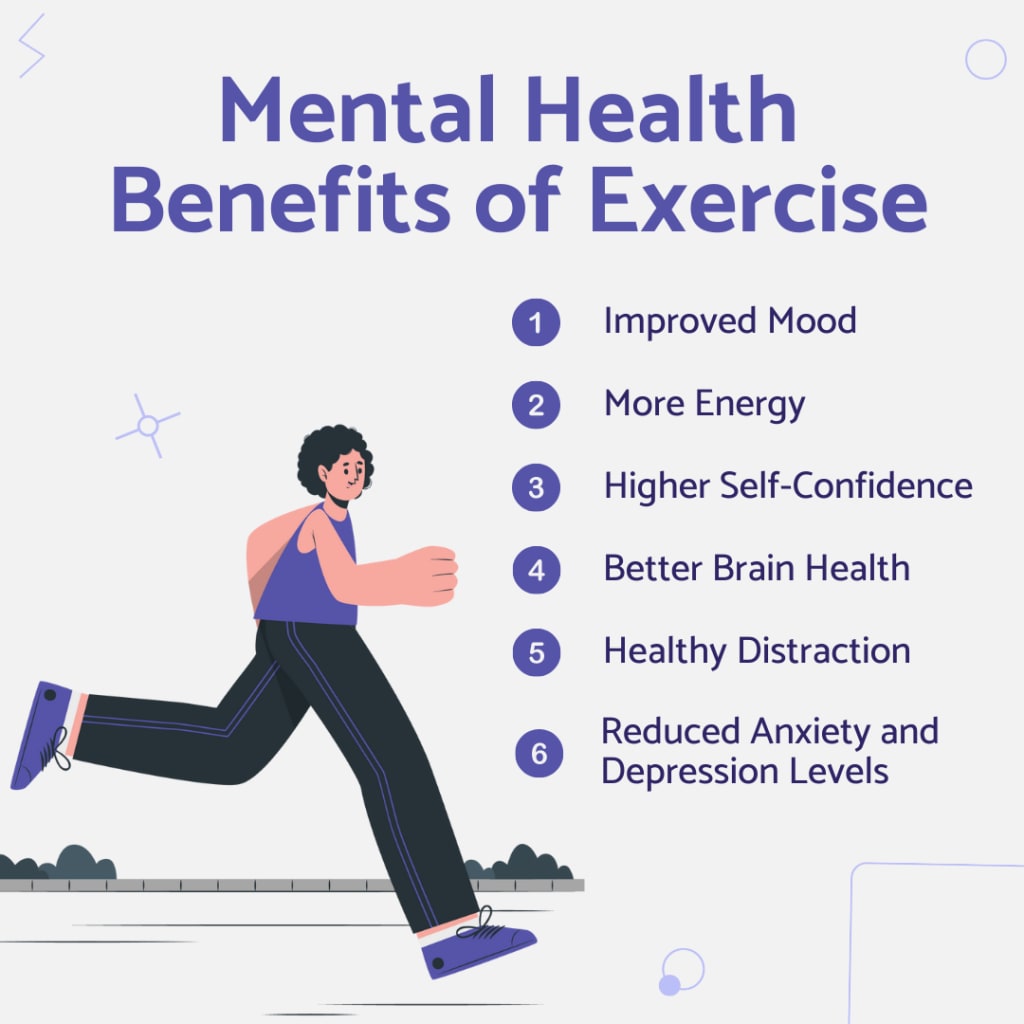
Physical activity is widely praised for its concrete physical benefits—stronger heart and cardiovascular system, stronger muscles, and increased flexibility—but its impact on mental health is no less substantial. Increasing numbers of recent studies have illustrated that fitness can also be an effective aid in the prevention, control, and even alleviation of symptoms of many of the mental disorders. This association between movement and mood is not psychological; it has a very profound foundation in brain chemistry, hormonal regulation, and nervous function.
In its essence, exercise impacts psychological health through the release of certain neurochemicals like endorphins, dopamine, serotonin, and norepinephrine. Endorphins, also popularly known as the "feel-good" chemicals of the body, induce a sense of euphoria and pleasure following exercise. Serotonin, the neurotransmitter that is also involved in mood control, tends to rise with regular exercise, leading to fewer symptoms of depression and anxiety. Dopamine, involved in pleasure and motivation, can be increased as well by exercise, amplifying an individual's drive and attention.
Regular exercise also has a profound impact on stress management. Exercise lowers cortisol levels, a hormone of stress, which, if chronically high, may cause anxiety, irritability, and difficulty concentrating. With motion, the body is able to release stored tension and re-set its stress response systems. That is why people tend to feel at ease and more in balance after a physical activity.
Psychologically, exercise can strengthen self-esteem and self-efficacy—the belief in one's ability to get the job done. Having fitness needs fulfilled, however small, can give a sense of achievement, which reinforces a good sense of self. This in turn produces more resilience in adversity.
One of the most overlooked mental health advantages of exercise is its role as a social bond. Team sports, dance classes, yoga classes, or walking clubs are just a few group activities that permit interaction, decreasing levels of loneliness and isolation—two variables to which poor mental health has been highly linked. Even solo activity performed in shared spaces, like going to the gym, can generate a sense of belonging and community.
The advantages of exercise extend beyond improving mood to mental well-being. Ongoing exercise is said to improve memory, capacity for learning, and focus. Exercise has been shown to stimulate the growth of new brain cells through the process of neurogenesis, particularly in the hippocampus, which is an area of the brain responsible for learning and memory. This helps with everyday activities as well as possibly protecting against loss of mental faculties and dementia in the future.
When considering the types of exercise most beneficial for mental health, the answer is not one-size-fits-all. The key is to find activities that are enjoyable and sustainable. However, certain forms of exercise have demonstrated particular benefits for emotional well-being:
Aerobic exercises – Activities such as brisk walking, running, cycling, and swimming are excellent for boosting mood and reducing anxiety. Just 30 minutes of moderate aerobic activity several times a week can have noticeable effects on mental health.
Mind-body practices – Yoga, tai chi, and Pilates combine physical movement with breath control and mindfulness, reducing stress and improving emotional balance.
Strength training – Resistance band training or weightlifting not only strengthens the body but also has been linked to fewer symptoms of depression.
Outdoor activities – Outdoor cycling, hiking, and gardening both offer the exercise and exposure to nature benefits, and nature itself has calming and mood-enhancing effects.
Team sports – Football, basketball, volleyball, or other group sports can foster teamwork skill, social connection, and meaning.
Consistency, not intensity, is required for the psychological advantages of exercise. Start modestly—i.e., 10–15 minutes daily of walking—and then increase frequency and duration gradually. It is less daunting than attempting an over-the-top program right away. Finally, and crucially, exercise must be treated as an act of self-care, not an exercise in punishment for eating or body image.
It is also noteworthy that although exercise can do magic for the mental state, it should not be considered a standalone treatment for major mental disorders. For those who are patients of extreme depression, anxiety disorders, bipolar disorder, PTSD, or other psychiatric conditions, exercise may turn out to be a significant supportive measure to therapy, medication, and other treatments as may be prescribed by a doctor.
Another contributing factor is the association between sleep and exercise. Exercise can enhance sleep quality, which then has positive effects on emotional well-being. Physically active individuals sleep quicker, sleep more soundly, and wake up feeling more refreshed—further supporting mood stability and stress resistance.
For those who struggle to incorporate exercise into daily routines due to motivation, mental illness, or physical disability, it is possible to start with something that is fun, not burdensome. Dancing around the house to favorite songs, taking short strides to class, or slow morning stretches can be as effective in the short run as formal exercise.
Finally, exercise should be viewed as an long-term investment in mental health. It takes a few weeks for beneficial effects to emerge with the establishment of a regular routine, but they accumulate over the months, leading to a solid foundation for long-term strength, mental acuity, and contentment with life. The interdisciplinarity of benefits makes physical exercise one of the most universal and effective available tools for maximizing mental health.
For professional guidance and mental health care assistance, you can visit:
https://www.delhimindclinic.com/
If you own a Craft site and wish to implement changes—or even simply wish to discuss your Craft project—you can visit:
https://www.craftcmsdeveloper.in/ — You are welcome to contact me if you wish to implement changes to your Craft site or simply discuss your Craft project. I provide troubleshooting for a free consultation!
About the Creator
Keep reading
More stories from Naveen Garg and writers in Education and other communities.
What role does sleep play in mental well-being, and how can improved sleep behavior benefit emotional well-being?
Sleep is not only a period of physical rest; it is a vital biological process that serves to preserve mental, emotional, and cognitive health. The majority of individuals underappreciate the importance of sleep as something inactive or as a loss that can be sacrificed for productivity. But years of research have confirmed that sleep has a powerful impact on mood management, emotional processing, memory consolidation, and the brain's ability to function at its best. Indeed, sleep loss is a cause and symptom of nearly all mental illnesses, including depression, anxiety, bipolar disorder, and post-traumatic stress disorder (PTSD). Understanding how sleep is related to mental health is essential for anyone who wishes to be emotionally in balance and well.
By Naveen Garg5 months ago in Education
Invisible Radiation in Everyday Life
We live in a world powered by invisible signals. From the moment you wake up and check your phone, to working on a laptop, connecting to WiFi, using Bluetooth earbuds, or scrolling before bed—your body is constantly surrounded by electromagnetic fields (EMFs). They’re an unavoidable part of modern life, yet most people rarely stop to think about how continuous exposure may affect their energy, sleep, focus, and overall well-being.
By Inamullah Momand 6 days ago in Education
Core Skills Every Finance Professional Needs Today
Financial analysis is one of the most critical abilities for anyone working in finance today. Companies rely on clear and accurate financial information to make smart business decisions. Finance professionals must understand how to read numbers, study trends, and guide action based on facts. These must-have financial analysis skills help workers become stronger, more confident, and more valuable in their roles. When used well, these skills support better planning, lower risk, and long-term success. Because of this, developing strong financial analysis skills is essential for finance professionals at every level.
By Andrew Lake5 days ago in Education


Comments
There are no comments for this story
Be the first to respond and start the conversation.