
How i Learned to Study for AP World History and Actually Succeed
Student Success tips for AP World History Prep

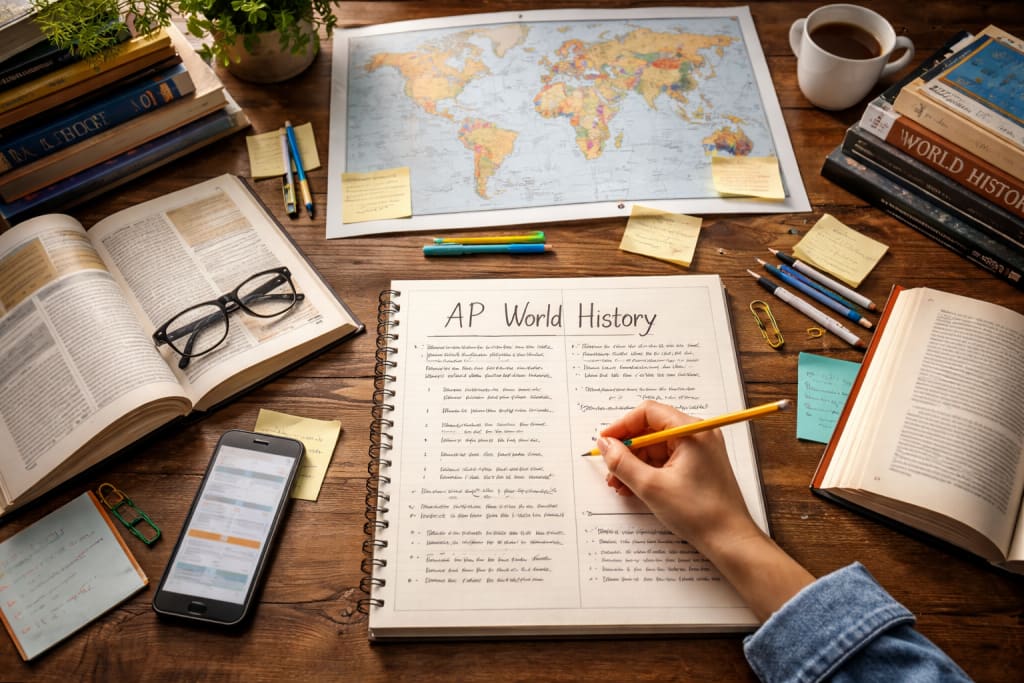
When I first started preparing for the AP World History exam, I believed success came down to memorizing timelines, dates, and long lists of historical events. I spent hours rereading chapters and highlighting textbooks, yet my practice results didn’t reflect the effort I was putting in.
Over time, I realized the problem wasn’t how much I was studying—it was how I was studying. AP World History doesn’t reward surface-level memorization. It rewards students who understand patterns, can analyze cause and effect, and can explain how societies change over time. Once I adjusted my approach, my progress became noticeable.
This is the study method that finally worked for me.
________________________________________
Understanding What the AP World History Exam Really Tests
One of the biggest turning points was understanding that the exam is skill-based, not fact-based. While historical knowledge matters, the exam consistently focuses on how well you can think like a historian.
The questions require you to:
• Analyze historical evidence
• Compare developments across regions
• Explain causes and consequences
• Recognize continuity and change
Once I understood this, my study sessions became more intentional. Instead of asking myself, “Do I remember this fact?” I started asking, “Can I explain why this happened and how it connects to something else?”
________________________________________
Breaking the Curriculum Into Clear Themes
The AP World History curriculum spans centuries, which can feel overwhelming at first. I found it much easier to manage when I stopped viewing it as one massive timeline and instead focused on recurring global themes.
For each unit, I concentrated on:
• Power and state-building
• Economic systems and trade
• Cultural exchange and belief systems
• Technology and environmental impact
By studying these themes across different periods, history began to feel interconnected rather than fragmented. This made comparison questions much easier to handle later.
________________________________________
Moving Away From Passive Studying
At first, I relied heavily on passive study habits—reading notes, watching videos, and highlighting key terms. While these methods felt productive, they didn’t help much when it came time to apply knowledge on practice questions.
What actually helped was switching to active study methods:
• Writing short explanations in my own words
• Creating comparison charts between regions
• Practicing thesis statements
• Explaining concepts out loud as if teaching someone else
These techniques forced me to process information instead of just recognizing it.
________________________________________
Learning Through Exam-Style Practice
Another major improvement came from practicing questions that mirrored the structure of the actual exam. Textbook review alone didn’t prepare me for the way AP questions are worded or how documents are presented.
At one point, I started using structured practice questions similar to what appears on the exam, including stimulus-based multiple-choice and document analysis exercises. I came across platforms like PrepPool during this phase, which helped reinforce how questions are framed rather than just what content is tested. The biggest benefit wasn’t the number of questions—it was learning why certain answers worked.
This helped me spot patterns in questions and avoid common traps.
________________________________________
Building Confidence With Historical Thinking Skills
Terms like “causation” and “continuity and change over time” seemed confusing at first. Once I practiced them regularly, they became second nature.
I focused on:
• Identifying long-term vs. short-term causes
• Explaining similarities and differences between societies
• Recognizing what changed and what stayed consistent
Instead of memorizing examples, I practiced explaining relationships. This made both essays and short answers far less intimidating.
________________________________________
Improving DBQs Without Overwriting
The Document-Based Question was initially the most stressful part of the exam for me. I used to think I needed to write long, complex essays to score well. That wasn’t true.
What worked better was learning structure:
• A clear thesis that directly answered the prompt
• Logical grouping of documents
• Brief sourcing analysis tied to the argument
I practiced outlining DBQs without fully writing them, which saved time and improved clarity. Once the structure became familiar, timed writing felt manageable instead of overwhelming.
________________________________________
Practicing Essays With Intention
The Long Essay Question required a different mindset. Without documents to rely on, I had to be confident in my historical knowledge and reasoning.
Rather than writing full essays every time, I practiced:
• Planning arguments
• Writing introductions and thesis statements
• Listing evidence I could use
This made essay writing feel less daunting and improved my organization under time pressure.
________________________________________
Reviewing Mistakes Instead of Avoiding Them
One habit that made a big difference was spending more time reviewing mistakes than celebrating correct answers. Every wrong question became a learning opportunity.
I asked myself:
• What concept did this question test?
• Why did my answer seem right at the time?
• How can I recognize this type of question in the future?
This reflection helped prevent repeated mistakes and steadily improved my accuracy.
________________________________________
Creating a Sustainable Study Routine
Consistency mattered more than long study sessions. I built a routine that included:
• Short reviews during the week
• Practice questions or writing on weekends
• Regular review of weaker units
Studying this way kept stress levels manageable and prevented last-minute cramming.
________________________________________
Exam Day Mindset
By exam day, I realized that confidence came from preparation, not perfection. I reminded myself that:
• I didn’t need to know everything
• Clear reasoning mattered more than perfect recall
• Staying calm helped me think clearly
That mindset made a noticeable difference in how I approached the exam.
________________________________________
Final Reflection
Preparing for AP World History taught me more than historical content. It taught me how to analyze information, connect ideas, and build clear arguments under pressure.
Once I stopped trying to memorize everything and focused on understanding patterns and skills, the subject became far more manageable. With the right approach and consistent practice, success felt achievable.
About the Creator
PrepPool
PrepPool helps students prepare smarter for exams through realistic practice questions, exam-aligned study resources, and practical strategies for AP, nursing, healthcare, and professional certification exams.
The Neuroscience Behind Healing: Exploring the Mind–Body Connection in Therapy
Modern therapy has entered a new era, one deeply informed by neuroscience. For decades, the mind and body were viewed as separate entities, with mental illness treated apart from physical health. However, neuroscience has dismantled this outdated view, revealing the brain's essential role as the command center where thoughts, emotions, and bodily responses intersect. This understanding has reshaped mental health therapy by emphasizing the biological and physiological roots of psychological distress.
By Debra Bailey PHD2 days ago in Education
How Smart Dieting Helps You Lose Weight and Boost Energy Naturally
Losing weight and increasing energy don’t have to involve extreme dieting, expensive supplements, or unrealistic routines. Smart dieting offers a healthier, more sustainable approach by focusing on nutrient-rich foods, mindful habits, and balanced meals that work with your body—not against it. When you choose more innovative eating strategies, you support natural weight loss while improving overall energy levels, mental clarity, and daily performance. This method provides long-term results because it’s based on consistency rather than restriction.
By Matthew Pothoff6 days ago in Education



Comments
There are no comments for this story
Be the first to respond and start the conversation.