
How Generative Engine Optimization Boosts Local SEO ROI
A View of AI-Driven Searches

What Is Generative Engine Optimization (GEO) and Why It Matters for Local Businesses
AI-generated answers are changing how customers find local businesses. This often happens before they ever click a website. If your brand isn’t showing up in those answers, you’re invisible to high-intent buyers.
Generative Engine Optimization (GEO) means shaping your content, data, and reputation so AI systems cite your business in summaries and recommendations. Google’s AI Overviews now appear widely and surface links from trusted sources, which creates a new battleground for local visibility. According to Google’s AI Overviews update, AI Overviews expanded to 200+ countries and 40+ languages in 2025, signaling a durable shift in search behavior. (blog.google)
This article shows you how to align GEO with local SEO to win more calls, bookings, and foot traffic. You’ll learn what’s changed in search, how to optimize pages for generative answers, and how to measure ROI so you can reinvest with confidence. Do this well and your local SEO ROI compounds.
"Ready to spot quick wins? Do a 15‑minute audit: search your top 5 services + "near me" and note which brands AI cites. That’s your competitive set for GEO."
How G‑E‑O Affects Search Traffic: From Blue Links to AI-Generated Answers
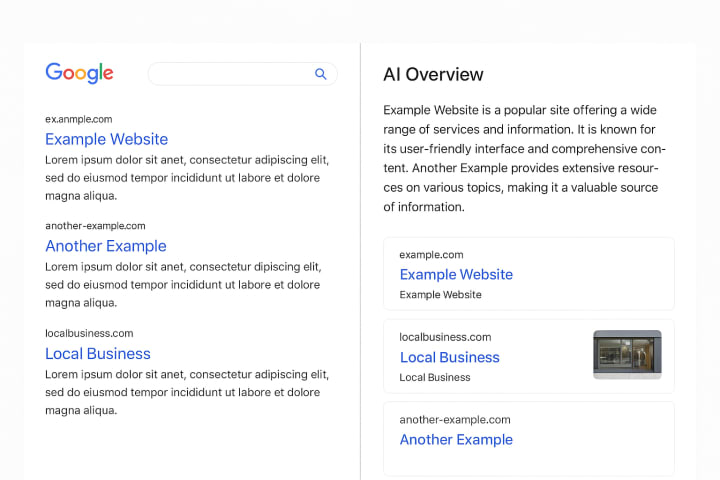
Generative answers compress the SERP and reduce clicks, but, cited brands earn disproportionate visibility. Studies tracking Google’s AI Overviews show sharp CTR declines on informational queries as users get answers without clicking.
Recent analysis reported a 61% drop in organic CTR and a 68% drop in paid CTR for queries with AI Overviews, while brands cited within the overview gained more clicks than those not cited. See the summary at Search Engine Land.
The takeaway is simple: optimize for citation, not just ranking. In practical terms, that means precise entities, trustworthy sources, and content that directly answers the question in a locally relevant way.
Mapping GEO to Local SEO: Visibility in AI-Driven Local Searches
Local packs aren’t the only game now, AI summaries can route demand before a click. But the inputs that power those summaries are still grounded in your real-world data and policies.
Start with clean, compliant business data. Google’s own rules on naming, categories, and eligibility reduce confusion and help machines match your entity correctly. Review the official Guidelines for representing your business on Google and fix any misalignments across your site, GBP, and citations. (support.google.com).
When AI models scan the web, they weigh consistency, prominence, and proximity signals. Tighten NAP consistency and ensure your primary category and services map to actual pages customers can visit.
Optimize Content for Generative Search: Building Locally-Relevant, Entity-Rich Pages
AI systems reward clear entities, not vague marketing copy. Build service pages that name neighborhoods, landmarks, and brands you carry, and show prices, hours, and guarantees.
Add structured data to affirm those entities for machines. Implement LocalBusiness markup and keep it conflict‑free across templates and plugins. Google’s documentation for LocalBusiness structured data shows supported properties that improve machine understanding.
Use on‑page sections that answer common local questions in 2–3 sentences. Short, specific answers are easier for generative systems to quote and easier for customers to trust.

Prompt Optimization for Local Queries: Structuring Content to Match AI Intent
Write content like the prompt an AI hopes to see. Lead with the answer, include the "where," and support it with specifics customers care about.
Borrow proven prompt design patterns to shape your Q&A blocks and comparison sections. OpenAI’s guidance on clarity, examples, and desired output format is a useful model for how you structure on‑page answers; see OpenAI’s prompt best practices. (help.openai.com)
For example, start a section with "Who we’re best for in [City]" and "What it costs", then add a compact checklist. Clear inputs lead to clear AI outputs.
AI-Driven Local SEO Strategies: Reviews, Citations, and First-Party Data for GEO
Reviews are reputation data that AI can quote directly. Make it easy for happy customers to leave detailed, service‑specific feedback and reply with useful context (warranties, turnaround times, accessibility).
Use Google’s own review guidance to build a consistent process for requesting, replying, and flagging. Start with "Manage customer reviews" in the Google Business Profile Help Center.
Feed first‑party data into your pages and GBP: real photos, inventory highlights, seasonal hours, and "areas served." Fresh, verifiable facts reduce AI hallucinations and increase citation odds.

Technical Foundations for Generative Visibility: Schema, E-E-A-T Signals, and Location Data
Trust is the currency of generative answers. Demonstrate experience (before/after photos), expertise (licenses, bios), authority (local press, awards), and trust (policies, guarantees).
Add organization, product/service, and review schema where appropriate, and keep your GBP categories and website services in sync. One source of truth beats clever tricks.
Content Formats That Win in Generative Results: FAQs, Comparisons, and Service Area Guides
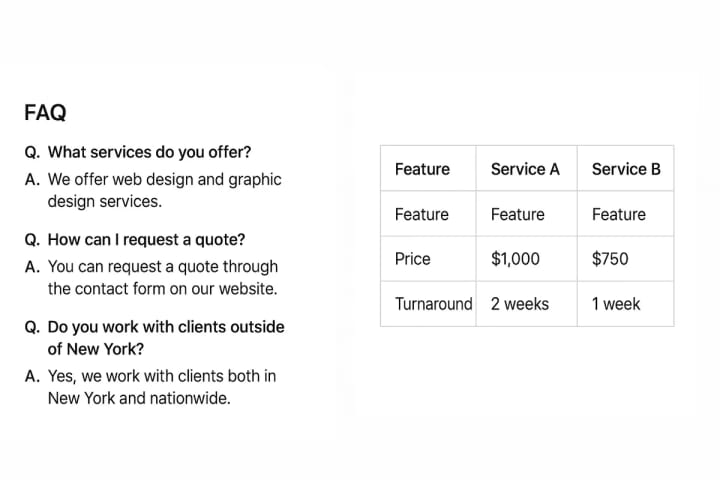
AI overviews prefer concise, structured explanations. Short FAQs, apples‑to‑apples comparisons, and clear service‑area pages tend to perform well.
Mark up FAQs when eligible and keep expectations realistic: Google’s FAQ rich results are restricted, but the format still helps generative systems parse answers. See Google’s FAQPage structured data guidance for correct usage.
Create a "Best for…" comparison table (e.g., "tank vs. tankless water heater”) with costs and timelines in your city. Specifics beat slogans in AI summaries.
How to Measure ROI from Generative SEO: Metrics, Benchmarks, and Attribution Models
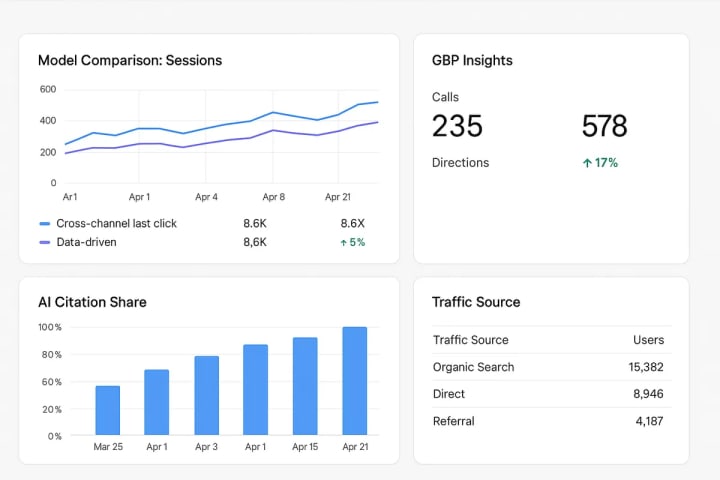
Measure beyond clicks. Track brand mentions in AI results, citation share vs. competitors, directions/calls from GBP, and assisted conversions.
In GA4, use attribution settings and model comparison to understand multi‑touch impact as AI answers change behavior. Learn the knobs and dials in GA4’s attribution settings.
Benchmarks to start: citation presence on your top 20 queries, GBP actions per 1,000 impressions, and lead quality (close rate by channel) to prove ROI.
Attribution that reflects GEO
Look at assisted conversions for branded and "near me" queries over 30–90 days. If citations rise while last‑click traffic dips, you’re winning visibility that still drives revenue.
Case-Style Scenarios: Boosting Local Business Visibility in AI Search
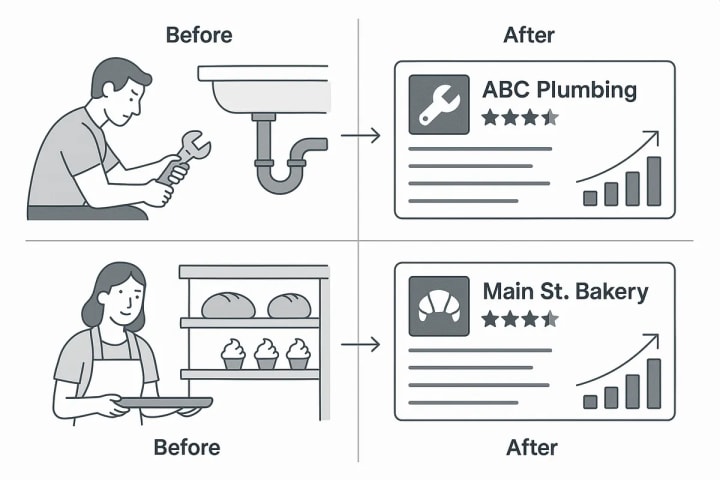
Scenario 1: Neighborhood plumber. We added entity‑rich service pages for "leak repair in Westwood" and "same‑day water heater install," plus clean LocalBusiness schema and photo evidence. Within 6 weeks, AI answers began citing the brand for "best emergency plumber near me," increasing calls from the GBP "Call" button.
Scenario 2: Boutique bakery. We structured content for "gluten‑free birthday cakes City]" with pricing tiers, order cutoffs, and allergen protocols. A local roundup blog and strong reviews gave authority, and AI began recommending the bakery on "last‑minute cake near me." For local behavior data, see Think with Google’s mobile insights on "near me" queries ([study). (thinkwithgoogle.com)
Workflow and Tools: Practical Steps to Implement Generative Engine Optimization
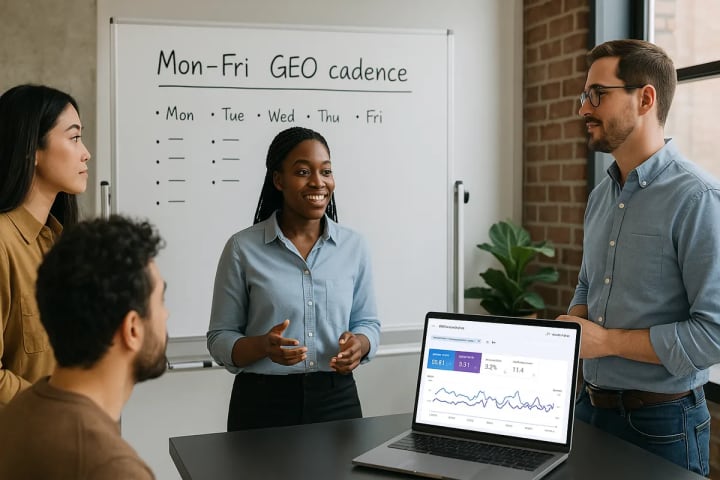
Adopt a weekly GEO rhythm. Monday: check AI citations for your top 20 queries. Tuesday: ship one entity‑tight content improvement. Wednesday: add one new review and one fresh photo. Thursday: validate schema and fix conflicts. Friday: log results.
Use Google Search Console’s Performance report to see query shifts and pages winning visibility; it’s your baseline for iterative tests. Start here: Search Console Performance report. (support.google.com)
Keep a simple "source of truth" spreadsheet for NAP, categories, services, and URLs to prevent schema/GBP drift. Consistency is compounding.
Quick FAQs (scan and go)
Can GEO replace classic SEO? No, GEO complements SEO by making your content easier for AI to cite while SEO ensures discovery, crawlability, and site quality.
Do I need separate pages for each neighborhood? Only when value is real. If services, pricing, or proof differ, create a page; otherwise, expand one strong city page with sections for neighborhoods.
Will posting more reviews alone boost AI citations? Reviews help prominence, but AI prefers sources that match the query. Pair review velocity with entity‑rich pages and clean data.
How fast will I see results? Expect 4–12 weeks for meaningful movement as models refresh and citations propagate; faster when you fix broken data or schema conflicts.
Risk Management: Avoiding Hallucinations, Misinformation, and Brand Drift in AI Answers
Guardrails matter when AI summarizes your brand. Publish definitive facts (hours, pricing ranges, eligibility) and cite sources on your site so machines can verify.
Adopt a lightweight governance model using NIST’s AI Risk Management Framework. Define owners, review cycles, and escalation paths for incorrect AI claims. Start with NIST’s AI RMF. (nist.gov)
Create a "Corrections" playbook: screenshots, the exact prompt, and links to the accurate page. Speed beats perfection when something’s wrong.

Action Plan: A 30-60-90 Day Roadmap to Improve Local SEO ROI with GEO
30 days: Fix foundations. Clean NAP/citations, align categories/services, add LocalBusiness schema, and ship two entity‑rich service pages.
60 days: Build authority. Collect 20–40 detailed reviews, add before/after proof, and earn 2–3 local mentions (chamber, news, guides). Use insights from BrightLocal’s primer on local ranking factors.
90 days: Scale what works. Track citation share on priority queries and expand successful formats (FAQs, comparisons, guides) to adjacent services or neighborhoods. Rinse and iterate.

"Want a checklist you can run weekly? Copy your Mon–Fri GEO cadence into a project board and set recurring 30‑minute blocks."
Subscribe for AI-Driven SEO Tips: Keep Your Local Strategy Ahead of Generative Search
GEO is about being the most helpful, verifiable answer in your market wherever customers ask. When you combine entity‑rich content, clean data, and real proof, AI systems can cite you with confidence.
Treat generative visibility as a measurable layer on top of SEO. Track citations, GBP actions, and assisted conversions to tie GEO into revenue. As the landscape evolves, follow updates from Google Search Central and keep iterating.
Your next customer is likely to meet you in an AI answer. Make that first impression both accurate and compelling.
About the Creator
Reuben Oyeyele
Reuben Oyeyele is an SEO specialist, a seasoned content writer and blogger with over 17 years of extensive experience in crafting compelling narratives that resonate with diverse audiences.
Keep reading
More stories from Reuben Oyeyele and writers in Education and other communities.
Why Canonical Tags Make or Break Your SEO Content Quality
Check this out: About 65% of mobile and 69% of desktop pages utilize rendered canonical tags according to the 2024 Website Almanac! This significant increase since 2022 highlights how canonical in SEO has become a critical component of modern website optimization. However, the percentage of mismatched canonical tags has also doubled during the same period, creating serious visibility problems for countless websites.
By Reuben Oyeyele2 months ago in Education
Rewiring Wellness: How Neuroscience Is Redefining the Mind-Body Connection in Therapy
In recent years, neuroscience has reshaped the understanding of how emotional and physical processes interact, offering therapists new insight into healing. The mind-body connection, once viewed as more philosophical than scientific, now has clear biological explanations. Studies show that thoughts, emotions, and physical sensations are deeply intertwined, influencing everything from stress responses to overall wellbeing. This knowledge is transforming modern therapeutic practices by providing clinicians with evidence-based tools that support integrated healing.
By Debra Bailey PHD2 days ago in Education
Was Alexander the great really that great?
Order, order! Who do we have on the stand today? Alexander... the Great, eh? Well, what’s so great about him? Your honor, the better question is, what's not great about him? He was the King of Macedon and considered a living demigod by Egyptians and Greeks alike. He conquered Persia when it was one of Earth's largest empires. And he was a thoughtful student of Aristotle, creative enough to untie the impossibly tight Gordian knot by cutting it in half. The Gordian knot is a myth— just like the countless other stories invented to enhance Alexander’s legend!
By Munesh Yadava day ago in Education
Smart phones, Humans and Aliens.
WARNING. I will be tapping into one of your favorite creative tensions: The absurdity of humans worshipping their glowing rectangles as if they were tiny oracles. There’s something deliciously poetic about that contradiction, and it lends itself beautifully to an instructive proviso.
By Novel Allen4 days ago in Poets



Comments
There are no comments for this story
Be the first to respond and start the conversation.