
How does childhood trauma affect mental health in adulthood?
childhood trauma
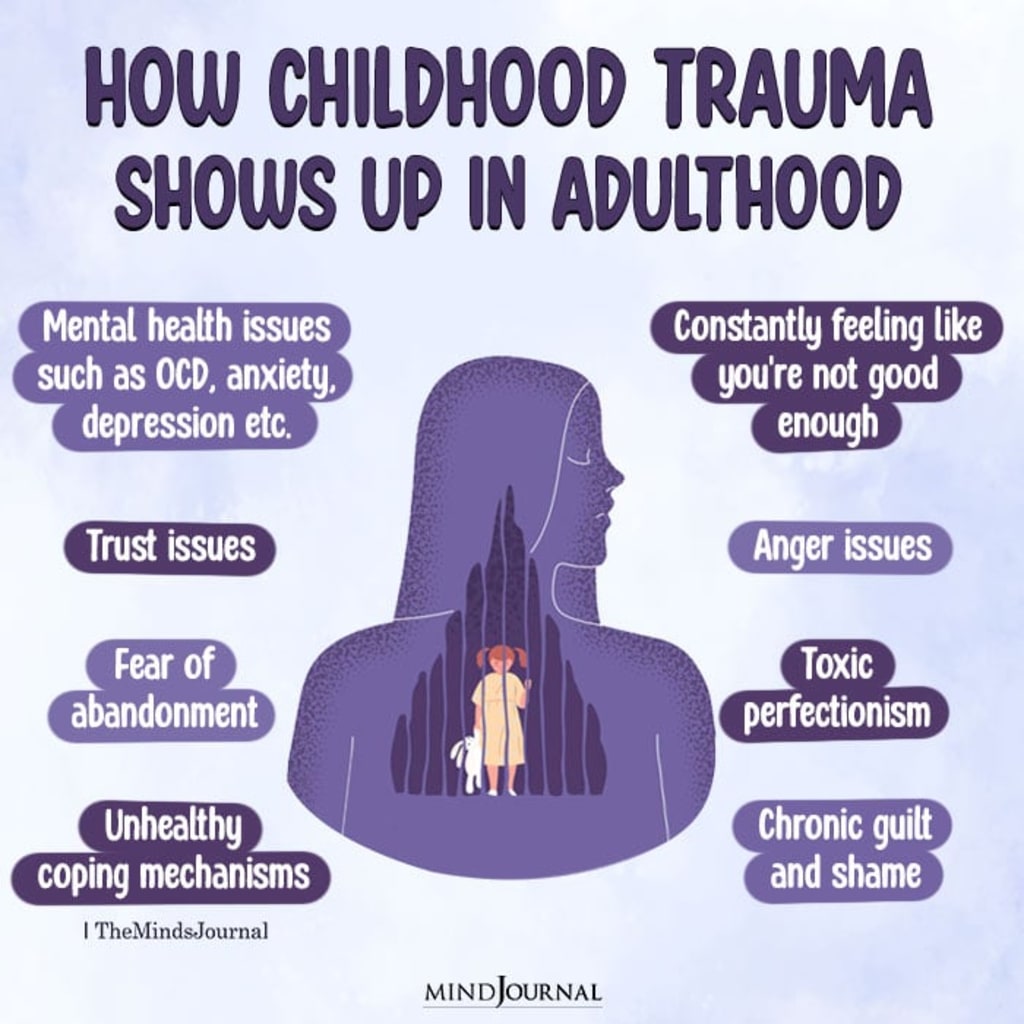
What is the impact of childhood trauma on adult mental health?
Childhood ought to be a time of safety, learning, and emotional growth. For some, however, it is also a time of trauma—experiences that are extremely stressful and overwhelming. Childhood trauma can take many various forms: abuse (physical, emotional, or sexual), neglect, domestic violence, death of a caregiver, or growing up in a household devastated by mental illness, alcohol or drug abuse, or chronic conflict.
The emotional wounds of these experiences do not necessarily fade over the years. Instead, they can shape how individuals think, feel, and behave well into adulthood. It is necessary to understand how child trauma influences adult mental health in order to heal and to assist individuals who continue to live with its consequences.
What is Childhood Trauma?
Childhood trauma refers to any intensely disturbing experience that disrupts a child's sense of safety and stability. This may involve:
Physical abuse (beating, hitting, or injuring)
Emotional abuse (insults, humiliation, threats)
Sexual abuse
Neglect (basic physical or emotional needs not being met)
Experiencing violence, particularly domestic violence
Separation from caregivers (as a result of death, incarceration, or abandonment)
Family dysfunction (poverty, mental illness, substance abuse, incarceration of parents)
They can provoke a biological stress response in a developing brain, altering the way a child sees themselves and the world in a fundamental way.
The Science: How Trauma Affects the Developing Brain
Early trauma triggers the stress response system—dousing the brain with cortisol and adrenaline. Though periodic stress is normal, constant stress can disrupt brain development.
The significant changes in the brain due to trauma are:
Overactive amygdala: The fear center of the brain gets hyperalert, causing excessive anxiety or emotional reactivity.
Underdeveloped hippocampus: Affects learning and memory, making it hard to process and recall experiences.
Damaged prefrontal cortex: Leads to deficits in impulse control, attention, and decision-making.
Changed attachment systems: Trauma interferes with a child's capacity to develop secure attachments, affecting relationships in the future.
These effects on the nervous system mean that trauma isn't "just in the past"—its mark is still in the brain and body, usually into adulthood.
Common Mental Health Effects in Adulthood
Adults with childhood trauma can manifest a range of mental health symptoms. These are usually associated with the initial trauma, even though they may only become apparent years after the event.
1. Depression and Anxiety Disorders
Persistent fear, sadness, and powerlessness during childhood frequently re-emerge as anxiety and depression in adult life. The emotional abandonment or neglect experienced in childhood can reinforce low self-esteem, excessive anxiety, and overwhelming sadness.
2. Post-Traumatic Stress Disorder (PTSD)
Adult PTSD can also arise from childhood trauma, especially if the trauma was of a violent or abusive nature. Symptoms can be:
Flashbacks
Nightmares
Hypervigilance
Emotional numbing
Avoidance behaviors
Complex PTSD (C-PTSD), a variant frequently associated with chronic childhood trauma, entails further symptoms such as chronic shame, challenge in trusting others, and emotional dysregulation.
3. Relationship and Attachment Issues
Children who are not regularly cared for can acquire insecure or disorganized attachment patterns. In adulthood, this may be expressed as:
Difficulty trusting others
Fear of abandonment
Codependency
Pushing individuals away when they get close
Struggles with intimacy and vulnerability
4. Addiction and Substance Use Disorders
Emotional pain can be numbed by drugs, memories can be avoided, and overwhelming feelings can be controlled. Adults with unresolved childhood trauma are more vulnerable to alcohol and drug abuse.
5. Borderline Personality Disorder (BPD) and Other Personality Disorders
Some individuals develop maladaptive coping mechanisms and disturbed self-concept as a result of early emotional instability. These qualities may eventually evolve into diagnosable personality disorders, particularly BPD.
6. Self-Injury and Suicidal Ideation
Untreated trauma can manifest in self-injurious behaviors as a means of communicating emotional pain that otherwise cannot be managed. This can involve cutting, eating disorders, or suicidal tendencies.
7. Chronic Health Conditions
Long-term exposure to stress hormones is accountable for physical illnesses like heart disease, autoimmune disorders, chronic pain, and gastrointestinal issues.
Behavioral Patterns Stemming from Childhood Trauma
Adults who have unresolved trauma can exhibit behavioral characteristics that include:
People-pleasing or inability to say "no"
Perfectionism to gain love or approval
Emotional numbness or detachment
Incessant need for validation
Hyper-independence as a result of mistrust
Difficulty regulating emotions—frequent anger, crying, or emotional shutdown
They are usually unconscious attempts at survival and coping derived from early experiences in life.
Barriers to Healing
Despite the profound impact of trauma, treatment is postponed or avoided by some individuals due to:
Shame and self-blame ("I should have been stronger.")
Normalization of trauma ("Everyone had a tough childhood.")
Fear of confronting painful memories
Ignorance that current challenges are related to past trauma
Stigma of mental health treatment
Knowing that trauma was not the person's fault—and that recovery is possible—can be empowering.
Pathways to Recovery and Healing
Healing from childhood trauma is not a straightforward journey, yet it can be achieved. Most individuals discover peace, purpose, and resilience through deliberate healing.
1. Therapy
A mental health professional can help uncover, understand, and process childhood trauma in a safe, supportive environment. Common approaches include:
Trauma-focused Cognitive Behavior Therapy (TF-CBT)
Eye Movement Desensitization and Reprocessing (EMDR)
Internal Family Systems (IFS)
Somatic Experiencing
Narrative Therapy
Therapy not only alleviates symptoms but also reforms fundamental beliefs regarding self-esteem, trust, and safety.
2. Developing Safe Relationships
A major component of healing is learning to establish and sustain safe, mutual relationships. Healthy friendships, romantic relationships, and even therapeutic relationships can repair trust.
3. Mind-Body Treatments
Trauma resides in the body as much as in the mind. Activities that reconnect one to his/her body can allow for the release of accumulated stress. These involve:
Yoga
Meditation
Breathwork
Dance or movement therapy
4. Establishing Boundaries
For the majority of survivors, learning to say no, assert yourself, and protect personal space is crucial. Healthy boundaries reduce re-traumatization and enable self-respect.
5. Support Groups
Connecting with others who share similar experiences reduces isolation and provides validation. Support groups can be therapist-led or peer-run.
Hope and Resilience
Despite the suffering, many childhood trauma survivors emerge with impressive strength. Research shows that post-traumatic growth—positive psychological transformation as a result of adversity—is possible. Survivors often develop:
Deep empathy Strong values Resilience Creative coping strategies A feeling of purpose in serving others Healing does not imply forgetting or erasing the past. Healing entails taking back control, creating a healthier today, and unlocking the possibility of a promising tomorrow. Final Thoughts Childhood trauma leaves a long shadow, yet it need not determine the course of your life. Coming to terms with the legacy of early adversity is a potent step toward healing. Armed with appropriate support, strategies, and understanding—both for yourself and from others—you can move beyond the past and build a life based on self-knowledge and resilience. If you or a person close to you is grappling with the long-term consequences of childhood trauma, there is assistance. Visit: https://www.delhimindclinic.com/
https://www.craftcmsdeveloper.in/
Feel free to reach out if you're interested in discussing how to update your Craft site or simply want to chat about your Craft project. I'm available for a complimentary consultation!
About the Creator
Keep reading
More stories from Naveen Garg and writers in Education and other communities.
How does trauma influence mental well-being, and is it possible to heal from it successfully?
Trauma is a profoundly distressing or disturbing experience that overwhelms a person's ability to cope with it. While stress is common to all, trauma is more severe and can have lasting imprints on the mind and body. Whether caused by childhood abuse, a car accident, a natural disaster, domestic violence, or loss of a loved one, trauma can have a considerable impact on mental health and day-to-day functioning. Fortunately, recovery is possible—with proper support, therapeutic interventions, and personal commitment.
By Naveen Garg6 months ago in Education
How Global Experiences Shape Smarter, More Creative Leaders
Leadership today demands more than experience and technical skill. It requires imagination, empathy, and the ability to see problems from new angles. One of the most potent ways leaders develop these qualities is through travel. When leaders step outside familiar routines, they gain insight that books and meetings cannot offer. Exposure to new cultures, environments, and ways of thinking shows clearly how creative leadership through travel can unlock ideas that change how leaders think, decide, and inspire others.
By Nathalie Kyriakou3 days ago in Education
Can You Really Earn Money With Transcription? The Real Income Reality
The short answer is yes—you can earn money with transcription. But the more honest, useful answer is this: transcription only becomes worthwhile when you understand how the income actually works, not how it’s often presented online.
By Mahesh Kumar3 days ago in Education



Comments
There are no comments for this story
Be the first to respond and start the conversation.