
How Different Parenting Styles Affect Sibling Relationships
How Different Parenting Styles Shape the Bond Between Siblings: Encouraging Harmony or Fostering Rivalry
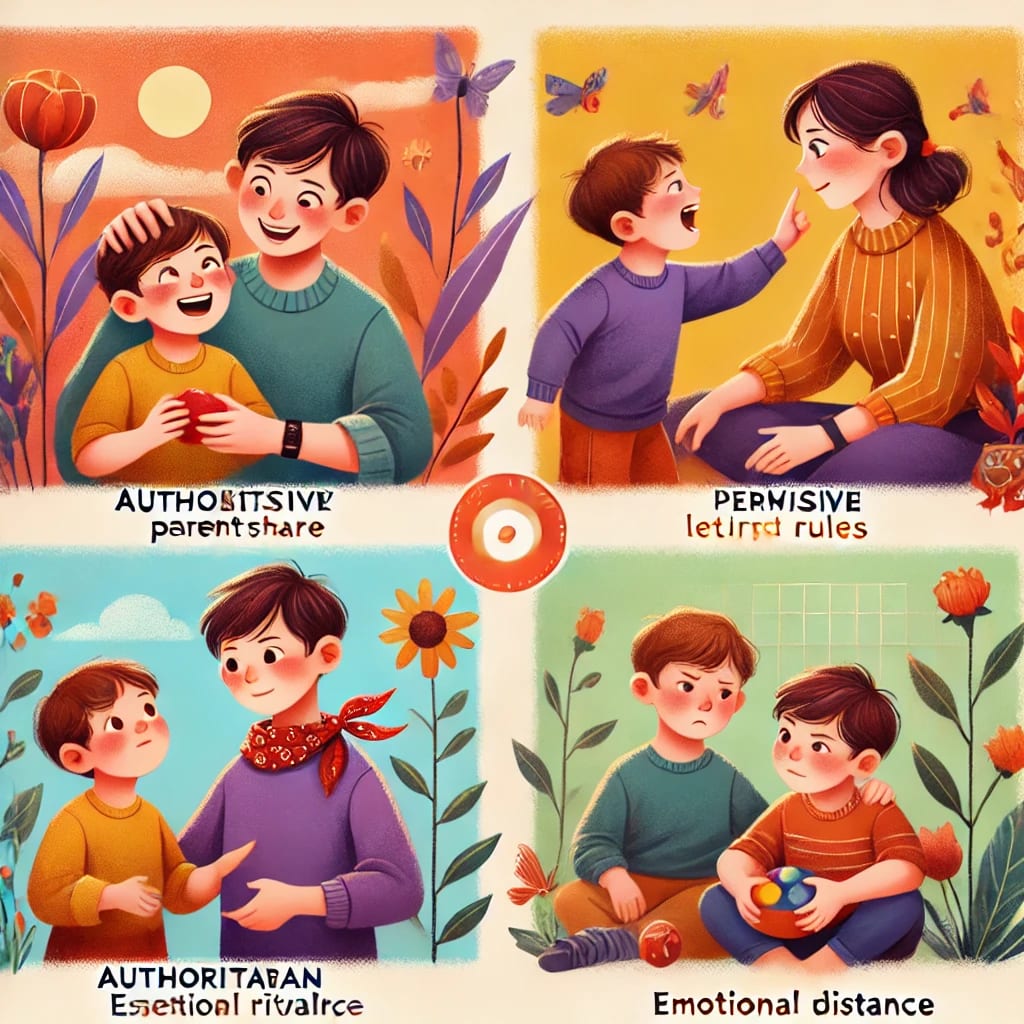
A child's personality, emotional health, and social abilities are greatly influenced by its parents. The parenting style used by caregivers has a big influence on the relationships between siblings when several kids live together. Different parenting styles—whether permissive, authoritarian, authoritative, or neglectful—have an impact on how siblings bond, compete, and interact. At Makoons Play School in Indirapuram, we place a strong emphasis on comprehending family dynamics in order to promote a child's social development from preschool through kindergarten.
The Effects of the Four Primary Parenting Styles on Sibling Relationships
1. Authoritative Parenting: Fostering Strong Relationships
An authoritative parent strikes a balance between structure and warmth. They promote independence and candid communication while laying out clear expectations. Growing up in such a setting increases the likelihood that siblings may form close emotional ties, reciprocal.
Effect on Siblings:
promotes teamwork and problem-solving.
creates a climate that is supportive, which lessens harmful competition.
enhances sibling bonding by fostering emotional intelligence.
2. Friends Over Parents: Permissive Parenting
Despite their lack of boundaries, permissive parents are loving. Although this might foster a laid-back atmosphere at home, the absence of explicit rules can also result in sibling rivalry and misunderstandings.
Effect on Siblings:
can result in sibling domination and power disputes.
might promote rivalry for parents' attention.
encourages innovation but might not be disciplined in conflict resolution.
3. Authoritarian Parenting: Obedience & Sibling Competition
High standards and rigorous discipline are typical in authoritarian homes. Rigid restrictions and a fear of punishment might cause siblings to become competitive.
Effect on Siblings:
might lead to competition and hatred.
may prevent siblings from speaking freely.
limits emotional attachment but fosters obedience.
4. Careless Parenting: The Price of Independence
Minimal involvement in a child's upbringing is considered neglectful parenting. As a result, siblings frequently develop strong relationships out of need or, on the other hand, drift apart as a result of inadequate parental supervision.
Effect on Siblings:
promotes independence but could erode sibling support.
might cause siblings to become emotionally distant from one another.
may result in behavioral problems because of a lack of parental guidance.
How Kindergarten and Preschool Encourage Positive Sibling Relationships
Children who have a solid foundation in preschool and kindergarten can better manage sibling relationships by learning social skills, how to resolve conflicts, and how to work as a team. Schools such as Makoons Play School are essential for:
use planned events to promote cooperation and sharing.
teaching self-control and emotional intelligence.
establishing a caring atmosphere to support at-home education.
Conclusion
Sibling interactions are fundamentally shaped by parenting styles. Whether parents actively promote collaboration and love or inadvertently promote rivalry, their actions have a long-lasting effect. When strong parenting is combined with high-quality kindergarten or playschool instruction, children are certain to acquire critical social skills, which eventually improves sibling relationships. At Makoons Play School, we assist parents in raising emotionally knowledgeable, well-rounded kids who are prepared to form enduring family ties.
FAQs
Q1: Can sibling rivalry be influenced by parenting styles?
Ans: Indeed, sibling interactions are influenced by parental methods. Strong relationships are fostered by authoritative parenting, whereas competition may result from authoritarian or negligent parenting.
Q2: What positive effects may a preschool have on sibling relationships?Ans: Children learn social skills, empathy, and patience in preschool, all of which have a favorable impact on how they interact with their siblings at home.
Q3: What kind of parenting fosters strong sibling relationships?
Ans: The authoritative technique works best because it fosters sibling collaboration and respect by striking a balance between independence and direction.
Q4: How can parents lessen domestic disputes between siblings?
Ans: Relationships can be strengthened and sibling rivalry lessened by establishing clear limits, promoting teamwork, and using positive reinforcement.
About the Creator
Keep reading
More stories from writers in Education and other communities.
How Online Shopping Is Transforming Consumer Behavior and Business Models
The last ten years have seen a digital revolution changing the way we think about commerce and consumers, and how we understand and operate within the context of global trade. E-commerce has moved from a market niche to a global pillar of the economy. The ability to purchase a variety of products and services with a single click is no longer a luxury but a requirement for any modern-day consumer. Thanks to technological advances, a population that evolves rapidly each year, and a persistent focus on the user experience when it comes to online shoppers, the e-commerce industry is on the move in 2026.
By Bobby Yadav2 days ago in Education
Striking the Right Balance: Modern Tech and the Human Touch in Harmony
As technology continues to reshape every corner of business and daily life, the balance between innovation and personal interaction becomes increasingly important. Automation, artificial intelligence, and digital communication have allowed companies to operate faster, smarter, and more efficiently. These tools improve productivity and offer consumers greater convenience, transforming how services are delivered and experiences are shaped.
By Ian Schenkel Haliburton7 days ago in Education




Comments (1)
Good to know! Great work!