
How Blockchain is Revolutionizing Industries Beyond Cryptocurrency
Changing the Game: Blockchain's Influence Across Multiple Fields

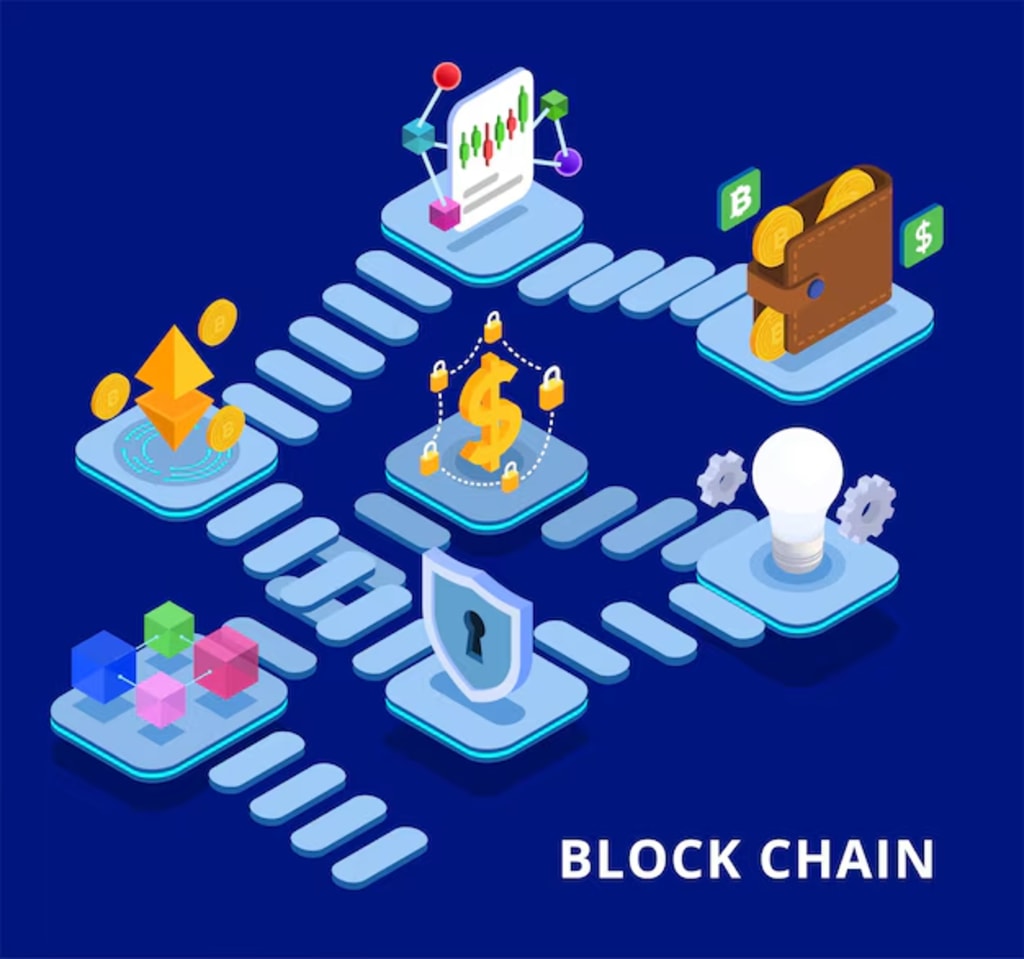
Blockchain technology, once known solely for its role in cryptocurrency, is now reshaping multiple industries with far-reaching impacts that extend beyond digital currencies. Blockchain’s transparent, secure, and decentralized nature is the backbone of its adaptability and potential to disrupt traditional systems. As companies across various sectors explore how blockchain can enhance transparency, security, and efficiency, we are seeing its applications unfold in fascinating ways—from supply chain management to healthcare, finance, and beyond.
In this article, we’ll explore how blockchain is revolutionizing industries outside the cryptocurrency realm and discuss real-life examples of how this technology is bringing about positive change.
1. Blockchain in Supply Chain Management: Ensuring Transparency and Authenticity
In a world where consumers increasingly prioritize transparency and ethical sourcing, blockchain technology is becoming essential for companies that want to provide accurate, real-time information about their products. With blockchain, every step of a product’s journey, from raw material sourcing to distribution, is logged securely, creating an indelible record that can be verified at any stage.
For example, Walmart has utilized blockchain to improve food safety in its supply chain. By logging each step in the supply chain on a blockchain platform, Walmart can trace contaminated produce back to its origin within seconds, allowing the company to quickly remove affected items and protect consumers. This level of transparency benefits both consumers and companies, making it easier to track, verify, and authenticate products.
2. Blockchain in Healthcare: Enhancing Patient Data Security
The healthcare industry handles an immense amount of sensitive data, and protecting patient information is a constant challenge. Blockchain provides a secure and decentralized system for managing medical records, enabling patients and healthcare providers to access accurate information without compromising privacy.
One pioneering example is MediBloc, a South Korean company leveraging blockchain to build a decentralized healthcare information ecosystem. Patients have control over their data and can grant access to healthcare providers when needed, allowing for seamless sharing of medical information while ensuring data security. MediBloc’s blockchain-based system offers both enhanced privacy and reliability, which is crucial in an era when data breaches are increasingly common.
Did you know? Healthcare data breaches affected over 40 million individuals in 2021 alone, according to the U.S. Department of Health and Human Services.
3. Blockchain in Finance: Revolutionizing Banking and Payments
Blockchain’s potential to disrupt traditional financial systems is profound, and its impact goes far beyond cryptocurrencies. In the financial industry, blockchain can streamline processes, reduce costs, and increase transaction security. By eliminating intermediaries, blockchain enables faster and cheaper transactions that benefit individuals and institutions alike.
JPMorgan Chase launched its own blockchain platform, Quorum, to execute secure transactions, especially for cross-border payments. By using blockchain, JPMorgan has streamlined international payments, reducing the time it takes to complete transactions from days to minutes. This shift is not only more efficient but also significantly reduces the associated costs, which is particularly valuable for high-volume financial transactions.
4. Blockchain in Real Estate: Simplifying Property Transactions
The real estate industry is known for its complex, time-consuming transactions that involve multiple intermediaries, from real estate agents to escrow companies. Blockchain is making property transactions faster and more transparent by eliminating the need for middlemen, ensuring that records are secure and tamper-proof.
For example, Propy, a blockchain-based real estate platform, simplifies the property-buying process by creating a transparent, immutable record of ownership. Buyers and sellers can complete transactions digitally, making the process quicker and more secure. Propy's system is already being used for real estate transactions in the U.S., allowing buyers to purchase properties without the typical delays and complications of traditional real estate processes.
5. Blockchain in Voting Systems: Ensuring Fair and Transparent Elections
Election integrity is a concern worldwide, and blockchain is emerging as a powerful tool for creating transparent, tamper-proof voting systems. Blockchain-based voting can increase voter confidence by ensuring that each vote is accurately recorded and cannot be altered, thus helping to prevent fraud and manipulation.
A notable example is Voatz, a blockchain-based voting platform used in some U.S. municipal elections and for overseas voters. Voatz allows users to securely cast votes from their smartphones, ensuring each vote is encrypted and stored on the blockchain. By providing secure, auditable elections, Voatz is paving the way for more reliable voting systems that can safeguard democracy in the digital age.
Did you know? Blockchain-based voting is already in use in some regions, including certain U.S. elections and shareholder voting for companies.
6. Blockchain in Intellectual Property: Protecting Digital Rights
In an age of digital content creation, protecting intellectual property (IP) rights has become increasingly challenging. Blockchain can offer artists, musicians, and content creators a way to establish ownership and manage distribution rights without relying on intermediaries. By timestamping and recording ownership on a blockchain, creators can prevent unauthorized usage of their content.
Audius, a blockchain-based music streaming platform, allows artists to publish their music directly on the blockchain. This platform not only provides artists control over their work but also enables transparent, secure royalty payments without the need for traditional intermediaries like record labels or streaming services. This decentralized approach empowers creators and protects their intellectual property, giving them greater financial control over their work.
7. Blockchain in Education: Verifying Credentials and Academic Records
Blockchain is also proving valuable in education, where academic records, diplomas, and certifications can be stored securely and verified easily. This innovation helps students and professionals avoid fraud and enables employers to verify credentials with confidence.
For instance, MIT uses blockchain to issue digital diplomas to graduates, making it easy for employers to verify the authenticity of credentials without the need for time-consuming paperwork. By providing verifiable records on a blockchain, educational institutions can reduce fraud and ensure that qualifications are accurate and trustworthy.
The Future of Blockchain: A Tool for Transparency, Security, and Efficiency
Blockchain’s ability to create secure, immutable, and decentralized records has profound implications for various industries beyond cryptocurrency. From securing patient data and enhancing transparency in supply chains to revolutionizing financial services, blockchain technology is driving change on a global scale.
As more industries adopt blockchain, the benefits of improved transparency, data security, and efficiency will only become more evident. With applications expanding every year, blockchain promises to reshape our world in ways we’re just beginning to understand. Although challenges like regulation and scalability remain, the widespread adoption of blockchain technology could lead to a future where transparency, efficiency, and trust define our digital interactions.
The next time you think about blockchain, remember that it’s more than just the engine behind cryptocurrencies; it’s the building block for a new era of innovation, poised to transform how industries operate and how we interact in an increasingly digital world.
About the Creator
FLORENCE DANIEL
Hi, I’m a tech enthusiast and writer, dedicated to making AI and the latest technology accessible and impactful for everyone.Technology isn’t just something we use—it’s something that drives positive change!
Keep reading
More stories from FLORENCE DANIEL and writers in Education and other communities.
AI in Healthcare: How Artificial Intelligence is Saving Lives
Artificial intelligence (AI) has revolutionized numerous fields, but few hold as much promise as healthcare. From early diagnostics to patient care and drug development, AI is transforming the way doctors and hospitals deliver care, often leading to better outcomes, cost savings, and even lives saved. AI technologies like machine learning, natural language processing, and computer vision are enabling healthcare systems to leverage data in ways that were previously impossible.
By FLORENCE DANIELabout a year ago in Education
Wuthering Heights uni module given content warning for students"
The 1847 novel Wuthering Heights has long been considered one of the most intense works in English literature. Written by Emily Brontë, the book explores obsession, revenge, cruelty and emotional torment on the Yorkshire moors. Now, nearly two centuries after its publication, the novel has become the center of a modern academic debate after a university module introduced a content warning for students studying the text.
By Fiaz Ahmed 2 days ago in Education



Comments
There are no comments for this story
Be the first to respond and start the conversation.